
To design a floor care plan for mixed surfaces, start by evaluating each surface’s unique needs and selecting appropriate cleaning methods. Match your equipment to the surface type—use microfiber mops for delicate floors, gentle tile cleaners, and extractors for carpets. Establish a safety protocol for equipment and surfaces, and create a schedule based on traffic and usage. If you keep exploring, you’ll discover how to tailor your approach for lasting results and safety.

Get cleaning gear delivered free with Prime
- Fast, free delivery on millions of items
- Prime Video, Amazon Music and more included
- Member-only deals all year
Key Takeaways
- Assess each surface’s specific cleaning needs and select appropriate methods and products accordingly.
- Develop a tailored schedule balancing routine maintenance and periodic deep cleaning for all surfaces.
- Match cleaning equipment and tools to each surface type to prevent damage and ensure effective cleaning.
- Implement safety protocols, including PPE and wet floor signs, to protect staff and prevent accidents.
- Train staff regularly on surface-specific care techniques and safety procedures for consistent quality.
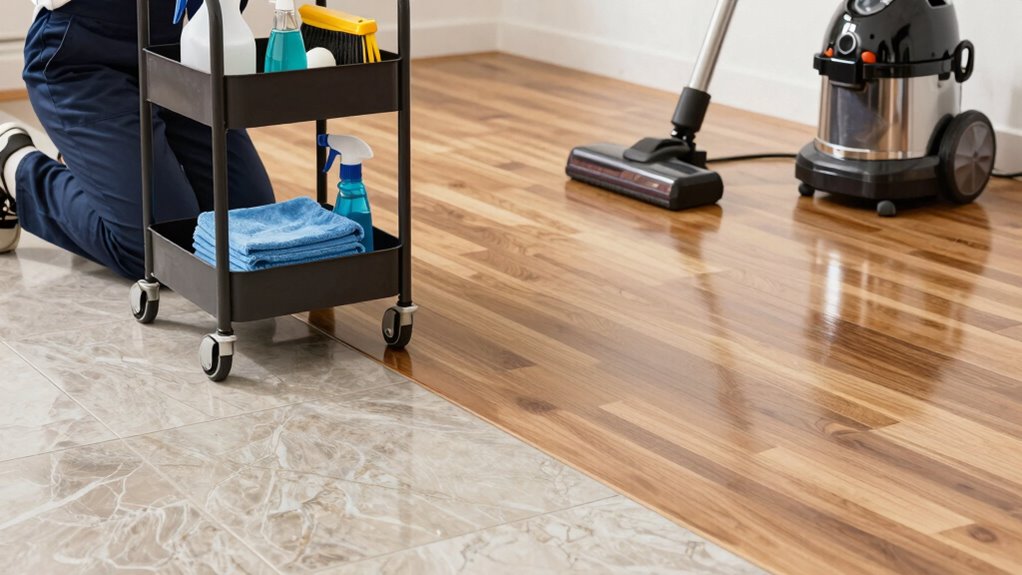
Have you ever wondered how to keep your floors looking spotless and well-maintained over time? Crafting a floor care plan for mixed surfaces can seem complex, but with the right approach, you can guarantee each material receives its proper care. The key is understanding the specific needs of each surface type and selecting appropriate cleaning equipment. For tile, vinyl, hardwood, and carpeted areas, you’ll want to use specialized tools like microfiber mops, carpet extractors, and soft-bristle brushes. Using the wrong cleaning equipment can damage delicate surfaces or leave residues, so it’s vital to match tools with materials. Equally important is establishing safety protocols. Always verify your equipment is in good condition, properly maintained, and used according to manufacturer instructions. Wearing PPE—gloves, masks, and eye protection—protects you from chemical fumes and debris, especially when handling cleaning agents that might be harsh or irritating. Implement procedures that prevent slips, trips, and falls, such as marking wet floors and using slip-resistant mats in high-traffic areas.
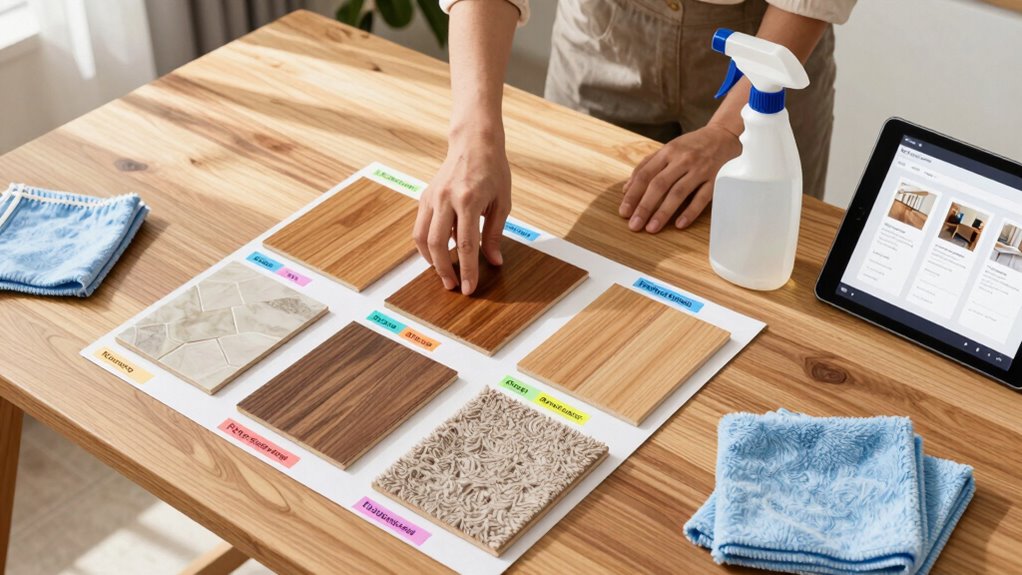
When designing your plan, start with a thorough assessment of each surface’s requirements. For hardwood floors, gentle cleaning with a damp microfiber mop and a pH-balanced cleaner prevents warping or dulling the finish. For tiles, a scrub with a soft brush and a suitable tile cleaner helps remove grime without scratching the surface. Carpets benefit from regular vacuuming, but occasional deep cleaning with a carpet extractor restores freshness and removes embedded dirt. Vinyl floors are resilient but can be scratched or discolored if cleaned improperly; use non-abrasive cleaners and soft cloths. To streamline your routine, establish a cleaning schedule that accounts for foot traffic, usage patterns, and specific maintenance needs of each surface. This approach ensures that no area is neglected and that your floors stay in prime condition longer. Additionally, understanding cleaning equipment and how it impacts different surfaces can help prevent costly damage and extend the longevity of your flooring investments. Proper knowledge of floor maintenance techniques is essential to avoid accidental damage during routine cleaning. Regular training on safety procedures can further reduce the risk of accidents and ensure a safe working environment. Moreover, familiarizing yourself with appropriate cleaning protocols and preventative measures can significantly improve the effectiveness and safety of your cleaning routines.
Products Worth Considering

Roborock Q10 S5+ Robot Vacuum and Mop with 10,000 Pa Suction

Philips Hue Play Floor Lamp, RGBWWIC LED, 53 Inch, Black

DREAME D20 Air Plus Robot Vacuum and Mop with Auto-Empty Dock
As an affiliate, we earn on qualifying purchases.
Frequently Asked Questions
How Often Should Different Surfaces Be Cleaned?
You should clean different surfaces based on their specific needs and foot traffic, typically cleaning high-traffic areas daily and others weekly. Regular floor maintenance guarantees surface compatibility and prolongs lifespan. For example, hardwood floors may need gentle cleaning weekly, while tile can handle more frequent cleaning. Adjust your schedule according to usage and dirt levels, making certain each surface gets the appropriate care to stay pristine and safe.
What Cleaning Products Are Safe for Mixed Surfaces?
You should choose eco-friendly solutions and DIY cleaning methods that are safe for all your surfaces. Look for products labeled as gentle, biodegradable, and free from harsh chemicals. For mixed surfaces, a mixture of mild dish soap and water often works well. Always test a small area first, and avoid abrasive cleaners that could damage delicate finishes. This way, you keep your floors clean without risking harm to any surface.
How to Handle Stubborn Stains on Various Materials?
Think of stubborn stains as uninvited guests overstaying their welcome. To handle them, you act as a skilled diplomat, choosing stain removal methods that respect each surface’s unique needs. Use gentle, surface-compatible cleaners for delicate materials and stronger solutions for tougher stains, but always test first. Patience and proper stain removal techniques will help you restore your floors, ensuring surface compatibility and leaving your space looking fresh and inviting.
Can a Single Machine Clean Multiple Surface Types?
Yes, a single machine with multi surface compatibility and equipment versatility can clean multiple surface types effectively. You should choose machines designed to handle various materials, such as carpets, hardwood, and tile, to streamline your cleaning process. This reduces the need for multiple devices, saves time, and guarantees consistent results across different surfaces. Always check the manufacturer’s specifications to confirm the machine’s suitability for your specific flooring types.
How to Train Staff for Diverse Floor Care Needs?
You can’t teach everything at once, but thorough staff training makes all the difference. Focus on safety protocols and proper techniques for each surface type. Use hands-on demonstrations to show correct equipment use and cleaning methods. Regularly update training to keep staff informed about new products and safety standards. When your team understands diverse floor care needs, they’ll work efficiently and safely, ensuring a spotless, well-maintained environment.
Conclusion
Think of your floor care plan as a well-tuned orchestra, each surface playing its part in harmony. When you tailor your approach to each material, you create a seamless symphony of cleanliness that lasts. Regular inspections and adjustments keep the melody smooth, ensuring every surface shines brightly. With this plan in place, you’re not just cleaning floors—you’re conducting a masterpiece of pristine beauty, turning your space into a welcoming stage for all who walk through.