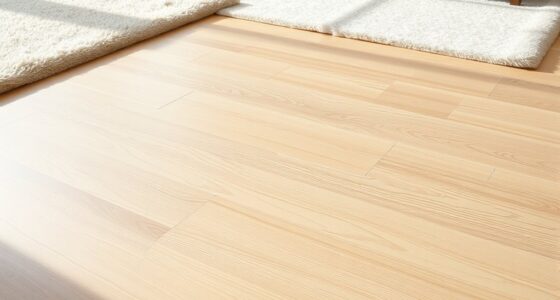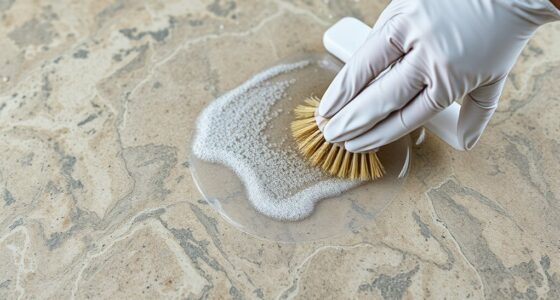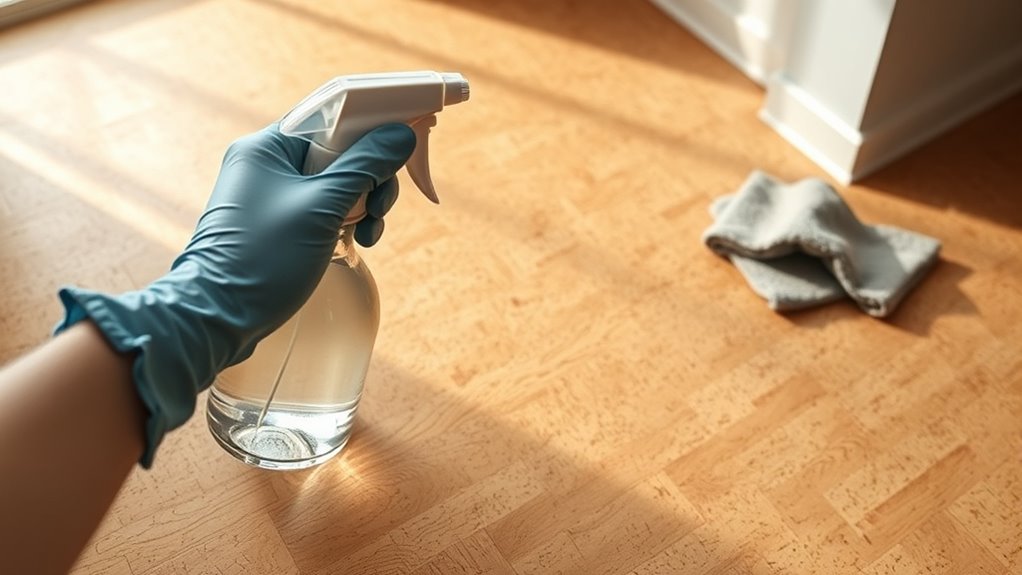

To disinfect cork floors safely, use eco-friendly solutions like diluted vinegar or hydrogen peroxide, which effectively kill germs without damaging the surface. Avoid harsh chemicals like bleach, ammonia, or commercial disinfectants full of chemicals, as they can cause discoloration or deterioration. Be cautious with application—use a damp cloth or mop without oversaturating the floor and guarantee it dries thoroughly afterward. Keep these tips in mind to protect your cork floor and maintain its beauty and durability—learn more below.
Key Takeaways
- Use diluted vinegar or hydrogen peroxide solutions for natural, effective disinfection without damaging cork floors.
- Avoid harsh chemicals like bleach and ammonia, which can discolor and deteriorate cork surfaces.
- Never oversaturate the floor; damp mops or soft cloths are recommended for gentle cleaning.
- Steer clear of abrasive scrubbers or steel wool that can scratch or harm the delicate cork surface.
- Ensure floors are thoroughly dried after cleaning to prevent moisture damage and maintain durability.

Cork floors are a popular choice for their comfort and eco-friendliness, but keeping them clean and disinfected is essential for a healthy home. When it comes to maintaining your cork flooring, using eco-friendly cleaning methods is a smart move. These options help protect the environment while ensuring your floors stay in top condition. Many commercial disinfectants contain harsh chemicals that can damage cork’s natural properties or pose health risks. Instead, you should opt for gentle, natural disinfectants that effectively eliminate germs without compromising the material’s integrity. Vinegar solutions, diluted with water, are a common eco-friendly choice, but you need to be cautious with their concentration. Too much acidity can damage the cork’s surface, so always dilute vinegar properly and avoid using it too frequently. Alternatively, hydrogen peroxide diluted with water can serve as a safe disinfectant, killing bacteria effectively without harmful residues.
Understanding common disinfectant mistakes is key to avoiding damage to your cork floors. One mistake many homeowners make is using bleach or ammonia-based cleaners, which are too harsh for cork and can cause discoloration or deterioration over time. These chemicals aren’t just bad for the material—they can also leave behind residues that attract dirt or cause slippery surfaces. Another common mistake involves overusing disinfectants or applying them in excess. Excess moisture can seep into the cork, causing swelling, warping, or mold growth. Always use a damp mop or cloth rather than soaking the floor. Remember, the goal is to clean and disinfect without saturating the surface.
It’s also important to consider that AI-driven data analytics can help monitor and improve cleaning routines by tracking usage and effectiveness, ensuring optimal maintenance of your cork floors. Proper drying is equally important—avoid walking on the floor until it’s completely dry to prevent streaks or slips. Additionally, steer clear of abrasive scrubbers or steel wool, which can scratch and damage the cork’s delicate surface. Instead, use soft cloths or microfiber mops for routine cleaning.
Ultimately, maintaining a healthy, eco-friendly approach to disinfecting your cork floors involves choosing the right solutions and avoiding common mistakes. By using gentle, natural disinfectants and applying them correctly, you protect your floors and contribute to a safer home environment. Staying informed about what to avoid ensures you won’t inadvertently harm your cork flooring, keeping it beautiful and durable for years to come.

Quick Shine Disinfectant Floor Cleaner 27oz | Hospital Level Disinfectant Kills 99.9% Germs & Bacteria | Cleans w/Power of Hydrogen Peroxide & No Harsh Chemicals | Streak Free & Zero Residue
Kills 99.9% of household germs and bacteria, including cold & flu viruses for a deep down clean
As an affiliate, we earn on qualifying purchases.
As an affiliate, we earn on qualifying purchases.
Frequently Asked Questions
Can I Use Vinegar to Disinfect Cork Flooring Safely?
You can use vinegar to disinfect cork flooring, but you should be cautious. Vinegar safety is a concern because its acidity can damage cork over time if used undiluted or too frequently. Instead, consider disinfectant alternatives like diluted hydrogen peroxide or a gentle commercial cleaner designed for cork. Always test a small area first, and avoid harsh chemicals to keep your cork flooring safe and in good condition.
How Often Should I Disinfect Cork Floors?
Think of your cork floors as a garden needing regular tending. You should disinfect and mop using gentle techniques at least once a week, or more often if you have high traffic or pets. Proper mopping techniques, like using a damp mop rather than soaking, help maintain cleanliness without damaging the cork. Consistent cleaning frequency keeps your floors radiant and protected, like a well-tended garden thriving with care.
Are There Commercial Disinfectants Safe for Cork Floors?
Yes, there are commercial disinfectants safe for cork floors. When choosing these products, you should look for options labeled as gentle or specifically formulated for cork or hardwood surfaces. Always read the labels for cork floor safety instructions, and avoid harsh chemicals like bleach or ammonia that can damage the material. Using the right disinfectant guarantees your cork floors stay clean, safe, and well-maintained without risking harm.
What Are Signs of Damage After Disinfecting Cork Floors?
Like a fragile butterfly, your cork floor shows signs of damage after disinfecting. You might notice increased moisture absorption, causing the surface to feel soft or swell. Surface scratches become more visible, dulling its natural look. These issues indicate the floor’s protective layer has been compromised. Always monitor for these signs and avoid excessive moisture or harsh chemicals to keep your cork floors beautiful and intact.
Should I Seal Cork Floors Before Disinfecting?
You should seal cork floors before disinfecting to protect them from moisture and damage. Applying a proper sealant creates a barrier that prevents liquids from seeping in during your cleaning schedule. Make sure to use a suitable sealant for cork, and allow it to fully cure before disinfecting. Regular sealing helps maintain the floor’s durability and appearance, ensuring your cleaning routine keeps your cork floors looking their best.

Clorox Healthcare Hydrogen Peroxide Cleaner Disinfectant Refill, Bleach Free, 128 Fluid Ounces (Package May Vary)
HYDROGEN PEROXIDE DISINFECTANT: Clorox Healthcare Hydrogen Peroxide Cleaner Disinfectant delivers great surface compatibility, low residue and fast kill…
As an affiliate, we earn on qualifying purchases.
As an affiliate, we earn on qualifying purchases.
Conclusion
To keep your cork floors safe and spotless, choose gentle disinfectants and avoid harsh chemicals. Regular cleaning and proper products will protect their beauty and longevity. Remember, a little caution goes a long way—you don’t want to throw the baby out with the bathwater. By staying informed and careful, you’ll maintain a healthy, inviting space without risking damage. Keep these tips in mind, and your floors will stay beautiful for years to come.

18" Professional Microfiber Mop Floor Cleaning System, Flat Mop with Stainless Steel Handle, 4 Reusable Washable Mop Pads, Wet and Dust Mopping for Hardwood, Vinyl, Laminate, Tile Cleaning
【WORK ON EASY】With it’s large 18 Inch base can cover a lot of areas in a single scan,…
As an affiliate, we earn on qualifying purchases.
As an affiliate, we earn on qualifying purchases.
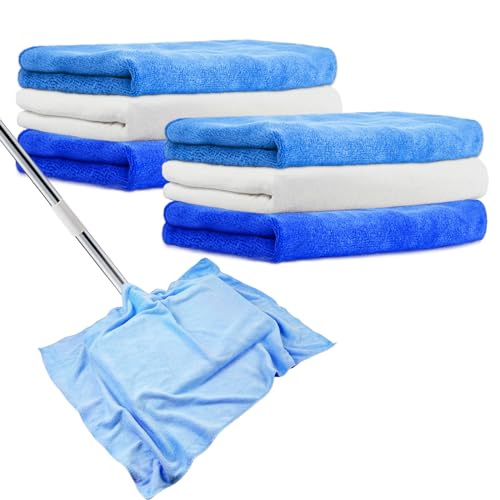
CODOHI 6 Pcs Extra Large Microfiber Cleaning Cloth, 20" x 30" Washable Reusable Large Floor Cloth Rags, Microfiber Towels for Mop Cleaning Office Bathrooms Housekeeping (Blue, White)
Large Size: These microfiber cleaning cloths are sized at 20 x 30 inches / 50 x 75 centimeters,…
As an affiliate, we earn on qualifying purchases.
As an affiliate, we earn on qualifying purchases.