To disinfect epoxy floors safely, use diluted solutions of mild disinfectants like hydrogen peroxide or sodium hypochlorite, following manufacturer instructions. Avoid harsh chemicals such as concentrated bleach, alcohol-based disinfectants, or acidic cleaners, as these can weaken or discolor the surface. Opt for pH-neutral cleaners and gentle scrubbing tools like microfiber mops to prevent damage. Continuing with proper practices will help you maintain a clean, durable epoxy surface that lasts longer.
Key Takeaways
- Use diluted disinfectants like sodium hypochlorite or hydrogen peroxide, following manufacturer instructions.
- Avoid concentrated bleach, alcohol-based disinfectants, and harsh chemicals that can damage epoxy surfaces.
- Prefer pH-neutral cleaners and gentle methods to disinfect without weakening the coating.
- Never use abrasive tools or steel wool that can scratch or compromise the epoxy’s protective layer.
- Properly dry the floor after cleaning to prevent moisture damage and maintain surface integrity.
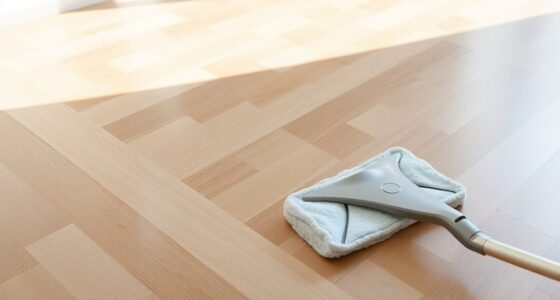
Maintaining a clean and sanitary environment is essential, especially when it comes to epoxy floors that see heavy foot traffic or equipment use. Proper cleaning techniques are vital to ensure these surfaces stay in top condition without compromising their integrity. When cleaning epoxy floors, your goal should be to remove dirt, grime, and bacteria without damaging the surface or reducing its durability. Using harsh chemicals or abrasive tools can weaken the epoxy, leading to cracks or dullness over time. Instead, opt for gentle, effective cleaning methods that respect the surface’s surface durability. Regular sweeping or vacuuming is a good starting point to clear loose debris. Follow this with a mop using warm water mixed with a mild, pH-neutral cleaner. Avoid acidic or alkaline cleaners, as they can erode the epoxy’s protective coating. Microfiber mops are ideal because they trap dirt efficiently and won’t scratch the surface, preserving its shine and integrity.
When disinfecting epoxy floors, it’s tempting to reach for strong chemicals, but you need to be cautious. Many disinfectants contain bleach or alcohol, which can cause discoloration or weaken the epoxy if used excessively or improperly. Instead, consider using diluted solutions of sodium hypochlorite or hydrogen peroxide, but always follow manufacturer instructions carefully. This guarantees you’re disinfecting effectively without risking damage to the surface. Remember, the key is to strike a balance—disinfect thoroughly but gently. Never use steel wool or abrasive scrubbers, as they can scratch and compromise the surface’s durability, making it more vulnerable to future damage. Additionally, incorporating sound cleaning practices helps maintain the epoxy’s protective layer and longevity. Another critical aspect is drying the floor properly after cleaning or disinfecting. Excess moisture can seep into seams or cracks, causing damage over time. Use a clean, dry microfiber cloth or mop to remove residual water and prevent streaks or water spots. Regular maintenance combined with appropriate cleaning techniques extends the life of your epoxy floors and keeps them looking professional.
Frequently Asked Questions
Can I Use Bleach to Disinfect Epoxy Floors?
You can use bleach to disinfect epoxy floors, but you must do so carefully. Bleach safety is essential because strong chemicals can damage epoxy’s durability if used improperly. Dilute the bleach properly and avoid leaving it on the surface for too long. Always rinse thoroughly afterward. Using bleach occasionally in moderation won’t harm your epoxy floors if you follow safety guidelines, helping you maintain a clean and durable surface.
Are Commercial Disinfectants Safe for Epoxy Surfaces?
Yes, commercial disinfectants can be safe for epoxy surfaces if you choose products compatible with epoxy. Always check the label for epoxy compatibility before use; some disinfectants contain harsh chemicals that can damage your floor. To protect your epoxy, opt for gentle, EPA-registered disinfectants designed for delicate surfaces. Test a small area first, and follow the manufacturer’s instructions closely to guarantee safe and effective disinfection.
How Often Should I Disinfect Epoxy Floors?
Did you know that bacteria can double in number every 20 minutes? You should disinfect your epoxy floors at least once a week to maintain proper floor maintenance and prevent germs from spreading. During high-traffic periods or spills, increase cleaning frequency to ensure safety. Regular disinfection keeps your floors shiny and hygienic, while reducing the risk of slips and illnesses. Stay consistent, and your epoxy floors will stay durable and spotless.
Will Disinfectants Damage the Epoxy Coating?
Disinfectants can damage epoxy coatings if they cause harmful chemical reactions, compromising surface integrity. Harsh chemicals like bleach or ammonia may degrade the epoxy over time, leading to cracks or discoloration. To protect your floor, choose disinfectants specifically formulated for epoxy surfaces, and always follow manufacturer instructions. Regular, gentle cleaning helps maintain the epoxy’s durability, ensuring your floor stays safe and visually appealing without risking chemical damage.
Can I Use Homemade Solutions to Disinfect Epoxy Floors?
Sure, you can try DIY cleaning with natural disinfectants on epoxy floors—who doesn’t love a bit of homemade magic? Just remember, while it sounds eco-friendly and cost-effective, some homemade solutions may not be effective or could damage the coating. Use gentle, proven natural disinfectants like vinegar diluted properly, but avoid harsh or untested mixtures. Always test first; your epoxy floor deserves some TLC, not unintended harm.
Conclusion
Remember, protecting your epoxy floors isn’t just about choosing the right disinfectant; it’s also about timing and awareness. Sometimes, a simple mistake can lead to unexpected damage, reminding you that even in routine cleaning, a little caution goes a long way. As you navigate these choices, you might find that what works today could surprise you tomorrow—highlighting the importance of staying informed. Ultimately, safe disinfection reveals a surprising harmony between cleanliness and preservation, if you stay attentive.