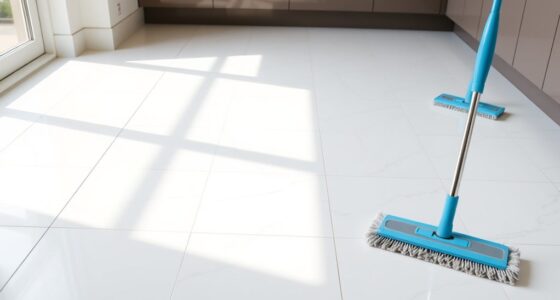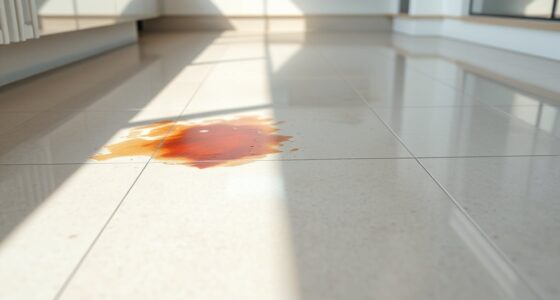
To quickly remove coffee, wine, or grease stains from your epoxy floors, act fast. Blot spills immediately with a soft cloth to prevent stains from setting. For recent stains, use warm water and mild dish soap, gently scrubbing with a soft sponge. For stubborn spots, try a mix of vinegar or baking soda paste, letting it sit briefly before scrubbing gently. Regular prevention and prompt action help keep your floors pristine—discover more tips for flawless epoxy maintenance below.
Key Takeaways
- Blot spills immediately with a soft cloth to prevent stain penetration.
- Use warm water and mild soap for fresh stains like coffee and wine.
- Apply baking soda paste or white vinegar on set-in stains, then gently scrub.
- For grease, treat with degreasing agents or dish soap, letting it sit before scrubbing.
- Rinse thoroughly and dry to prevent moisture damage and maintain epoxy’s shine.
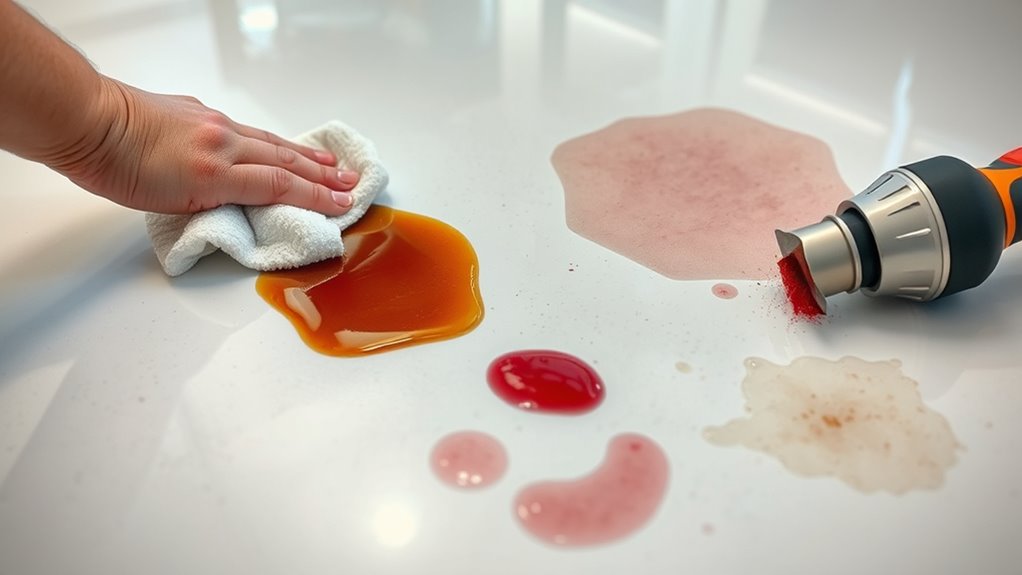
Epoxy floors are durable and visually appealing, but they can still develop stains that mar their appearance. When spills happen, quick spill cleanup is essential to prevent stains from setting in. The longer a spill sits, the more likely it is to seep into the epoxy’s surface, making stain removal much more difficult. That’s why it’s important to act fast—grab a paper towel or a clean cloth and blot the spill immediately. For liquids like coffee or wine, don’t wipe; instead, gently blot to absorb as much as possible without spreading the stain. Prompt spill cleanup not only prevents stains but also preserves the glossy finish of your epoxy floor, keeping it looking new longer. Incorporating mindfulness practices into your cleaning routine can help you stay attentive to spills before they become stubborn stains.
Act quickly to blot spills on epoxy floors and prevent stubborn stains and surface damage.
Prevention is your best ally when it comes to maintaining epoxy floors. Consider placing mats or rugs in areas prone to spills—like near coffee makers or wine glasses—to catch drips before they reach the floor. Regularly sealing your epoxy surface can also enhance stain resistance, creating a barrier that makes cleanup easier. When you’re proactive about stain prevention, you reduce the need for harsh cleaning agents later and keep your floors looking pristine. Remember, the quicker you’re able to address spills, the less chance they have to penetrate the surface and leave a stubborn stain.
For stains like coffee or wine that have already set, don’t panic. You can often remove them with simple household items. For instance, a mixture of warm water and mild dish soap is effective for fresh stains; gently scrub the area with a soft cloth or sponge. For more stubborn stains, a solution of white vinegar or baking soda paste can help lift the discoloration. Apply these solutions, let them sit for a few minutes, then scrub lightly. Always rinse well and dry thoroughly to prevent any residual moisture from causing further issues. If the stain persists, commercial epoxy-safe stain removers are available, but always test a small area first to avoid damage.
Grease stains can be tricky, but they’re not impossible to remove. Use a degreasing agent or a grease-cutting dish soap solution to break down the oil. Apply it directly to the stain, let it sit for several minutes, then scrub gently with a soft-bristled brush. Rinse with clean water and dry thoroughly. Regular maintenance, including quick spill cleanup and using the right cleaning products, helps keep grease from building up and becoming permanent. Stick to these routines, and you’ll keep your epoxy floors looking their best, free of stubborn stains that detract from their beauty and durability.

ERC #1 Epoxy Cleaner "Ready 2 Go" Pre-Diluted Gallon of ERC Epoxy & Resinous Surface Cleaner | Professional Strength | No Mixing Required | Cleans Epoxy Floors, Sealed Concrete, and More
✅ Ready-To-Use Convenience – Skip the mixing! Ready 2 Go comes pre-diluted with the perfect ratio of our…
As an affiliate, we earn on qualifying purchases.
As an affiliate, we earn on qualifying purchases.
Frequently Asked Questions
Can I Prevent Stains on Epoxy Floors Before They Occur?
Yes, you can prevent stains on epoxy floors by applying preventive measures like stain-resistant coatings. Regularly clean spills immediately to avoid absorption, and consider sealing your epoxy with a protective layer. These stain-resistant coatings create a barrier that repels liquids and prevents stains from setting in. Staying proactive with these measures helps keep your epoxy floors looking new and minimizes the risk of permanent stains.
Are There Natural Remedies for Removing Epoxy Floor Stains?
Yes, you can try DIY solutions and household remedies for removing epoxy floor stains. For coffee, wine, or grease, mix baking soda with water to create a paste and gently scrub the stain. Vinegar and baking soda together can also help lift stubborn marks. Always test a small area first, and avoid harsh chemicals. These natural remedies are effective, affordable, and safe for your epoxy floors.
How Often Should I Reseal My Epoxy Floors to Prevent Stains?
You should reseal your epoxy floors every 2-3 years for ideal stain prevention—because apparently, epoxy isn’t a magic stain shield. Regular resealing with the right product enhances sealing frequency, making it tougher for coffee, wine, or grease to leave their mark. Don’t wait until stains appear; proactive sealing keeps your floors looking pristine, proving that a little maintenance goes a long way in avoiding stubborn messes.
What Tools Are Best for Deep Cleaning Epoxy Floor Stains?
For deep cleaning epoxy floor stains, you should use scrubbing brushes and steam cleaners. Scrubbing brushes help loosen stubborn stains like coffee, wine, and grease, while steam cleaners lift grime without harsh chemicals. Use a stiff-bristled brush on tough spots and a steam cleaner for gentle, thorough cleaning. These tools work together to restore your epoxy floors quickly, leaving them spotless and protected from future stains.
Is Professional Cleaning Necessary for Stubborn Epoxy Stains?
You don’t always need professional cleaning for stubborn epoxy stains. Start with DIY solutions like a mixture of baking soda and water or specialized epoxy cleaners. Incorporate stain removal into your regular cleaning schedule to prevent buildup. If stains persist despite these efforts, then consider professional cleaning. Regular maintenance keeps your floors looking their best, saving you time and money in the long run.

Zep Neutral PH Industrial Floor Cleaner – 1 Gallon – ZUNEUT128 – Concentrated Pro Trusted All-Purpose Floor Cleaner
Maintains polish without stripping protective coating
As an affiliate, we earn on qualifying purchases.
As an affiliate, we earn on qualifying purchases.
Conclusion
Now that you know how to tackle stains on your epoxy floors quickly, you’ll keep them looking pristine for years. Did you know that epoxy flooring is among the most durable options, with a 20-year lifespan when properly maintained? Regular cleaning and prompt stain removal can extend that even further. So, stay vigilant, act fast, and your floors will stay stunning and stain-free, saving you time and money in the long run.
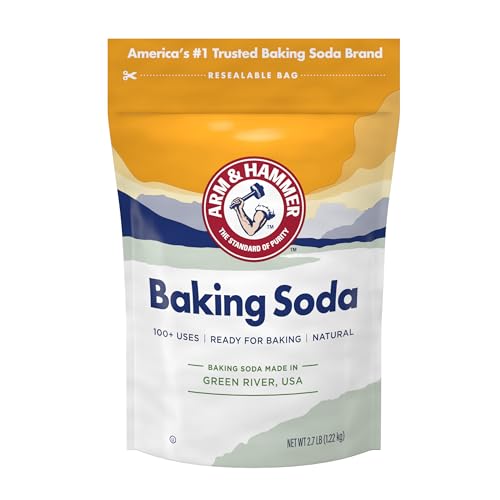
ARM & HAMMER Baking Soda Made in USA, Ideal for Baking, Pure & Natural, 2.7lb Bag
Ideal for Baking: Made with fine baking soda particles from Grade 1 baking soda to create fluffier recipes;…
As an affiliate, we earn on qualifying purchases.
As an affiliate, we earn on qualifying purchases.

Armor All Garage Floor Mat (17' x 7'4"), Waterproof Garage Flooring, Absorbent, Premium Oil Spill Resistant Garage Pad, Durable, Protects Surfaces (Includes Double Sided Tape) (USA Made)
PROTECTS SURFACES & TRANSFORMS GARAGE INTO SHOWROOM QUALITY (KEEPS FLOORS LOOKING LIKE NEW): Our mat is designed to…
As an affiliate, we earn on qualifying purchases.
As an affiliate, we earn on qualifying purchases.