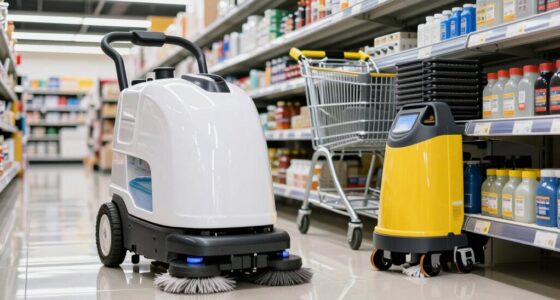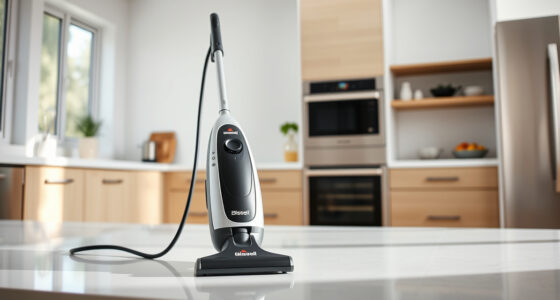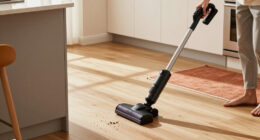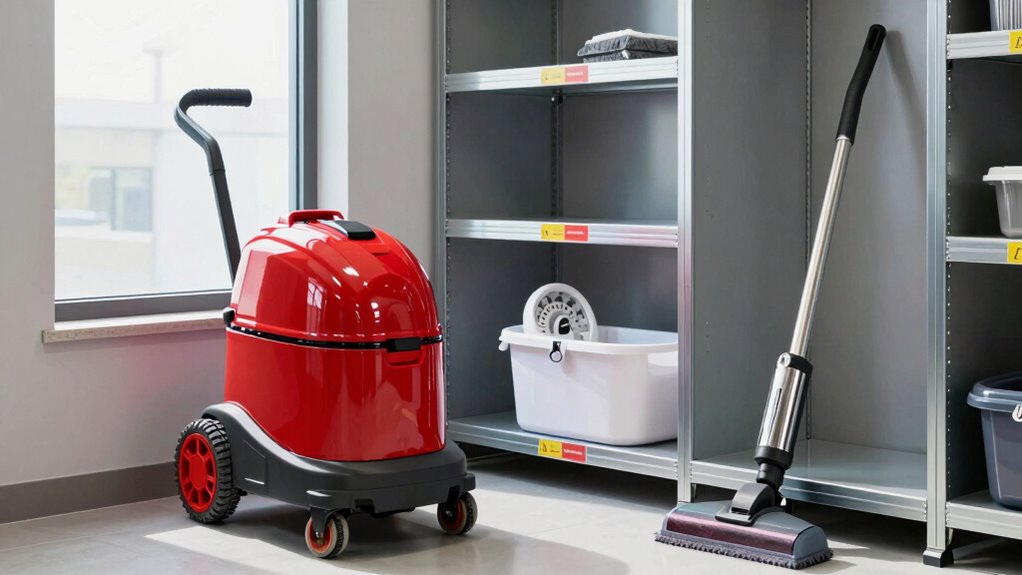
To prioritize standardization, start with your core floor cleaning tools like mops, vacuums, and scrubbers. These are used daily and directly impact cleanliness, efficiency, and staff training. Consistent equipment reduces errors, speeds up maintenance, and simplifies inventory management. Establishing uniform tools also makes adopting new technologies easier later on. Focusing on these essentials sets a strong foundation for a more reliable, cost-effective cleaning system—stay tuned to discover how to expand and optimize your standards further.

Get cleaning gear delivered free — and shop member deals
- Fast, free delivery on millions of items
- Access to Prime Big Deal Days deals on October 6–7
- Prime Video, Amazon Music and more included
Key Takeaways
- Prioritize standardizing core cleaning tools like mops, vacuums, and scrubbers for consistent cleaning quality.
- Focus on equipment used daily to ensure hygiene, efficiency, and staff familiarity.
- Standardize maintenance routines for primary tools to extend lifespan and prevent breakdowns.
- Align equipment with safety and hygiene standards to reduce cross-contamination risks.
- Streamline procurement by selecting uniform brands and models for easier inventory management.
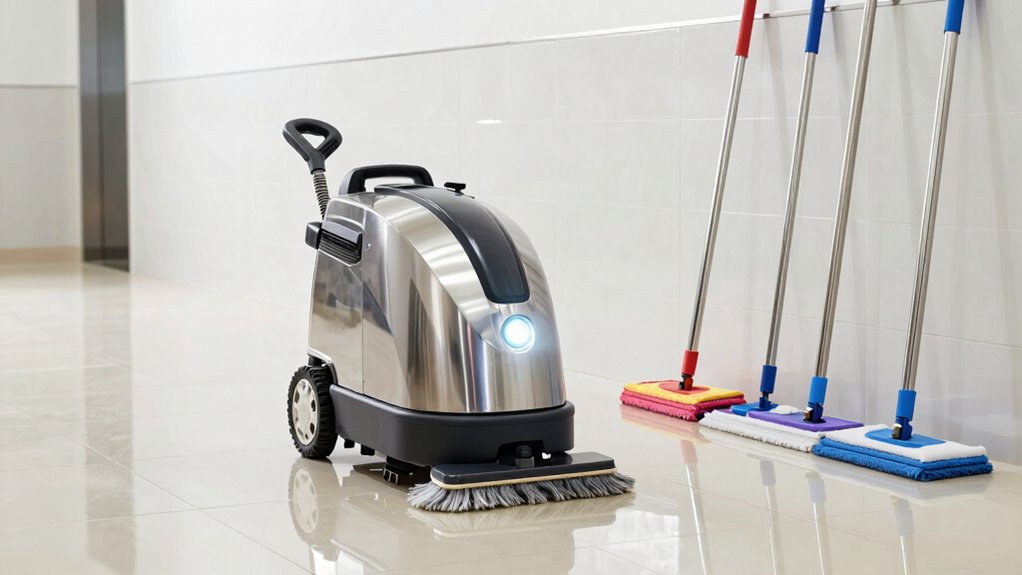
Have you ever considered how inconsistent floor care equipment can impact your facility’s cleanliness and efficiency? When equipment varies widely in brands, models, or features, it can create gaps in your cleaning protocols. Staff might not be trained uniformly, leading to missed spots or uneven results. This inconsistency can cause increased cleaning time, higher costs, and compromised hygiene standards. To get ahead, it’s crucial to prioritize standardizing the equipment that directly influences your cleaning protocols and overall maintenance routines.
Inconsistent floor care equipment can hinder cleaning efficiency, increase costs, and compromise hygiene standards. Standardization is key.
Start by focusing on the primary tools used for daily floor cleaning—mops, vacuums, and scrubbers. These are the workhorses that determine the quality of your facility’s cleanliness. When you standardize these items, your staff can become more proficient with a consistent set of tools, reducing errors and speeding up training. Uniform equipment also simplifies the procurement process, allowing you to negotiate better prices and ensure compatibility with replacement parts or accessories. Consistent equipment reduces downtime caused by malfunctioning or incompatible parts, which is critical for maintaining a smooth cleaning schedule. Additionally, equipment consistency can improve inventory management by reducing the variety of spare parts needed across your operation. Establishing standardized equipment protocols can also lead to better tracking and accountability for maintenance and repairs.
Another essential aspect to address is equipment maintenance. Regular maintenance ensures your floor care machines operate at peak performance and last longer. When equipment varies across your facility, tracking maintenance schedules becomes cumbersome. Standardization allows you to establish uniform maintenance routines, making it easier for staff to follow protocols and spot issues early. Proper maintenance minimizes breakdowns, reduces the risk of cross-contamination, and ensures your cleaning processes remain effective. It also helps in adhering to safety standards, as well-maintained equipment is less likely to pose hazards. Additionally, adopting consistent equipment standards can facilitate easier staff training and help in implementing new technologies more smoothly. Furthermore, standardization can support cost savings by reducing the need for multiple spare parts and specialized training. Recognizing the importance of equipment durability can further help in selecting long-lasting tools that withstand frequent use and cleaning cycles.
By standardizing key equipment first, you also foster a cohesive training environment. Staff members become more confident and efficient when they’re familiar with the same set of tools, which improves overall cleaning quality. Plus, standardization supports a more sustainable approach—fewer models mean less waste, easier inventory management, and simplified repairs. It also creates a foundation for implementing advanced cleaning technologies down the line, as you’ll have a clear baseline of equipment to upgrade from.
In essence, the best place to start your standardization efforts is with those core floor cleaning tools and their maintenance routines. Doing so will streamline your cleaning protocols, improve equipment longevity, and elevate the overall cleanliness of your facility. This initial focus sets the stage for further improvements and ensures that your entire floor care system becomes more efficient, reliable, and cost-effective.
As an affiliate, we earn on qualifying purchases.
Frequently Asked Questions
How Often Should Floor Care Equipment Be Maintained or Serviced?
You should service your floor care equipment regularly according to your cleaning schedules and maintenance protocols. Generally, daily or weekly maintenance keeps equipment in top shape and prevents breakdowns. For high-use machines, more frequent checks may be necessary. Always follow manufacturer recommendations and document maintenance tasks. Consistent servicing guarantees peak performance, extends equipment lifespan, and maintains a safe, clean environment for your facility.
What Safety Features Are Essential for Standard Floor Care Equipment?
Safety features are the backbone of reliable floor care equipment—think of it as “an ounce of prevention is worth a pound of cure.” You should guarantee safety protocols are built into the equipment, like emergency shutoff switches and non-slip grips. Regular equipment inspections are key to spotting hazards early, preventing accidents, and maintaining safe operation. Prioritizing these features keeps your team protected and your facility compliant.
Can Equipment Be Customized to Fit Different Facility Types?
Yes, equipment can be tailored to fit different facility types. You should explore customization options that address your facility’s specific needs, such as adjusting size, power, and attachments. By customizing equipment to your environment—whether it’s a hospital, school, or manufacturing plant—you guarantee peak performance and efficiency. Customization helps you meet safety standards, improve cleaning results, and streamline your floor care processes effectively.
What Training Is Required for Staff Operating Standardized Equipment?
You need to guarantee staff receive proper training, including staff certification and understanding operational procedures. This training covers safe and effective equipment use, maintenance, and troubleshooting. By completing certification, staff demonstrate their competence, reducing errors and enhancing safety. Regular refresher courses help keep everyone updated on best practices, ensuring consistent floor care quality across your facility. Proper training is essential for maximizing equipment efficiency and maintaining a clean, safe environment.
How Does Equipment Standardization Impact Overall Facility Cleanliness?
Think of equipment standardization as tuning an orchestra—every instrument plays in harmony. When you standardize, you boost cleaning efficiency, making floors sparkle faster and more thoroughly. Plus, durable equipment withstands daily demands, reducing breakdowns and downtime. This consistency guarantees a spotless environment, elevating overall facility cleanliness. You create a seamless rhythm that keeps your space pristine, efficient, and resilient, all with the reliable tools you trust.
Conclusion
By standardizing your facility’s floor care equipment first, you set the foundation for efficiency and consistency, like the steady heartbeat of a well-oiled machine. This choice acts as a compass, guiding your team toward streamlined operations and improved cleanliness. When everyone’s on the same page, the potential for mishaps diminishes, and your floors shine brighter than ever. Remember, the right equipment isn’t just a tool—it’s the backbone of a spotless, safe environment.
Fall Picks
fall essentials
As an affiliate, we earn on qualifying purchases.