
TL;DR

Get cleaning gear delivered free with Prime
- Fast, free delivery on millions of items
- Prime Video, Amazon Music and more included
- Member-only deals all year
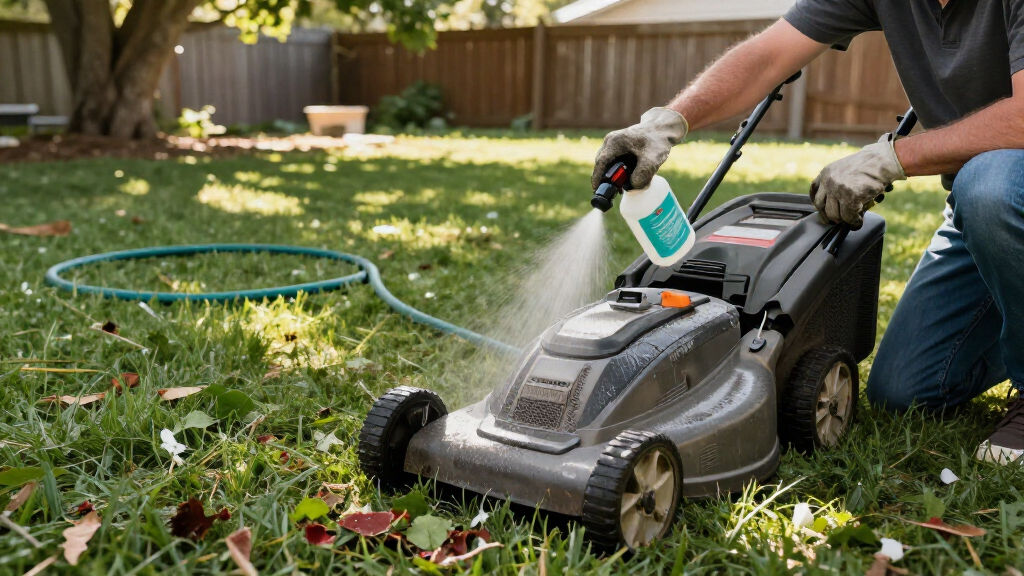
A Hunker report recommends checking and replacing a dirty lawn mower air filter as a way to support engine performance and potentially reduce grass collecting beneath the deck. It advises using the mower’s model or the old filter’s part number to find a replacement, and disconnecting the spark plug wire before maintenance.
A Hunker lawn-care report recommends checking and replacing a dirty mower air filter to support engine performance and potentially reduce grass buildup beneath the mower deck. The advice offers a maintenance alternative to applying oil, WD-40 or another lubricant, but the report does not establish that a filter change will prevent buildup on every mower.
According to the report, a gas-powered mower draws air and small particles toward its engine as it runs. The air filter, which may be made of foam, paper or both, is intended to catch particles before they reach the engine’s moving parts. When the filter is dirty, the report says, restricted airflow can make the engine work harder and may contribute to grass and debris collecting on the deck.
Hunker recommends replacing the filter at least once a year or after every 100 hours of mowing. It suggests checking the part number on the existing filter or using the mower’s model number to identify a compatible replacement. The report also lists possible signs of an airflow or engine problem: difficulty starting, sputtering or slowing in tall grass, black smoke, and needing to refuel more often than usual. Those symptoms can have other causes, so they do not by themselves confirm that the air filter is dirty.
For the replacement, the instructions say to disconnect the spark plug wire before opening the filter housing, which is usually near the top of the engine. Remove the housing cover, take out the old filter and clean the housing with a rag or paper towel for light dirt. For heavier buildup, the report suggests a soft brush and warm, soapy water. Let cleaned parts dry before fitting the new filter, replacing the cover and reconnecting the wire.
A Small Service Step for Mower Care
The guidance matters to homeowners because a mower that runs poorly or accumulates clippings can require more stops and cleanup. Checking a filter is a routine maintenance task that may address restricted airflow, while also helping protect the engine from particles the filter is designed to catch. The report says proper maintenance can help keep a mower running properly and may extend its lifespan; it does not provide test results or quantify those effects.
Replacing a filter is not the same as cleaning the mower deck, sharpening blades or diagnosing all causes of poor performance. Grass can collect for reasons beyond a dirty air filter, and the report does not claim the maintenance step will eliminate clumping. Its practical point is narrower: inspect the filter on schedule and treat deck buildup alongside other maintenance signs, rather than relying on a lubricant as the proposed fix.
As an affiliate, we earn on qualifying purchases.
How the Filter Relates to Deck Buildup
The report describes a relationship between the engine’s airflow and the debris that can accumulate during mowing. As the machine moves across a lawn, it draws air and small particles toward the engine. A functioning filter catches particles before they enter internal engine components. If the filter is clogged, airflow can be restricted, which may affect how the engine runs.
Hunker connects that strain with more grime collecting beneath the mower, but the source does not present measurements or a controlled comparison showing how much a new filter changes deck buildup. Its recommendation is best understood as general maintenance guidance, not a guaranteed anti-stick treatment. The stated replacement intervals are a baseline; owners should also consult the mower’s manual for model-specific service instructions.
““Changing your air filter can significantly improve lawn mower performance and can help if your mower deck keeps getting clogged.””
— Hunker report
What a Filter Change Cannot Confirm
The report does not provide comparative testing, identify specific mower models, or quantify whether changing a filter reduces the amount of grass stuck to a deck. It also does not establish that a dirty air filter is the cause whenever a mower sputters, smokes, starts slowly or uses more fuel. Those signs can indicate a problem, but the source does not diagnose them conclusively.
It is also unclear whether the suggested intervals apply to all mowing conditions or filter designs. The report advises checking the mower model or filter part number, but does not list replacement products or model-specific procedures. Owners should use the manual’s instructions where they differ from general advice.
Check the Manual Before Replacing
For owners considering the maintenance step, the next action is to check the mower manual and inspect the filter. Use the old filter’s part number or the machine’s model number to identify a suitable replacement. Before opening the housing, disconnect the spark plug wire as directed in the report; clean the housing and allow any washed parts to dry before installing the new filter.
After replacement, owners can monitor whether starting, engine behavior and deck cleanup improve during later mowing. The supplied report does not describe a follow-up test or announce further findings, so any change in grass buildup should be treated as an observation rather than proof that the filter was the only cause.
Key Questions
Does changing the air filter stop grass from sticking to a mower?
The Hunker report says replacing a dirty filter can help if the deck keeps clogging, but it does not promise to prevent grass buildup or provide test results showing how much it reduces it.
How often does the report recommend replacing a mower air filter?
It recommends replacement at least once a year or after every 100 hours of mowing. Check the mower’s manual for model-specific instructions.
What can a dirty mower air filter look like in practice?
The report lists slow starting, sputtering or slowing in tall grass, black smoke and more frequent refuelling as possible signs of engine trouble. These symptoms are not proof that the air filter is the cause.
What safety step should I take before changing the filter?
The report says to disconnect the spark plug wire before opening the filter housing to reduce the risk of the engine starting accidentally. Follow the mower manual’s safety and service instructions.
Source: rss
Halloween Picks
halloween
As an affiliate, we earn on qualifying purchases.