
To make your polished concrete surface allergy-safe, start by sealing the floors to prevent dust from penetrating and becoming airborne. Use air purifiers with HEPA filters to capture floating dust and allergens, and guarantee they’re strategically placed in busy areas. Maintain a regular cleaning routine with microfiber mops or vacuums to avoid stirring dust. Combining sealing with air purification creates a cleaner, healthier environment—keep exploring to learn how these methods work together effectively.
Key Takeaways
- Regularly seal polished concrete floors with multiple coats to prevent dust penetration and simplify cleaning.
- Use microfiber mops and HEPA vacuums for routine cleaning, avoiding traditional brooms that stir up dust.
- Implement HEPA-filter air purifiers in high-traffic areas to capture airborne dust and improve indoor air quality.
- Reapply sealant every few years to maintain dust barrier effectiveness and surface durability.
- Combine sealing with air purification for a comprehensive, allergy-safe dust control routine.

Polished concrete floors are popular for their durability and sleek appearance, but dust can become a persistent issue if not properly managed. Dust particles can circulate in the air, aggravating allergies and reducing indoor air quality. To keep your environment safe and comfortable, you need to adopt effective dust control strategies that focus on air purification and sealing techniques. These methods work together to minimize dust buildup and improve overall air cleanliness.
Start by understanding the significance of sealing your concrete floor properly. A high-quality sealant creates a barrier that prevents dust and dirt from penetrating the surface. Sealing techniques are essential because they lock in existing dust and make the floor easier to clean. When you apply a good sealant, you reduce the amount of dust that becomes airborne during routine activities. Make sure to choose a sealant suitable for polished concrete—look for products that offer strong adhesion, flexibility, and durability. Applying the sealant according to manufacturer instructions, typically in multiple coats, guarantees maximum coverage and effectiveness. Regular reapplication, usually every few years, helps maintain the seal and keeps dust at bay.
Sealing your concrete floor locks in dust and makes cleaning easier.
Additionally, dust control methods such as implementing a regular cleaning schedule with appropriate tools can significantly reduce dust accumulation over time.
In addition to sealing, integrating air purification into your routine enhances dust control. Air purifiers with HEPA filters are highly effective at capturing airborne dust particles, allergens, and other pollutants. Position the purifier strategically in high-traffic or dusty areas to maximize its impact. Keep the filters clean and replace them as recommended by the manufacturer to maintain effective performance. Using air purifiers continuously creates a cleaner indoor environment, reducing the likelihood of dust settling on surfaces or becoming airborne during cleaning.
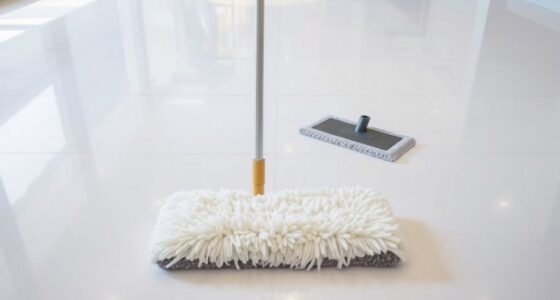
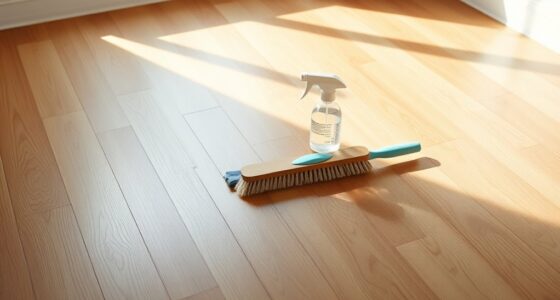
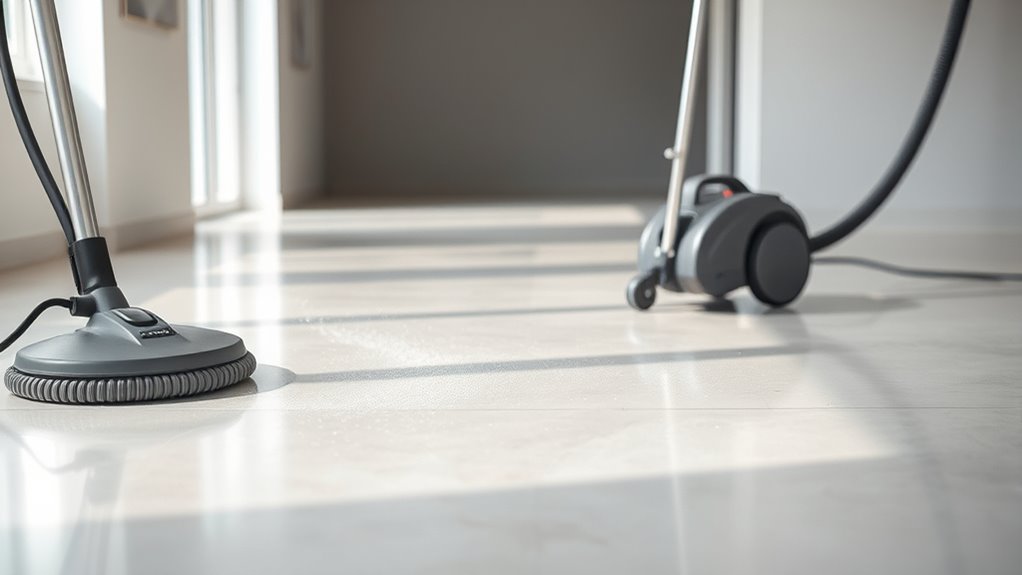
Routine cleaning is also essential. Use a microfiber mop or vacuum equipped with a HEPA filter to pick up dust without dispersing it into the air. Avoid sweeping with traditional brooms, which can stir up dust and spread it around. When cleaning, focus on gentle techniques that don’t disturb the sealed surface or release dust into the air. Incorporate air purification and sealing techniques into your regular cleaning schedule for maximum effectiveness.

Oreck Commercial Orbiter Hard Floor Cleaner Machine, Multi-Purpose Floor Cleaning, Random Orbital Drive, Wide Cleaning Path, 50-Foot Long Cord, ORB550MC, Gray/Red
MULTI-PURPOSE CLEANING: Commercial grade cleaner and effective on all types of flooring surfaces. Sand, refinish, strip, scrub, wax,...
As an affiliate, we earn on qualifying purchases.
Frequently Asked Questions
How Often Should I Perform Dust Control Maintenance on Polished Concrete?
You should perform dust control maintenance on polished concrete at least twice a week, depending on foot traffic and dust levels. Follow a consistent cleaning schedule, vacuum daily to remove surface dust effectively. Increase vacuum frequency during high-traffic periods or if you notice more dust accumulation. Regular maintenance prevents allergens and keeps your space safe and clean, ensuring your polished concrete stays in top condition and allergy-friendly.
Are There Eco-Friendly Dust Control Products Suitable for Allergy-Sensitive Environments?
Sure, eco-friendly alternatives exist that are perfect for allergy-safe environments. You can choose plant-based or low-VOC dust control products that effectively manage dust without compromising indoor air quality. These allergy-safe solutions are designed to be gentle yet effective, ensuring your space remains clean and healthy. So, go ahead—embrace environmentally conscious options that protect both your lungs and the planet, all while keeping dust at bay.
Can Dust Control Methods Impact the Durability of Polished Concrete Surfaces?
Dust control methods can impact the durability of your polished concrete if they alter surface porosity. Using sealants correctly helps maintain surface integrity and extend sealant longevity, ensuring dust stays sealed in. Overusing or applying incompatible products might weaken the surface, reducing its durability. To keep your polished concrete resilient, choose eco-friendly dust control solutions that suit the surface and follow proper sealing practices.
What Are the Signs That My Dust Control Routine Needs Adjustment?
Like a watchful guardian, you notice if air quality worsens or if dust begins settling despite your routine. If surfaces feel gritty or dust clouds appear during cleaning, it’s time to reassess. Maintenance indicators such as increased dust accumulation or lingering odors signal your dust control needs adjustment. Keep a close eye on these signs, ensuring your routine remains effective for a safer, healthier environment.
Is Professional Dust Control Necessary for Small-Scale Polished Concrete Areas?
If your polished concrete area is small, professional dust control isn’t always necessary. You can try DIY tips like using a damp mop regularly and sealing the surface to reduce dust. Budget options include applying a concrete sealant yourself or using a vacuum with a HEPA filter to clean dust effectively. These simple steps help maintain a clean, allergy-safe space without the need for professional services.

Bissell BigGreen BGFS5000 Portable Two Brush Floor Scrubber & Polisher, Polypropylene, 13"" W x 7"" D x 44"" H, White & Green
A small portable scrubbing machine that is perfect for cleaning brick, carpet, ceramic, concrete, cork, hard wood, laminate,...
As an affiliate, we earn on qualifying purchases.
Conclusion
By following these dust control tips, you can create a safer, allergy-friendly environment on your polished concrete floors. Imagine Sarah, a homeowner with allergies, who noticed her symptoms improve after regularly using a damp mop and air purifier. Small steps like these make a big difference, turning your space into a healthier zone. Keep up the routine, and you’ll enjoy cleaner air and a more comfortable home every day.

Bissell® SpinWave Hard Floor Expert Corded Spin Mop Cleaner with Washable mop Pads for Sealed Hard Floors, 20393
DEEP CLEANING WITHOUT SCRUBBING. Powerful corded spin mop with 100% machine-powered scrubbing pads—removes tough messes effortlessly.
As an affiliate, we earn on qualifying purchases.

Battery Powered Walk Behind Mini Automatic Floor Scrubber Machine – Compact & Portable, 15” Cleaning Width, 90-Minute Runtime, 170 RPM – Ideal for Small Commercial Spaces, Offices, Retail & More
Compact & Efficient Cleaning – Designed for small commercial spaces, this mini automatic floor scrubber features a 15-inch...
As an affiliate, we earn on qualifying purchases.