Before you mop your epoxy floors, start by removing loose dirt and debris with a soft microfiber broom or vacuum. Use gentle, non-abrasive tools like microfiber mops or cloths and avoid steel wool or abrasive scrub brushes. Sweep and inspect regularly, and only clean with a mild, pH-neutral solution. Proper preparation helps prevent scratches and keeps your floors looking their best—continue to explore effective tips for safeguarding your epoxy surface.
Key Takeaways
- Sweep or vacuum the floor thoroughly to remove loose dirt and debris before mopping.
- Use a damp microfiber mop with a mild cleaning solution to prevent scratching.
- Avoid abrasive scrub brushes or steel wool pads that can damage the epoxy surface.
- Inspect the floor regularly for debris or grit that may cause scratches during cleaning.
- Refrain from using harsh chemicals or acidic cleaners that can degrade the epoxy coating.

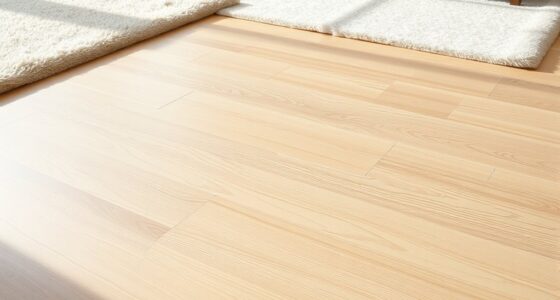
Scratches on epoxy floors can quickly diminish their sleek appearance and durability, but you don’t have to accept damage as inevitable. The key to maintaining that flawless, glossy surface lies in understanding how scratches happen and taking proactive steps to prevent them. One effective strategy involves applying protective coatings designed specifically for epoxy surfaces. These coatings create an extra layer of defense, making it harder for dirt, grit, and minor impacts to mar the finish. When you invest in high-quality protective coatings, you’re fundamentally giving your epoxy floor a shield that preserves its shine and integrity over time.
Applying protective coatings shields epoxy floors from scratches and preserves their shine over time
Before you start mopping, it’s vital to choose the right cleaning tools. Using the wrong tools can scratch your epoxy surface even when you’re trying to clean it. For example, avoid abrasive scrub brushes or steel wool pads, as their rough textures can scratch the epoxy. Instead, opt for soft microfiber mops or cloths that gently lift dirt without damaging the finish. Microfiber is especially effective because it traps dust and debris, preventing these particles from scratching the surface during cleaning. When paired with gentle cleaning solutions, these tools help you maintain your floor’s appearance without risking new scratches.
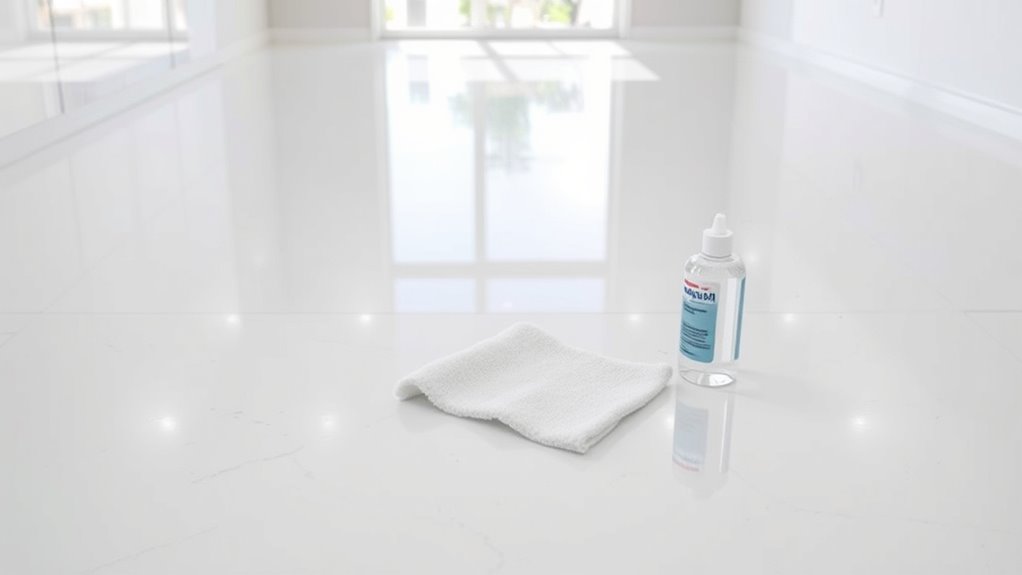
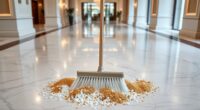
Regularly inspecting your epoxy floor allows you to catch grit or debris before they cause damage. Before mopping, sweep or vacuum the area thoroughly to remove loose dirt and particles. This step is vital, as dirt trapped under your cleaning tools can act like sandpaper, scratching the epoxy when you mop. Once the surface is free of debris, use a damp microfiber mop with a mild cleaning solution designed for epoxy floors. Avoid harsh chemicals or acidic cleaners that can degrade the protective coatings over time, making your floor more vulnerable to scratches.
If you notice scratches forming despite your precautions, consider reapplying a protective coating or using a touch-up epoxy kit. These products help fill in minor scratches and restore the smooth, glossy finish. Keep in mind that maintaining your epoxy floor isn’t just about cleaning but also about caring for it. Using appropriate cleaning tools, applying protective coatings, and avoiding abrasive materials will go a long way in preventing scratches. Remember, a little effort before mopping can save you from costly repairs down the line, ensuring your epoxy floors stay sleek and durable for years to come.

Microfiber Mops for Hardwood Floor Cleaning – BPAWA Flat Floor Mop with 4 Washable Pads for Laminate Wood Tile Vinyl Home Kitchen Bathroom – 59" Adjustable Handle
Microfiber Mops for Floor Cleaning: Flat floor mop with adjustable long handle, flexible lightweight but sturdy, great for…
As an affiliate, we earn on qualifying purchases.
As an affiliate, we earn on qualifying purchases.
Frequently Asked Questions
Can I Use Vinegar to Clean Epoxy Floors Without Causing Scratches?
Yes, you can use vinegar cleaning on epoxy floors without causing scratches, but you need to be cautious. Vinegar is safe for epoxy when diluted properly, as it’s gentle and won’t damage the surface. Always test a small area first to guarantee epoxy safety. Use a soft cloth or mop, avoid abrasive scrubbers, and don’t let vinegar sit too long. This way, you keep your epoxy floors clean and scratch-free.
How Often Should I Apply a Protective Coating to Prevent Scratches?
You should apply protective coatings every 12 to 18 months to maintain your epoxy floor’s durability. Establish a consistent maintenance schedule, including cleaning and inspecting for scratches or damage. Regularly reapplying protective coatings helps prevent scratches, keeps your floor looking fresh, and extends its lifespan. By sticking to this routine, you guarantee your epoxy surface remains resilient, smooth, and scratch-free, saving you time and costly repairs down the line.
Are There Specific Mop Types Best Suited for Epoxy Floors?
You should use a microfiber mop for epoxy floors, as its soft materials prevent scratches and trap dirt effectively. Avoid using harsh or abrasive mop materials like steel wool or stiff bristles. Clean your floors regularly—ideally once a week—based on your cleaning frequency needs. This helps maintain the epoxy’s shine and prevents dirt buildup that can cause scratches. Always choose a mop suited for delicate surfaces to protect your epoxy flooring.
What Are the Immediate Steps if I Notice a Scratch on My Epoxy Floor?
You might think scratches are inevitable, but proper preventive maintenance can minimize them. If you notice a scratch, act quickly with scratch repair by cleaning the area gently, then applying a compatible epoxy touch-up or polish. First, investigate whether the scratch is superficial or deep. Address it immediately to prevent further damage. Regular preventive maintenance keeps your epoxy floor looking pristine and reduces the need for extensive repairs later.
Do Environmental Factors Influence the Likelihood of Scratches on Epoxy Surfaces?
Environmental impact and surface contaminants definitely influence the likelihood of scratches on epoxy surfaces. If your environment has high levels of dust, dirt, or debris, these surface contaminants can cause scratches when you walk or move items across the floor. Climate factors like humidity and temperature fluctuations can also weaken the epoxy, making it more susceptible to scratches. Regular cleaning and sealing help protect your floor from these environmental factors.

Master Protective Coatings Epoxy Resin Coating for Floors & Counter Tops, 100% Solids, Self Leveling (Grey)
EPOXY FLOOR KIT: Designed to create a protective concrete epoxy coating, recover existing epoxy-finish flooring, or add some…
As an affiliate, we earn on qualifying purchases.
As an affiliate, we earn on qualifying purchases.
Conclusion
Now, as you mop your epoxy floors, remember that a simple extra step can save you from scratches down the line. It’s funny how a quick sweep or using the right pad can make all the difference—almost like those tiny coincidences that unexpectedly save the day. So next time, take a moment before you start cleaning; your floors will thank you with a flawless shine, and you’ll enjoy the peace of mind knowing scratches are kept at bay.

Coconix Tile & Stone Repair Kit | Fix Cracks, Chips, and Scratches on Bathtubs, Tile and Stone Floors, Walls, and Counters | Easy Application with Kneadable Putty
1 MILLION HAPPY CUSTOMERS: Trusted worldwide, our repair kits have helped over a million people restore their favorite…
As an affiliate, we earn on qualifying purchases.
As an affiliate, we earn on qualifying purchases.

The Tile Doctor Multipurpose Scrub Pad – Ideal for Bathroom, Kitchen & Floor Cleaning – Non-Scratch Dish Sponge & Shower Scrubber – Non Abrasive – (White – Light Duty, 6 Pack)
POWERFUL NO SCRATCH SCRUBBY: This non-abrasive scrub pad is a gentle yet effective dirt and grime remover for…
As an affiliate, we earn on qualifying purchases.
As an affiliate, we earn on qualifying purchases.