To calculate ROI for robotic cleaning, start by adding up your initial purchase and installation costs. Next, track ongoing expenses like maintenance and energy use. Measure efficiency improvements such as increased cleaning speed and reduced labor costs. Compare these savings over time to your overall investments to see how quickly the robots pay off. If you want to find out how to optimize these figures, keep exploring the key factors involved.
Key Takeaways
- Compare initial purchase and installation costs against projected savings from increased efficiency and reduced manual labor.
- Measure cleaning speed, area coverage, and energy use to quantify productivity gains and operational efficiency.
- Track long-term maintenance expenses and device durability to assess total cost of ownership and ROI.
- Analyze performance data over time to identify trends, cost reductions, and return on investment milestones.
- Consider long-term savings from reduced water, energy consumption, and fewer manual oversight requirements.
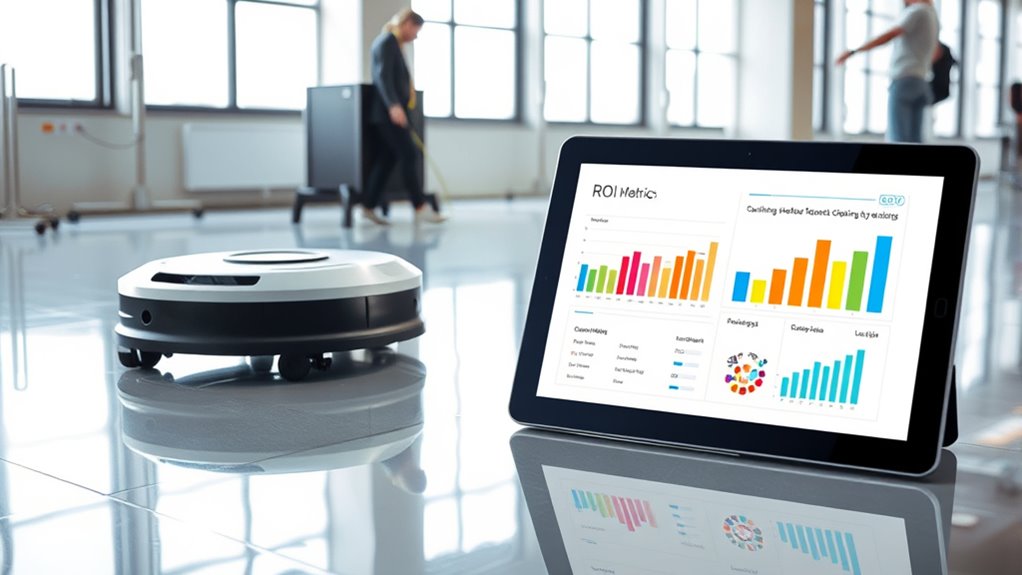
Have you ever wondered whether investing in robotic cleaning is truly cost-effective? When you’re weighing the decision, conducting a thorough cost analysis becomes essential. This process involves examining all expenses related to robotic cleaners, including the upfront purchase price, installation costs, maintenance, and potential savings over time. By carefully analyzing these costs, you can determine if the investment aligns with your budget and operational goals. But cost analysis alone isn’t enough; you also need to consider efficiency metrics to see how well these robots perform in real-world scenarios. Efficiency metrics help quantify the productivity gains you can expect, such as the amount of area cleaned per hour, energy consumption, and the robot’s ability to operate continuously without breaks. These metrics give you a clear picture of whether the device will streamline your cleaning processes and improve overall operational efficiency.
As you evaluate the robotic cleaning options, focus on how these efficiency metrics compare to traditional cleaning methods. For example, if a robot can clean more square footage in less time while using less water or energy, you’re likely to see cost savings in the long run. Keep in mind that initial costs might seem high, but the efficiency gains can offset these expenses over months or even years. It’s also important to analyze how consistently the robot performs across different environments and tasks. Consistent efficiency means fewer interruptions, less manual oversight, and better resource management—all critical factors when calculating return on investment. Additionally, understanding the performance of robotic cleaners can help you choose devices that are better suited for your specific needs.
To get a comprehensive view, you should track performance data over a defined period. This data can reveal trends, such as increased cleaning speed or reduced labor costs, which directly impact your ROI. For example, if a robotic cleaner reduces the need for manual labor by a certain percentage, those savings can be factored into your overall cost analysis. Additionally, consider the robot’s lifespan and maintenance requirements—these will influence your long-term costs and benefits. A device with higher durability and lower maintenance needs will generate better efficiency metrics and a more favorable ROI.
As an affiliate, we earn on qualifying purchases.
Frequently Asked Questions
How Long Does It Typically Take to See ROI From Robotic Cleaning?
You usually see ROI from robotic cleaning within 6 to 12 months. Your cost recovery depends on factors like cleaning frequency and labor savings. The investment timeline varies based on initial costs and ongoing expenses, but many businesses recoup their investment quickly by reducing labor costs and increasing efficiency. Keep track of your savings and maintenance costs to guarantee your ROI stays on course, helping you maximize your investment.
What Maintenance Costs Are Associated With Robotic Cleaning Systems?
You should budget for maintenance costs like battery replacements, which typically last 1-2 years, and regular software updates to keep your robotic cleaner running smoothly. An interesting fact is that over 60% of robotic cleaning system issues stem from battery degradation. Staying on top of these costs guarantees your investment remains efficient and effective, reducing downtime and extending the lifespan of your system.
Can Robotic Cleaning Adapt to Different Types of Surfaces Effectively?
Robotic cleaning systems excel at surface adaptability, allowing them to handle various surfaces like carpets, tiles, and hardwood floors effectively. You’ll notice improved cleaning efficiency because these robots adjust their settings automatically based on the surface they encounter. This flexibility guarantees thorough cleaning without the need for manual changes or multiple devices, making them a smart investment for diverse environments where maintaining cleanliness is essential.
How Do Labor Savings Compare Across Various Industries?
You’ll find that labor savings vary widely across industries, with manufacturing seeing up to 30% reductions due to industry-specific efficiency and technology integration. In retail, savings are around 20%, while in healthcare, they’re closer to 15%. These differences depend on how well robotic cleaning adapts to industry demands. By understanding these factors, you can better estimate ROI and tailor implementations to maximize cost benefits.
What Factors Influence the Variance in ROI for Robotic Cleaning?
You’ll find that ROI varies based on sensor accuracy and cleaning coverage. If sensors are precise, the robot cleans more efficiently, reducing labor costs and increasing ROI. Extensive cleaning coverage guarantees all areas are maintained without manual intervention, boosting savings. Factors like facility size, layout, and dirt levels also influence ROI. When these elements align well, your robotic cleaning system delivers a quicker return on investment.
Conclusion
By now, you see how robotic cleaning can boost efficiency and save costs. With clear ROI benefits, isn’t it time you considered making the switch? Imagine the extra time and resources you’ll gain, all while maintaining a spotless space. Don’t let hesitation hold you back—embrace the future of cleaning today. After all, why settle for less when smarter, more cost-effective solutions are at your fingertips?