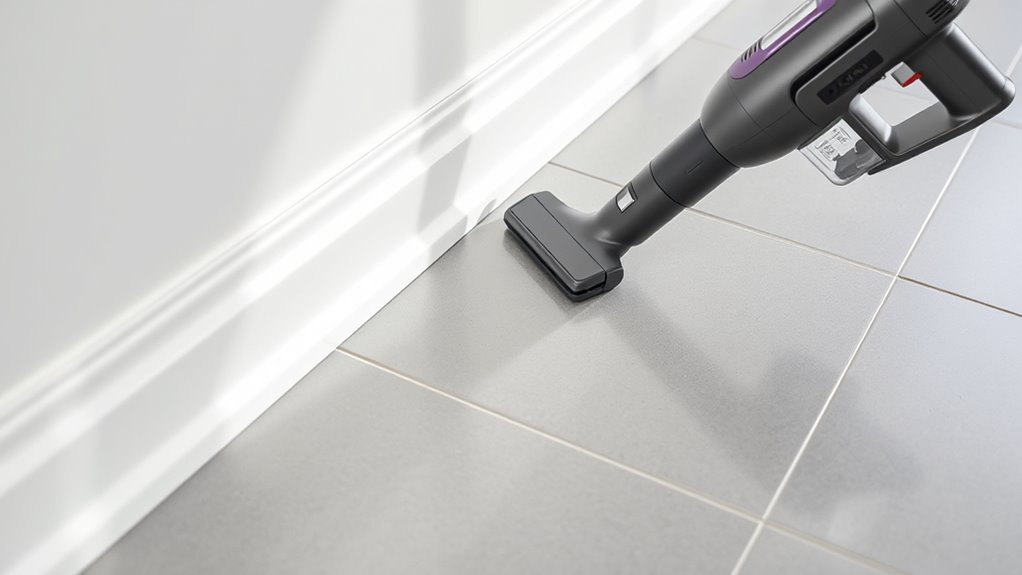
To effectively clean edges and baseboards on tile floors, make smart passes with a narrow crevice tool on your vacuum to reach tight spaces. Follow with a damp microfiber cloth or microfiber mop to trap dust and dirt without scratching surfaces. Use a detail brush or toothbrush for stubborn spots, and consider a steam cleaner for deep cleaning. Keep up with regular maintenance to prevent buildup—more tips await to help you master this task.
Key Takeaways
- Use angled brushes and detail vacuums with crevice tools for precise cleaning along tile edges and baseboards.
- Employ microfiber cloths dampened with cleaning solution to effectively wipe dirt and dust from corners and edges.
- Incorporate flexible grout scrapers or small brushes to loosen stubborn grime and mold in tight spaces.
- Schedule regular maintenance passes with robotic or handheld vacuums equipped with edge-cleaning attachments for efficiency.
- Seal gaps and cracks around baseboards to prevent dirt accumulation and mold growth along tile edges.
Identifying Common Areas of Dirt Accumulation Along Edges and Baseboards
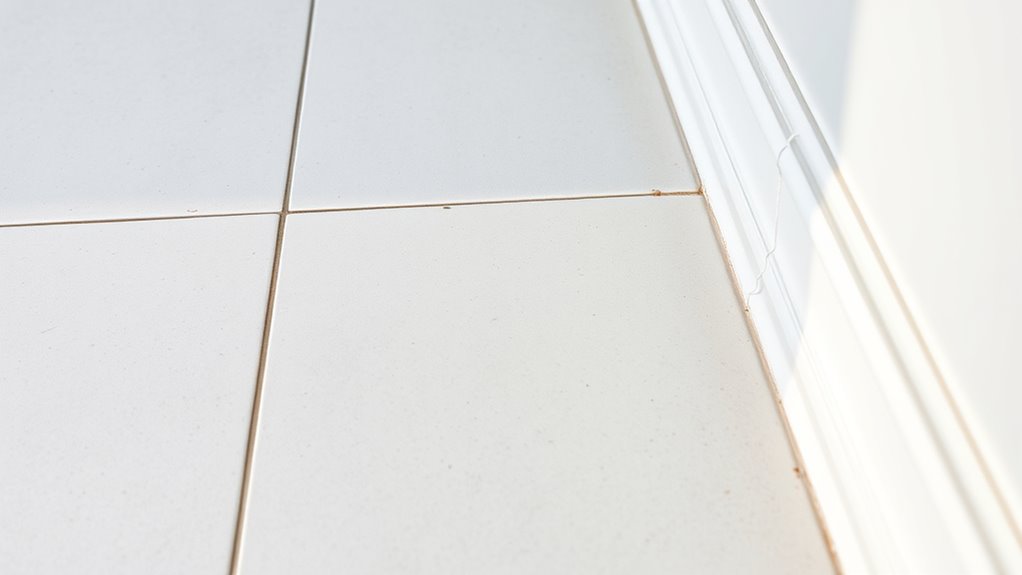
Edges and baseboards on tile floors tend to collect dirt and dust more than other areas because they’re less accessible during regular cleaning. You’ll notice debris, pet hair, and crumbs tend to gather there, creating a perfect environment for mold growth if moisture is present. These spots also serve as hiding places for pests like ants or spiders, making pest prevention essential. Regularly inspecting these edges helps you identify areas where dirt accumulates or mold might develop, especially in humid environments. By paying close attention to corners and along the baseboards, you can remove buildup before it causes damage or attracts pests. Keeping these areas clean not only enhances your floor’s appearance but also prevents long-term issues related to mold and unwanted pests.
Tools Designed for Precision Cleaning of Tile Edges
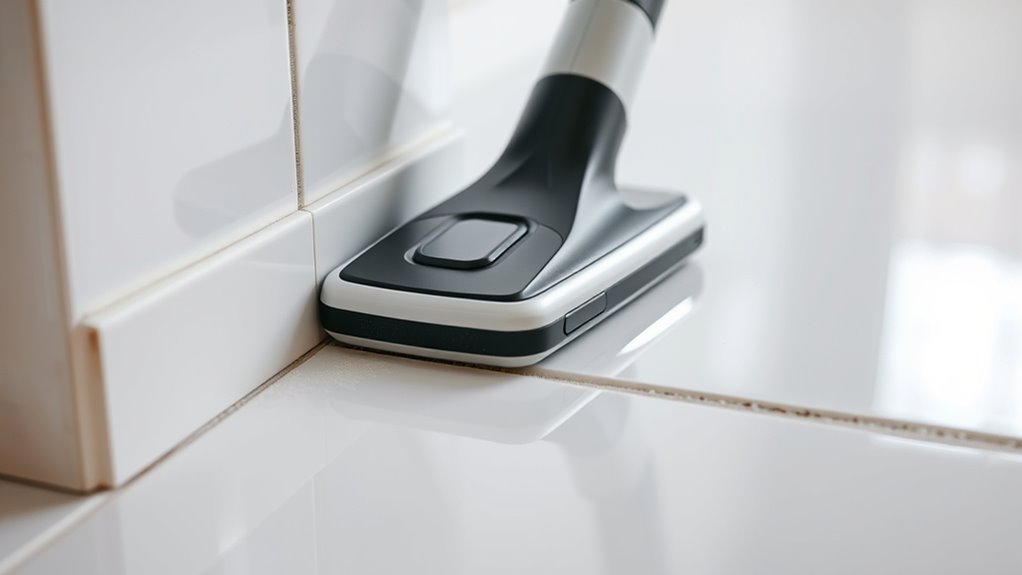
To effectively clean the narrow spaces along tile edges and baseboards, you need tools specifically designed for precision. These tools help you remove dust and dirt without damaging surfaces or disrupting tasks like edge sealing or baseboard painting. Precision cleaning tools include:
- Angled brushes that reach tight corners and along edges
- Detail vacuums with narrow nozzles for targeted suction
- Flexible grout scrapers for stubborn grime buildup
Using the right tools guarantees you maintain a clean appearance, especially when working around freshly sealed edges or freshly painted baseboards. Proper maintenance practices can prevent dirt buildup that may harbor bacteria or mold, ensuring a healthier environment. These tools help you achieve professional results, preventing dirt buildup that can compromise your finishing work. Investing in precision tools simplifies the task, making upkeep easier and extending the lifespan of your tile floors and trim.
Using a Damp Cloth or Microfiber for Effective Dust Removal
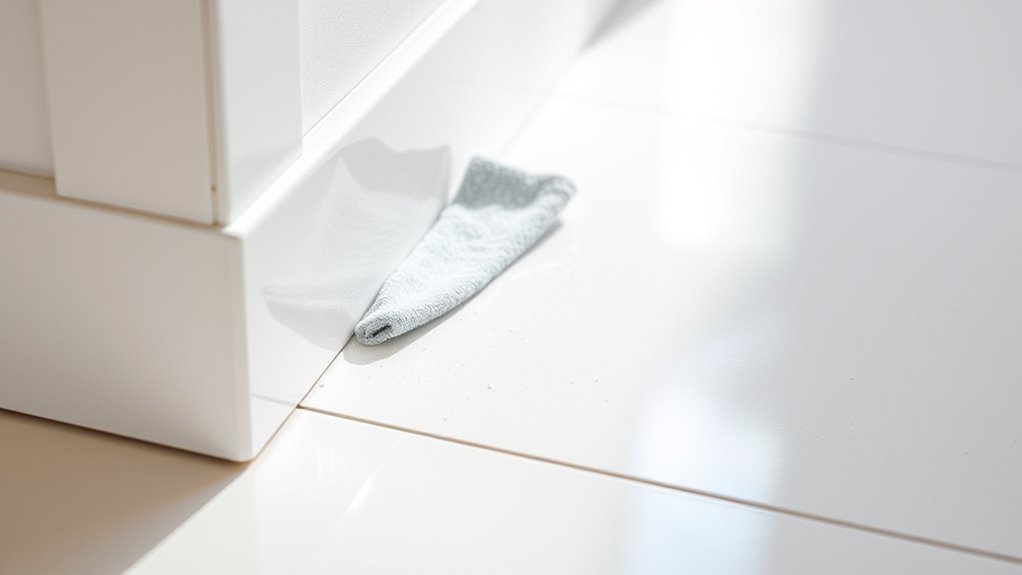
After using specialized tools for precision cleaning, switching to a damp cloth or microfiber is an effective way to remove lingering dust and dirt from tile edges and baseboards. This step enhances your dusting techniques by capturing particles that static or dry dusting might miss. Choose a clean, slightly damp cleaning cloth or a microfiber cloth designed for dust removal. Gently wipe along the edges and baseboards, applying just enough moisture to loosen dust without causing water damage. Microfiber cloths are especially effective because they trap dust particles efficiently. Remember to rinse and wring out your cloth regularly to prevent spreading dirt. Incorporating color accuracy into your cleaning routine can help ensure that the true details and hues of your flooring are visible after cleaning. This simple method ensures a thorough clean, leaving your tile edges and baseboards spotless and dust-free, with minimal effort.
Employing a Vacuum With a Crevice Tool for Narrow Spaces
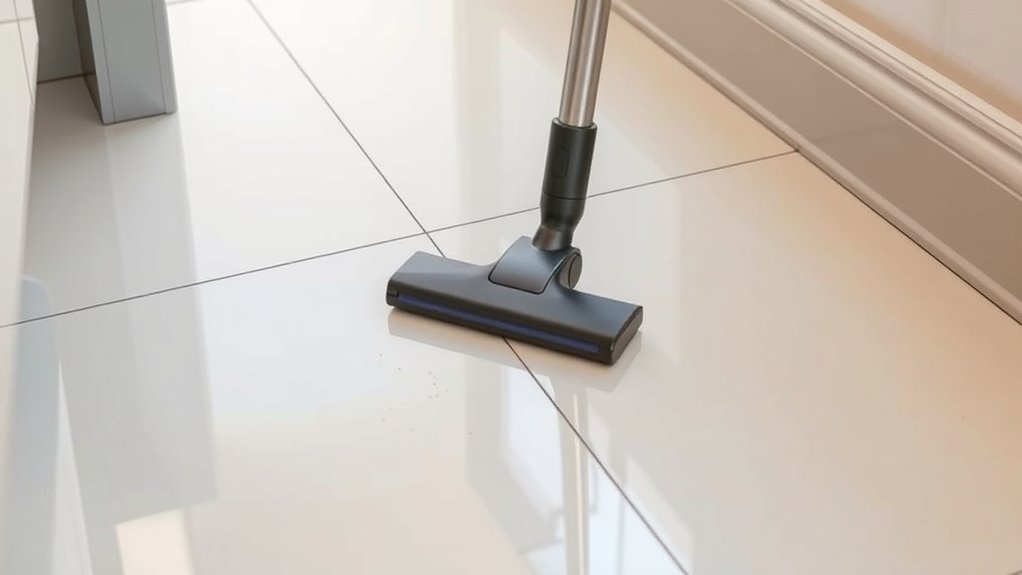
Using a vacuum with a crevice tool is one of the most efficient ways to clean narrow spaces around tile floors, especially along baseboards and tight corners. This attachment is designed for narrow cleaning, allowing you to reach areas that are difficult to access with standard heads. By using the right vacuum attachments, you can remove dust and debris without disturbing the surrounding tiles or furniture. It’s essential to keep the crevice tool clean for maximum suction. When employing it, move slowly to ensure thorough cleaning and avoid missing hidden dirt. Proper use of this tool not only improves cleanliness but also extends your vacuum’s lifespan by reducing the need for deep cleaning. Incorporating these tips to maximize the effectiveness of your narrow cleaning routine. Regular maintenance can also improve vacuum Tuning and ensure optimal performance over time.
- Choose attachments compatible with your vacuum model
- Maintain the crevice tool’s cleanliness regularly
- Use slow, deliberate motions for thorough cleaning
The Benefits of a Detail Brush or Toothbrush for Tough Spots

A detail brush or toothbrush is perfect for removing dirt from tight spots and corners. It helps you clean precisely where a larger tool might miss spots or spread dirt around. Using one makes tough spots on tile floors much easier to tidy up quickly and thoroughly. For those interested in customizing their cleaning tools, exploring tuning techniques can inspire innovative approaches to maintenance and care.
Precise Dirt Removal
When cleaning tile floors, stubborn dirt often hides in tight corners and along edges, making regular mops ineffective. To achieve thorough cleaning, a detail brush or toothbrush is essential for precise dirt removal. Use it for edge dusting to reach tricky spots and grout scrubbing to loosen embedded grime. This tool allows you to target stubborn spots without disturbing surrounding areas, ensuring a deep clean. For best results, apply gentle pressure and rotate the brush to dislodge dirt effectively. Incorporating these techniques into your routine can help prevent dirt buildup and improve overall cleanliness, maintaining a spotless appearance and prolonging the life of your grout and tiles.
Easy Corner Cleaning
Ever wonder how to effortlessly clean those hard-to-reach corners and tight spots on your tile floors? A detail brush or toothbrush makes corner dusting quick and effective. Use it to loosen dirt from grout lines and scrub away grime in tight spaces. This small tool helps you reach behind baseboards and into corners where a mop can’t. Regular corner dusting with a toothbrush keeps your grout polished and looking fresh. It also prevents dirt buildup that can stain or damage tiles over time. For best results, dip the brush in a cleaning solution and gently scrub along grout lines and edges. This simple step guarantees your floors stay spotless, and your grout remains bright and clean. Incorporating AI-powered cleaning tools can further optimize your floor maintenance routine.
How to Use a Steam Cleaner for Deep Cleaning Edges and Baseboards
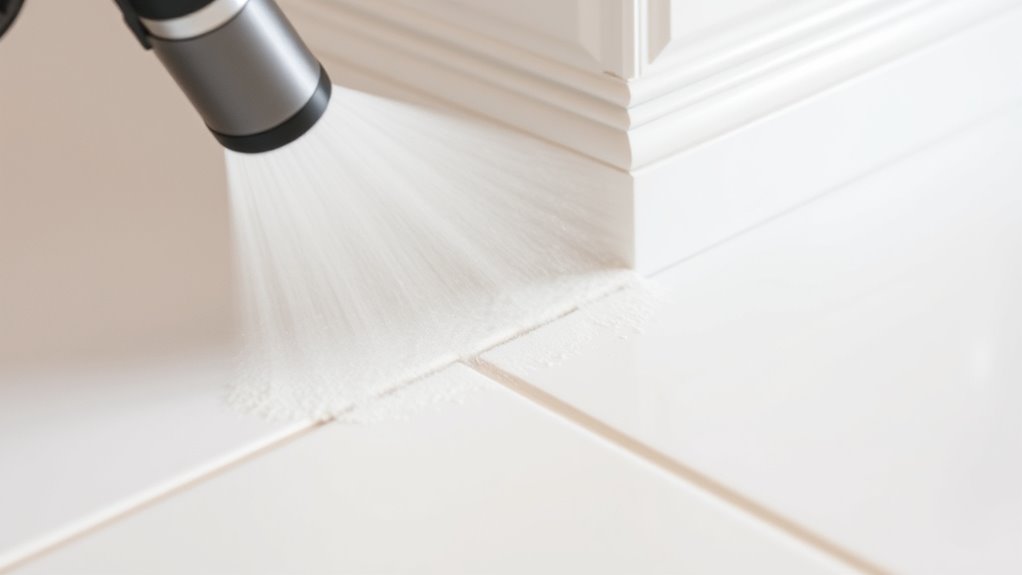
Using a steam cleaner is an effective way to deep clean edges and baseboards on tile floors, especially in hard-to-reach spots. It helps remove stubborn dirt, grime, and mold, supporting proper edge maintenance. To achieve ideal results, hold the steam nozzle close but not directly against the surface, allowing the steam to loosen dirt without damage. Use a microfiber cloth or brush attachment for scrubbing stubborn areas. Regular steam cleaning not only keeps your baseboards looking fresh but also reduces the need for frequent repainting. Consider these tips for the best outcome:
- Adjust the steam pressure for delicate or stubborn spots
- Keep the nozzle moving to prevent surface damage
- Use a soft brush for detailed edge cleaning
- Ensuring proper air quality can enhance the effectiveness of cleaning routines and prevent the buildup of pollutants that might compromise your indoor environment.
Tips for Maintaining Cleanliness Between Regular Sweeps
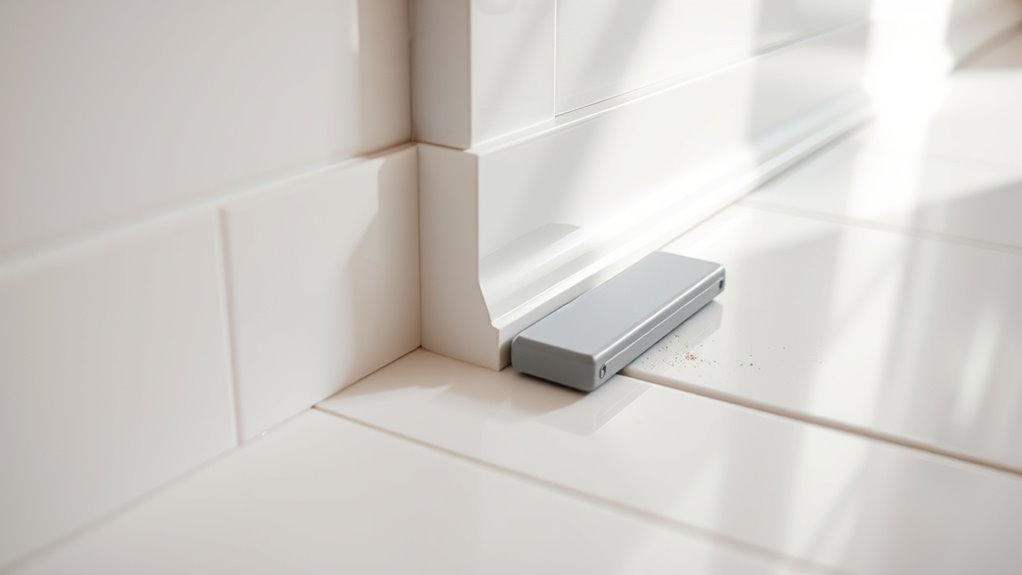
Maintaining cleanliness between regular sweeps requires consistent effort and simple habits. To prevent buildup of edge dust and baseboard grime, wipe down these areas weekly with a microfiber cloth. Use a small brush or vacuum attachment to dislodge dirt from corners and along baseboards. Pay special attention to the edges of tiles, where dust tends to settle unnoticed. Spot clean any spots or stains immediately to prevent dirt from settling deeper. Regularly dust with a damp cloth to keep grime from accumulating. Keep a hand-held vacuum handy for quick cleanups, especially in high-traffic areas. Incorporating proper cleaning techniques can further enhance the effectiveness of your maintenance routine. By staying proactive, you’ll prevent dirt from becoming stubborn, making your regular sweeping more effective and keeping your tile floors and baseboards looking fresh.
Best Practices for Preventing Dirt Buildup in Hard-to-Reach Areas
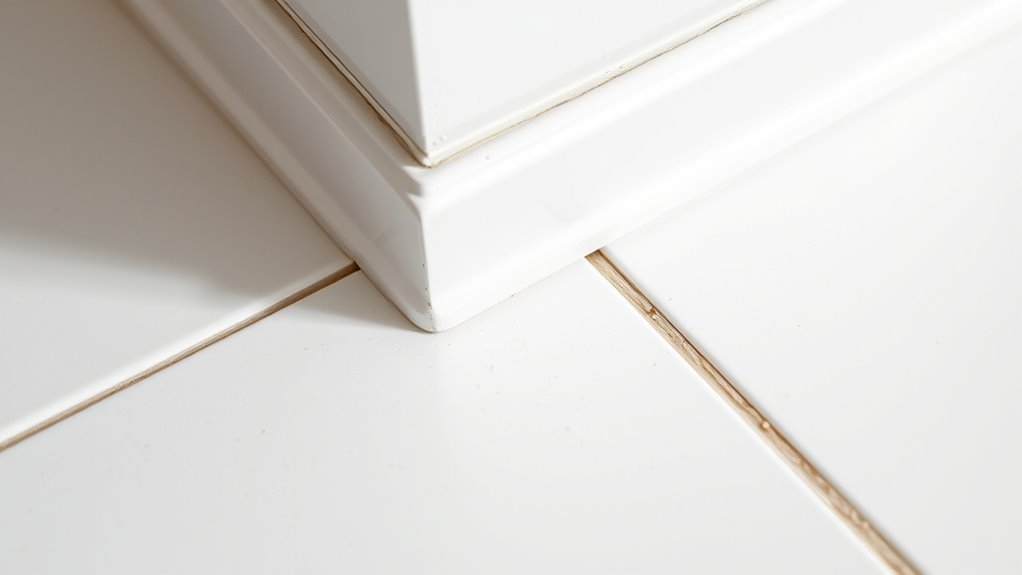
Hard-to-reach areas like behind appliances, under cabinets, and along baseboards often gather dust and debris despite regular cleaning. To prevent dirt trapping and mold buildup, implement targeted strategies. Regularly inspect these spaces and use tools like long-handled duster extensions or vacuum attachments to reach tight spots. Seal gaps and cracks to minimize entry points for dirt and moisture, reducing mold risk. Keep humidity levels low with dehumidifiers or proper ventilation to inhibit mold growth. Additionally, consider applying mold-resistant paint or sealants in vulnerable areas. Maintaining consistent cleaning routines and addressing moisture issues promptly are key. Advances in AI technology and continuous monitoring can also help identify problem areas early. By staying proactive and using these best practices, you’ll keep these hidden spots clean, dry, and free of mold, ensuring your floors remain pristine and healthy.
Creative DIY Solutions for Edge and Baseboard Maintenance

Looking for easy ways to keep your edges and baseboards spotless? You can try simple DIY hacks like using an old toothbrush for tight spots or creating custom touch-up paint. These creative solutions make maintenance quick and affordable, giving your space a fresh look without much effort. Incorporating grocery savings strategies can also help you allocate funds toward home improvement projects, ensuring you have the resources to maintain a clean and attractive space.
DIY Edge Cleaning Hacks
Cleaning the edges and baseboards along your tile floors doesn’t have to be an intimidating task. With simple DIY hacks, you can make edge cleaning more efficient and even prevent future issues. For example, applying edge sealing can help keep dirt and grime from settling into corners, making cleaning easier over time. You can also refresh your space with a quick coat of baseboard paint, which brightens and protects surfaces. To tackle stubborn dust and debris, try using a toothbrush or small brush dipped in a cleaning solution for targeted scrubbing. Additionally, attaching a microfiber cloth to a flexible tool or broom can reach tight corners effortlessly. These easy solutions not only improve cleanliness but also extend the life of your baseboards and edges.
Creative Baseboard Fixes
Ever wonder how to fix damaged or chipped baseboards without replacing them entirely? You can get creative with simple DIY solutions that enhance your space. For instance, adding decorative edge decoration can hide imperfections and elevate your baseboard installation. Consider using caulk or wood filler for minor chips, then paint over for a seamless look. For larger damages, try attaching a thin strip of molding or decorative trim to cover the flaw. Imagine these options:
| Damaged Baseboard | Creative Fix |
|---|---|
| Chips or cracks | Fill with wood filler, then paint |
| Missing sections | Attach decorative trim or molding |
| Dull or outdated | Refinish or add edge decoration for style |
These fixes make your baseboards look intentionally stylish and well-maintained.
Frequently Asked Questions
How Often Should I Clean the Edges and Baseboards on Tile Floors?
You should clean your edges and baseboards on tile floors every 1-2 weeks. Over time, dirt accumulation can turn into a real mess if ignored—so don’t let it pile up. Regular cleaning keeps them looking fresh and prevents grime from settling in. Use a soft brush or microfiber cloth to reach into corners and along the baseboards, making sure you stay ahead of the dirt before it becomes a bigger chore.
Can I Use Chemical Cleaners on Tile Edges and Baseboards Safely?
Yes, you can use chemical cleaners on tile edges and baseboards safely if you choose the right cleaning solutions. Always check for chemical safety by reading labels and opting for mild, non-abrasive products. Test a small area first to avoid damage. Avoid harsh chemicals that might discolor or harm the surface. Proper ventilation during cleaning and rinsing thoroughly will guarantee safe, effective cleaning of your tile edges and baseboards.
Are There Eco-Friendly Tools Suitable for Edge and Baseboard Cleaning?
Yes, you can find eco-friendly tools perfect for cleaning edges and baseboards, making sustainable cleaning easy. Using bamboo scrub brushes or microfiber cloths reduces plastic waste and chemicals, protecting your home and the environment. These tools are gentle yet effective, helping you maintain a clean space without compromising sustainability. Embrace eco-friendly tools for a safer, greener cleaning routine that keeps your tile edges spotless and supports eco-conscious living.
What Are the Signs Indicating My Baseboards Need Replacement Instead of Cleaning?
If your baseboards show signs like discoloration that won’t clean off or cracks that worsen over time, it’s probably time to replace them. Discoloration indicates significant staining or damage, while cracked baseboards can weaken and pose a safety risk. You should consider replacement when cleaning no longer restores their appearance or if structural issues develop, ensuring your space looks fresh and stays safe.
How Can I Prevent Future Dirt Buildup Along Tile Edges and Baseboards?
You can prevent future dirt buildup along tile edges and baseboards by practicing regular dust prevention. Use a microfiber cloth or vacuum with a brush attachment to remove dust and debris frequently. Applying a sealant to the baseboards and grout lines creates a barrier that prevents dirt from settling in. This simple routine keeps your tile edges cleaner longer and reduces the need for deep cleaning or replacements.
Conclusion
Think of your tile edges and baseboards as the corners of a treasure map—easy to overlook but essential for a flawless finish. When you use the right tools and techniques, cleaning becomes a simple treasure hunt instead of a chore. Just like uncovering hidden gems, maintaining these spots keeps your space bright and fresh. With regular care, you’ll turn your home into a sparkling masterpiece, where every detail shines as brightly as the rest.