When the floor is shiny or reflective, your cleaning robot’s sensors can get confused. Bright surfaces bounce light, making sensors think there are obstacles or dirt where there are none. This can cause it to avoid certain areas or miss spots altogether. The reflectivity can also interfere with mapping, leading to inefficient cleaning. Understanding how surface glare affects your robot can help you improve its performance—if you want to learn more, keep exploring the details.

Get cleaning gear delivered free with Prime
- Fast, free delivery on millions of items
- Prime Video, Amazon Music and more included
- Member-only deals all year
Key Takeaways
- High reflectivity causes surface glare, confusing sensors and leading to misinterpretation of obstacles and dirt.
- Glossy floors produce bright reflections that mimic debris, resulting in false dirt detection.
- Reflective surfaces interfere with optical sensors, causing inaccurate mapping and navigation errors.
- Increased surface glare on polished floors reduces the robot’s ability to distinguish obstacles and dirt.
- Matte or textured surfaces diffuse light, minimizing glare and improving sensor accuracy and cleaning efficiency.
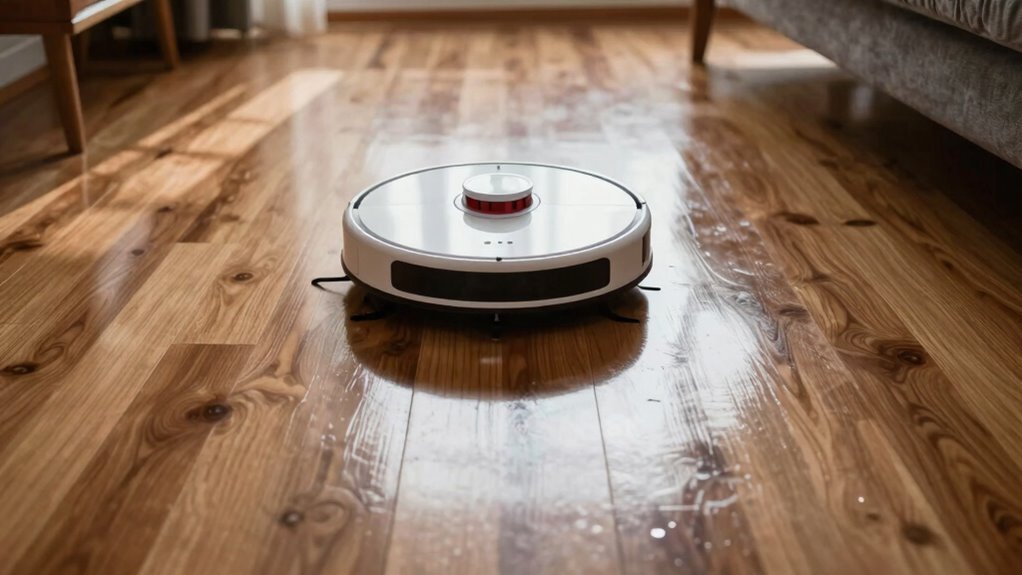
Floor reflectivity plays a crucial role in the effectiveness of cleaning robots, as it directly impacts their ability to navigate and detect dirt. When the floor’s surface reflects too much light, it creates surface glare, which can confuse the robot’s sensors. This glare can cause the robot to misjudge distances or lose track of its position, making cleaning less efficient. Conversely, a dull or matte surface might absorb light, but too much reflectivity can interfere with the robot’s visual and lidar sensors. As a result, the robot may struggle to differentiate between actual dirt and reflections, leading to missed spots or unnecessary cleaning cycles.
High floor reflectivity can confuse cleaning robots, causing missed spots and inefficient navigation.
Material detection is another essential aspect affected by floor reflectivity. Many cleaning robots rely on optical sensors or light-based detection systems to identify dirt, obstacles, and boundaries. When the surface is highly reflective, these sensors can mistakenly interpret reflections as obstacles or dirt, prompting the robot to change course unnecessarily or perform redundant cleaning passes. For example, a shiny tile floor might produce bright reflections that look like patches of dirt to the robot’s sensors, distracting it from actual debris. This misinterpretation hampers the robot’s ability to efficiently map your space and prioritize cleaning areas.
Surface glare not only impacts detection but also influences navigation. Cleaning robots often use a combination of sensors, including cameras and lidar, to create a map of your home. When glare is intense, the sensors can produce false readings, leading the robot to believe there are obstacles where none exist or to overlook real obstacles. This misreading can cause the robot to bump into furniture or avoid certain areas altogether. Over time, consistent glare-related confusion can reduce the robot’s overall cleaning effectiveness and increase its operational time as it repeatedly tries to navigate around perceived obstacles.
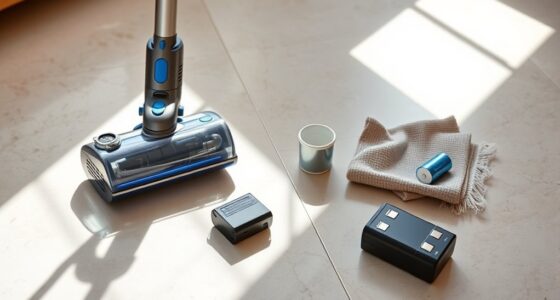
The material of your flooring plays a big role in how much glare it produces. Glossy surfaces like polished hardwood, ceramic tiles, or marble tend to reflect more light, creating challenges for the robot’s sensors. On the other hand, matte or textured surfaces diffuse light, reducing glare and making it easier for the robot to accurately detect dirt and understand its surroundings. If you notice your cleaning robot getting confused or missing spots, consider the type of flooring you have and whether it contributes to problematic surface glare. Sometimes, simple adjustments like adding rugs or using matte floor finishes can improve the robot’s performance considerably by reducing surface glare and enhancing material detection. Additionally, understanding the sensor limitations of your cleaning robot can help you make better decisions about optimizing your flooring for improved performance.
matte finish floor mats for cleaning robots
As an affiliate, we earn on qualifying purchases.
As an affiliate, we earn on qualifying purchases.
Frequently Asked Questions
How Does Floor Reflectivity Affect Robot Navigation Accuracy?
Floor reflectivity affects your robot’s navigation accuracy because high reflectivity can disrupt sensor calibration, causing it to misinterpret surface data. When the surface texture is shiny or smooth, sensors may falsely perceive obstacles or open spaces, leading to navigation errors. To improve performance, verify your robot’s sensors are properly calibrated for different surface textures, and consider using mats or coatings that reduce reflectivity for more consistent navigation.
Can Reflective Floors Cause False Obstacle Detection?
Yes, reflective floors can cause false obstacle detection because mirror glare and optical illusions trick your cleaning robot’s sensors. The shiny surface reflects light and nearby objects, making it seem like there’s an obstacle where there isn’t one. This confusion can lead to unnecessary stops or navigation errors. To minimize this, you might consider using mats or choosing floors with less reflectivity to help your robot clean more efficiently.
Do Cleaning Robots Have Settings to Adjust for Reflectivity?
Think of your cleaning robot like a painter adjusting their palette. Many models do have settings for sensor calibration, allowing you to tweak for surface textures and reflectivity. For example, you can often select floor types or manually calibrate sensors to prevent false obstacle detection caused by shiny floors. This guarantees your robot accurately navigates, even on reflective surfaces, making cleaning more efficient and less frustrating.
How Can Owners Improve Robot Performance on Reflective Surfaces?
To improve your robot’s performance on reflective surfaces, start with sensor calibration to guarantee accurate readings. You can also enhance surface texture by placing a non-reflective mat or rug in problematic areas, reducing glare and making the surface easier for the robot to navigate. Regularly clean sensors and keep the floor free of dust, which helps maintain ideal sensor function and prevents confusion caused by high reflectivity.
Are Certain Floor Materials More Problematic for Robots?
You’ll find smooth, glossy surfaces like polished tile or glass more problematic than textured or matte floors. The reason? Surface texture and material composition influence how robots perceive their environment. Shiny, reflective materials create confusing reflections and false obstacles, making navigation tricky. In contrast, rougher or matte materials reflect less light and provide better visual cues, helping your robot clean more effectively without getting sidetracked by misleading reflections.
Conclusion
As you watch your cleaning robot glide across the shiny, mirror-like floor, you realize how its reflection can play tricks on its sensors. The glossy surface might seem like open space, confusing its navigation. Imagine the frustration it feels, chasing after false signals, your home’s beauty shimmering around it. By understanding this, you can help your robot see clearly—smoothing the surface and restoring peace to your sparkling sanctuary.
Halloween Picks
halloween
As an affiliate, we earn on qualifying purchases.