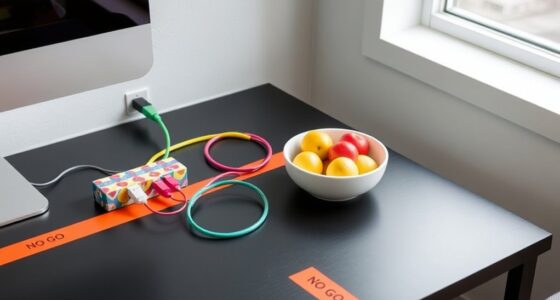
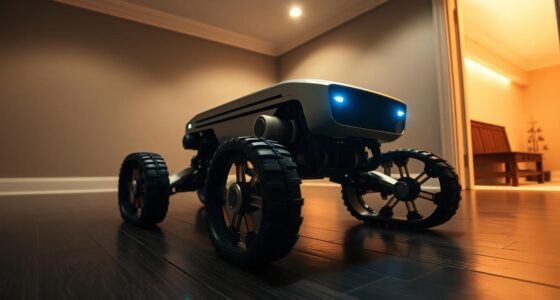
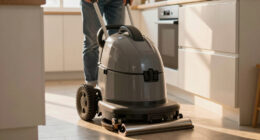
To prepare floors and facilities for robots, you should confirm surfaces are smooth, level, and free of clutter. Install clear markings or pathways to guide navigation and mark fixtures properly. Regularly calibrate sensors like lidar and cameras to maintain accuracy, especially after changes or maintenance. Keep lighting consistent and manage environment factors such as spills or obstacles. Taking these steps will help your robots operate smoothly, and there’s more to discover for achieving ideal setup.
Key Takeaways
- Ensure floors are smooth, level, and free of debris to improve robot navigation and sensor accuracy.
- Mark pathways with high-contrast lines or visual cues to guide robot movement effectively.
- Conduct regular sensor calibration and maintenance after environment changes or repairs.
- Remove obstacles, loose cables, and spills to prevent sensor confusion and accidents.
- Maintain consistent lighting conditions for optical sensors and install visual markers to enhance detection.

Preparing floors and facilities for robots is essential to guarantee smooth operation and longevity of your robotic systems. When you set up an environment optimized for robotics, you’re ensuring that sensors function correctly and that robots can navigate effectively. One of the most critical aspects is sensor calibration. Proper calibration of sensors, such as lidar, cameras, and proximity detectors, allows your robots to perceive their surroundings accurately. Misaligned or uncalibrated sensors can lead to errors in obstacle detection, causing your robots to misjudge distances or overlook hazards altogether. Regularly calibrate sensors to maintain their precision, especially after relocating robots or performing maintenance, to prevent drift and guarantee that obstacle detection remains reliable.
Obstacle detection is another crucial element in preparing your floors and facilities. Your robots rely heavily on obstacle detection systems to navigate safely and efficiently. To facilitate this, you should guarantee that the environment is free of unnecessary clutter and that any permanent fixtures are mapped and marked appropriately. Sharp changes in floor texture or unexpected objects can confuse obstacle detection sensors, leading to false positives or missed obstacles. Conduct routine inspections to identify and eliminate potential hazards, like loose cables, spilled liquids, or uneven surfaces that could trip up sensors. Additionally, installing visual markers or beacons can enhance obstacle detection in complex environments, giving your robots clearer cues to interpret.
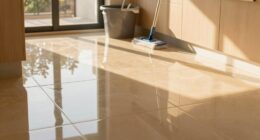
Surface conditions play a significant role in robotic performance. Smooth, even floors reduce the risk of wheel slippage or misalignment, which can impair sensor readings and navigation. If your facility has textured or uneven surfaces, consider applying coatings or leveling treatments to create a more consistent surface. Marking designated pathways with clear, contrasting lines helps robots distinguish navigable areas from obstacles, boosting the effectiveness of their obstacle detection algorithms. Furthermore, guarantee that lighting conditions are stable; inconsistent or overly bright lighting can interfere with optical sensors, so installing dedicated lighting or shading can help maintain sensor accuracy.
Finally, it’s crucial to develop a routine maintenance schedule that includes sensor checks and calibration updates. This proactive approach prevents unexpected failures and guarantees your robots operate at peak efficiency. Train staff to recognize signs of sensor degradation or calibration drift, and establish protocols for quick adjustments. By maintaining a meticulously prepared environment and emphasizing sensor calibration and obstacle detection, you create a setting where your robotic systems can perform reliably, safely, and for an extended period. This not only boosts productivity but also reduces downtime and costly repairs, making your robotic operations seamless and sustainable over time.

Bissell BigGreen BGFS5000 Portable Two Brush Floor Scrubber & Polisher, Polypropylene, 13"" W x 7"" D x 44"" H, White & Green
A small portable scrubbing machine that is perfect for cleaning brick, carpet, ceramic, concrete, cork, hard wood, laminate,...
As an affiliate, we earn on qualifying purchases.
Frequently Asked Questions
How Often Should Floor Surfaces Be Inspected for Robot Deployment?
You should inspect floor surfaces regularly, ideally weekly, to guarantee smooth robot deployment. Check for floor wear that might cause navigation issues and debris accumulation that can obstruct sensors or wheels. Frequent inspections help you catch problems early, maintaining ideal robot performance and safety. Addressing these issues promptly prevents delays and reduces maintenance costs, ensuring your robots operate efficiently and safely in your facility.
What Are the Best Practices for Managing Electromagnetic Interference?
Electromagnetic interference can cripple your robot operations faster than a lightning strike! To manage it effectively, you should employ robust electromagnetic shielding around sensitive equipment and cables. Regularly evaluate and update interference mitigation strategies, such as grounding techniques and filtering devices. Keep your environment free from unnecessary electronic noise, and guarantee all systems adhere to electromagnetic compatibility standards. These best practices will keep your robots running smoothly and prevent costly disruptions.
How Can I Optimize Lighting for Robot Sensors?
To optimize lighting for robot sensors, you should focus on ensuring lighting uniformity to prevent sensor misreads. Regular sensor calibration helps maintain accuracy, especially under changing lighting conditions. Avoid shadows and glare by using diffused, even lighting throughout the area. Adjust the lighting intensity to match sensor requirements, and monitor conditions regularly to keep sensor performance consistent, ensuring your robots operate efficiently and reliably.
Are Specific Cleaning Agents Recommended for Robot-Friendly Floors?
Imagine you’re stepping into a future where robot-friendly floors make cleaning effortless. You should use robot-safe detergents that are eco-friendly, ensuring your floors are safe for automation. These specialized cleaning agents prevent sensor interference and keep surfaces free of residues that could hinder robot navigation. By choosing environmentally conscious options, you protect the environment and maintain a smooth, robot-friendly environment, making your facility both sustainable and efficient.
How Do Floor Conditions Affect Robot Maintenance Schedules?
Floor conditions directly impact your robot’s maintenance schedule. If the floor’s traction is poor, your robot may struggle to move smoothly, increasing wear and tear. Debris accumulation can clog sensors and motors, leading to more frequent breakdowns. Regularly cleaning and maintaining ideal traction helps reduce maintenance needs and extends your robot’s lifespan, ensuring it operates efficiently and requires less downtime. Keep floors clean and traction high for best results.

SetSail Floor Scrub Brush with 51-Inch Long Adjustable Handle 2 in 1 Scrape Brush Stiff Bristle Floor Scrubber for Cleaning Shower Bathroom Garage Kitchen Wall Deck Tub Tile
2-IN-1 SCRUB BRUSH: Scrub brush and scraper integrated design, you can clean the floor with the brush, then...
As an affiliate, we earn on qualifying purchases.
Conclusion
Now that you’ve set the stage for your robots, remember, a smooth floor and clear pathways are your best allies—like a well-oiled machine from the days of steam power. Keep the area tidy, avoid obstructions, and regularly maintain the surfaces. Think of it as preparing your own personal Iron Man suit; every detail counts. With these simple steps, your facility will be robot-ready, ensuring efficiency and safety in this brave new world.

Battery Powered Walk Behind Mini Automatic Floor Scrubber Machine – Compact & Portable, 15” Cleaning Width, 90-Minute Runtime, 170 RPM – Ideal for Small Commercial Spaces, Offices, Retail & More
Compact & Efficient Cleaning – Designed for small commercial spaces, this mini automatic floor scrubber features a 15-inch...
As an affiliate, we earn on qualifying purchases.

HHQ Commercial Floor Scrubber Machine with Brushes and Pads, Heavy Duty Floor Cleaner Polisher and Buffer- Deep Cleaning Tile and Grout, Hardwood Floors and Carpets without Getting on Hands and Knees
Kit Included: 1 Orbital Floor Buffer & Scrubber Machine, 2 Polishing/ Stripping Pads, 3 Scrub Brushes, 1 Microfiber...
As an affiliate, we earn on qualifying purchases.