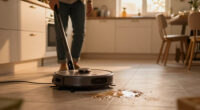
Robots detect spills and dry debris differently to guarantee effective cleaning. They use moisture sensors and advanced algorithms to quickly identify liquid messes, prompting them to switch to mopping or scrubbing modes. For dry debris, they rely on obstacle avoidance and vacuuming or sweeping techniques. The navigation adjusts to prevent spreading spills while thoroughly covering areas with debris. To discover how these strategies work in harmony, stay tuned for more insights into robot cleaning technologies.

Get cleaning gear delivered free with Prime
- Fast, free delivery on millions of items
- Prime Video, Amazon Music and more included
- Member-only deals all year
Key Takeaways
- Robots detect spills with moisture sensors, triggering liquid-specific cleaning modes like mopping or scrubbing.
- Dry debris is identified and vacuumed or swept using obstacle avoidance and optimized path algorithms.
- Spills require careful handling to prevent spreading, prompting slower movement and targeted cleaning actions.
- Dry debris cleaning emphasizes area coverage with minimal moisture, focusing on obstacle avoidance.
- Robots switch seamlessly between cleaning modes based on mess type, enhancing efficiency and effectiveness.
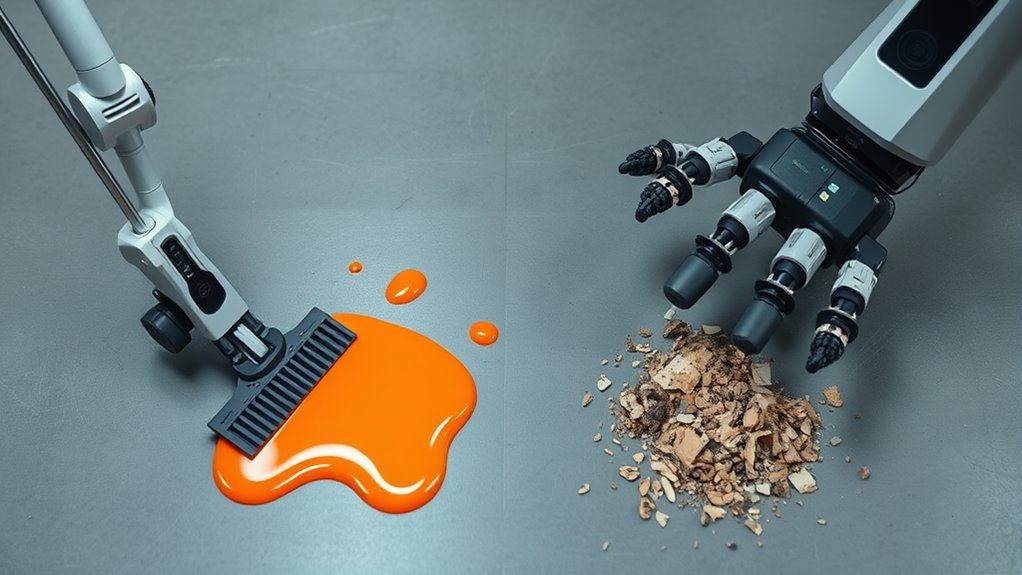
Robots are increasingly becoming essential for cleaning tasks, but they handle spills differently from dry debris due to the nature of the mess. When you’re relying on a robot to keep your space tidy, understanding how it navigates and adapts to different types of messes can make a big difference in cleaning efficiency. For spills, the robot must detect liquid presence quickly and adjust its cleaning approach. Unlike dry debris, which can often be swept or vacuumed up easily, liquids require specialized sensors and algorithms to prevent spreading and damage. The robot’s navigation system becomes *vital* here, guiding it around the spill carefully to avoid over-application of cleaning agents or causing further mess. Advanced cleaning algorithms help the robot distinguish between dry and wet surfaces, enabling it to switch between modes seamlessly.
The robot’s sensors play a key role in identifying spills. Optical and capacitive sensors detect moisture or liquid on the surface, alerting the robot to the presence of a spill. Once detected, the robot may slow down or change its path to focus on the affected area. This behavior is driven by sophisticated cleaning algorithms designed to prioritize the spill area, ensuring thorough cleaning without missing spots. These algorithms also help the robot decide whether to use mopping, scrubbing, or other liquid-cleaning techniques. For example, a small spill might be handled with a quick mop, while larger or more stubborn stains could trigger a more aggressive cleaning approach. Additionally, understanding the different cleaning modes helps the robot efficiently adapt to various messes, improving overall performance.
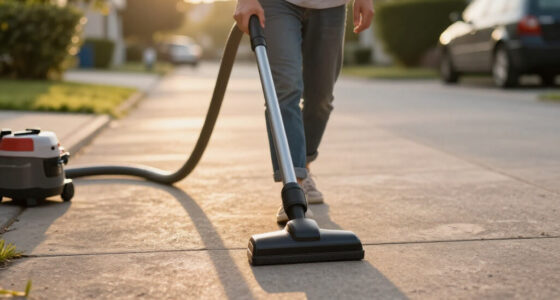
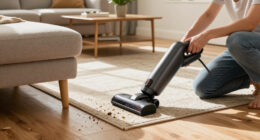
Handling dry debris involves a different set of challenges. Robots equipped for dry cleaning rely heavily on their navigation systems to map out the space and avoid obstacles, ensuring they cover every inch efficiently. Their algorithms optimize the cleaning path, reducing missed spots and unnecessary overlaps. They often incorporate boundary sensors and virtual walls to keep debris from spreading into areas where it’s not wanted. Dry debris is straightforward for these systems; they simply vacuum or sweep it up, with less concern about spreading or residual moisture.
Products Worth Considering

Philips Hue Smart Light Starter Kit with Bridge and 4 White and Color A19 Bulbs

Dyson Airwrap i.d. Multi-Styler

Dyson Airstrait Styling Brush
As an affiliate, we earn on qualifying purchases.
Frequently Asked Questions
How Do Robots Detect Different Types of Debris?
Robots detect different types of debris through advanced sensor calibration and debris classification techniques. You’ll find sensors that analyze debris based on size, texture, and material properties, enabling accurate identification. By calibrating sensors regularly, robots improve detection precision. They then classify debris as dry or spill-related, allowing tailored cleaning approaches. This combination guarantees efficient debris removal, whether handling liquids or dry waste, making robots versatile in maintaining cleanliness.
Are There Specific Sensors for Liquid Versus Dry Waste?
You’ll find that robots use specialized sensors for liquid versus dry waste, which are calibrated to guarantee accurate debris categorization. These sensors detect differences in moisture levels, conductivity, or optical properties, allowing the robot to identify spills accurately. Proper sensor calibration is vital for reliable performance, helping the robot distinguish between liquids and dry debris effectively, so it can respond appropriately to each type of waste.
How Do Robots Prevent Spreading Spills During Cleanup?
You’re right to ask how robots prevent spreading spills during cleanup. They use advanced spill containment features and contamination prevention measures, like sealed brushes and targeted suction, to avoid making a bigger mess. These systems detect liquid spills early, stopping them from spreading. By acting swiftly and precisely, robots keep the area clean and safe, proving that a little prevention goes a long way in maintaining a tidy workspace.
Can Robots Differentiate Between Hazardous and Non-Hazardous Spills?
You might wonder if robots can differentiate between hazardous and non-hazardous spills. They use advanced hazard identification technology to assess the spill’s nature quickly. This enables them to activate appropriate spill containment measures, ensuring safety and preventing contamination. By recognizing hazards, robots can adjust their cleanup strategies, handling dangerous spills more carefully while efficiently managing non-hazardous ones. This smart detection improves overall spill response and safety protocols in your business.
What Maintenance Is Required for Robots Handling Spills?
You might think robots handle spills forever without fuss, but they do need regular maintenance. Cleaning routines and maintenance schedules are essential to keep them functioning efficiently. You’ll want to check sensors, clean brushes, and replace worn parts frequently. Ironically, neglecting these tasks could lead to more spills than you’d like, proving even robots need a little TLC to handle messes effectively. Keep up with their upkeep for peak performance.
Conclusion
So, next time you see a robot gracefully dodging puddles while leaving dry crumbs behind, just remember—it’s all part of their master plan. Whether tackling liquid chaos or dry disasters, these machines are proving that, with a bit of programming, even the messiest jobs can be turned into a sleek ballet of precision. Who knew that in the future, your biggest messes might just be a robot’s idea of a perfect day?