
To optimize your cleaning coverage, choose systematic patterns like grid or spiral routes that guarantee thorough area coverage while minimizing overlaps and missed spots. Proper sensor calibration helps your robot detect obstacles accurately and adapt to changes in the environment. Combining precise sensor data with effective path planning makes your cleaning process more efficient, saving time and energy. Continue exploring to discover how these strategies can transform your cleaning routine even further.
Key Takeaways
- Systematic cleaning patterns like grid or spiral ensure thorough area coverage and reduce missed spots.
- Optimized route planning minimizes overlaps, saving time and energy during cleaning tasks.
- Proper sensor calibration enhances obstacle detection, enabling precise navigation and complete coverage.
- Combining accurate sensors with advanced algorithms allows adaptive cleaning in complex environments.
- Integration of effective patterns and calibrated sensors improves overall cleaning efficiency and resource management.

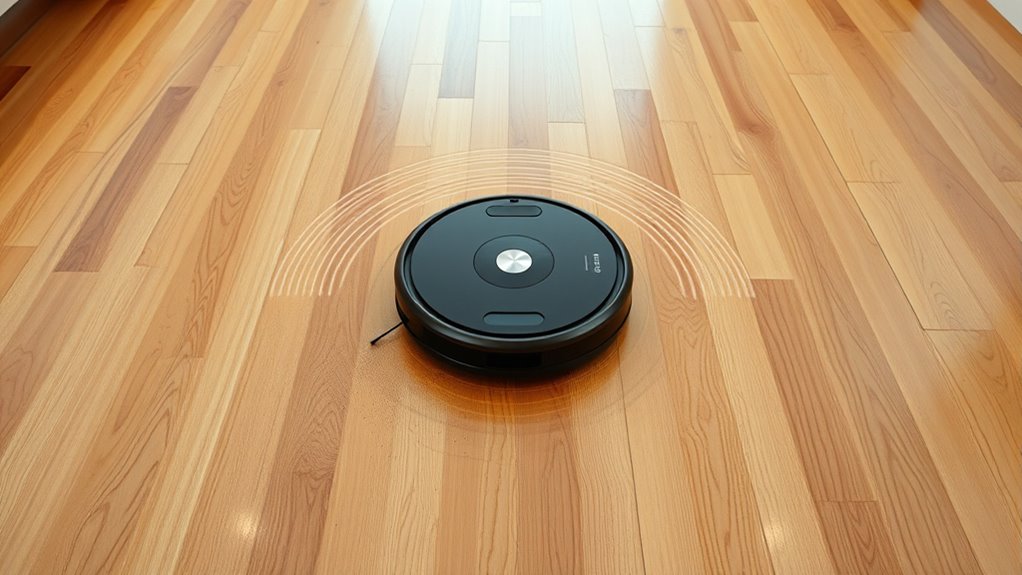
Efficient cleaning hinges on choosing the right patterns and optimizing coverage to save time and resources. When it comes to robotic cleaning devices, understanding how robot path planning works is essential. Your robot doesn’t just randomly wander; it follows calculated routes designed to cover the entire area systematically. Good path planning minimizes overlaps and missed spots, ensuring every inch of your space gets attention without wasting energy. To do this effectively, your robot relies heavily on sensor calibration. Proper sensor calibration ensures that the robot’s sensors—such as lidar, infrared, or ultrasonic—accurately detect obstacles, walls, and boundaries. If these sensors aren’t well-calibrated, the robot might misinterpret its surroundings, leading to inefficient routes, missed spots, or even collisions. Calibrating sensors correctly ensures that the robot’s perception of the environment is precise, enabling it to plan ideal paths that avoid obstacles and cover the space thoroughly.
Proper sensor calibration is essential for effective robot path planning and thorough cleaning coverage.
When you set up a cleaning robot, pay close attention to sensor calibration before starting. This step might involve running calibration routines or manually adjusting sensors to guarantee their readings are accurate. Once calibrated, the robot can better interpret its environment, which directly impacts the effectiveness of its path planning algorithms. With accurate sensor data, the robot can create a detailed map of the area, identify obstacles, and determine the most efficient route to cover the entire space. Proper calibration also helps the robot adapt to changes in the environment over time, maintaining ideal coverage even as furniture moves or new obstacles appear. Sensor calibration is crucial for the robot’s ability to navigate efficiently and adaptively.
In addition to sensor calibration, consider how the robot’s path planning algorithm influences coverage. Some robots use grid-based patterns, like back-and-forth or spiral movements, which are simple but effective in open spaces. Others employ more advanced algorithms that adapt to complex layouts, ensuring no area is left untouched. Combining these intelligent path planning methods with well-calibrated sensors guarantees that your robot can navigate efficiently, reducing cleaning time and conserving battery life. Remember, the better your robot understands its environment, the more effective its cleaning coverage will be.
Ultimately, achieving ideal coverage isn’t just about choosing a pattern; it’s about integrating precise sensor calibration with sophisticated robot path planning. When these elements work together, your cleaning robot becomes a capable, efficient cleaner that saves you time, energy, and effort. By maintaining proper calibration routines and selecting suitable path strategies, you ensure your space gets thoroughly cleaned with minimal waste. This synergy of technology and planning results in a seamless cleaning experience that keeps your environment spotless, with less fuss and more efficiency.

ROPVACNIC Robot Vacuum Cleaner Robot Vacuum and Mop Combo with 5200Pa Suction, Personalized Cleaning Adjustments, Self-Charging Robotic Vacuum Cleaner, Advanced Obstacle Avoidance
【2-in-1 Mopping and Vacuuming】 The ROPVACNIC Robot S1 integrates advanced electronically controlled mopping technology, significantly enhancing both cleaning…
As an affiliate, we earn on qualifying purchases.
As an affiliate, we earn on qualifying purchases.
Frequently Asked Questions
How Do Cleaning Patterns Vary Across Different Types of Surfaces?
You should modify cleaning patterns based on surface textures and material properties. For smooth surfaces like glass or tile, sweeping or straight-line patterns work best for thorough coverage. For textured or porous surfaces such as carpets or wood, circular or overlapping patterns help ensure dirt is lifted effectively. Always consider how the surface responds to cleaning techniques, tailoring your approach to avoid damage and maximize efficiency.
What Technological Advances Improve Coverage Accuracy?
Technological advances like sensor calibration and sophisticated mapping algorithms substantially improve coverage accuracy. You’ll find that well-calibrated sensors provide precise data, reducing errors during cleaning. Meanwhile, advanced mapping algorithms create detailed, real-time maps of your space, allowing your device to plan efficient routes. These innovations work together, ensuring thorough coverage with minimal overlap, saving you time and effort while maintaining a consistently high standard of cleanliness.
How Does Room Shape Influence Pattern Selection?
Room shape particularly influences your pattern selection because irregular or complex layouts require adaptive cleaning routes. For example, narrow or oddly shaped rooms may need zigzag or spiral patterns to guarantee thorough coverage. You should choose patterns that match the room’s shape, avoiding repetitive overlaps or missed spots. By tailoring your pattern selection to the room shape, you maximize cleaning efficiency and ensure every corner gets attention.
What Are Common Challenges in Coverage Optimization?
Ever wondered what makes coverage optimization tricky? You face challenges like ensuring sensor calibration stays accurate, so your device detects obstacles correctly. Algorithm complexity also plays a role; more advanced algorithms improve coverage but demand more processing power, which can slow down operations. Balancing precision with efficiency becomes difficult, especially in cluttered environments. Are you prepared to fine-tune your system to overcome these hurdles and achieve seamless coverage?
How Can Cleaning Efficiency Be Measured Effectively?
You can measure cleaning efficiency effectively by using data analytics to analyze performance metrics and sensor calibration to guarantee accurate data collection. Regularly review data on areas covered, time spent, and cleaning quality. Calibration keeps sensors precise, while analytics reveal patterns and inefficiencies. By combining these tools, you get a clear picture of your cleaning effectiveness, enabling you to optimize routines and improve overall productivity.

Shark AI Robot Vacuum Cliff Sensor Set, Drop Infrared Sensor Set – RV2000 AI Series Models
Fits Shark AI Models RV2001WRUS RV2001WD RV2000WRUS RV2002WXUS RV2001WRCA RV2011DRUS RV2211WRUS and others
As an affiliate, we earn on qualifying purchases.
As an affiliate, we earn on qualifying purchases.
Conclusion
Now that you’ve mastered cleaning patterns and coverage, think of your efforts as painting a vast canvas with precision and grace. Each pass is a brushstroke, weaving a seamless tapestry of cleanliness. When you optimize your coverage, you’re orchestrating a symphony of efficiency, turning chaos into harmony. Keep this rhythm steady, and your cleaning journey becomes a dance—smooth, effortless, and beautifully complete. Your space will shine like a star, bright and flawless.

Ultrasonic Sensor for Vehicle Detection & Parking, Wide Application in Robot Obstacle Avoidance, with Stable Output
Efficient Ranging: From 3cm to 450cm, the ultrasonic distance sensor enables accurate ranging that will not be influenced…
As an affiliate, we earn on qualifying purchases.
As an affiliate, we earn on qualifying purchases.
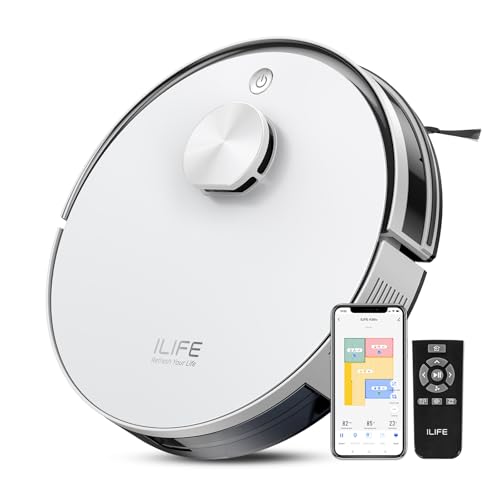
ILIFE A30s Robot Vacuum Cleaner, 10000Pa Max Suction Power with Lidar Navigation, Home Mapping, No-Go Zone, 150 Mins Max, 2.4G WiFi/App/Alexa/Remote Control, for Hard Floor, Carpet and Pet Hair
10,000Pa Max Suction Power: Experience deep cleaning with up to 10,000Pa ultra-strong suction in Spot Mode. The A30s…
As an affiliate, we earn on qualifying purchases.
As an affiliate, we earn on qualifying purchases.