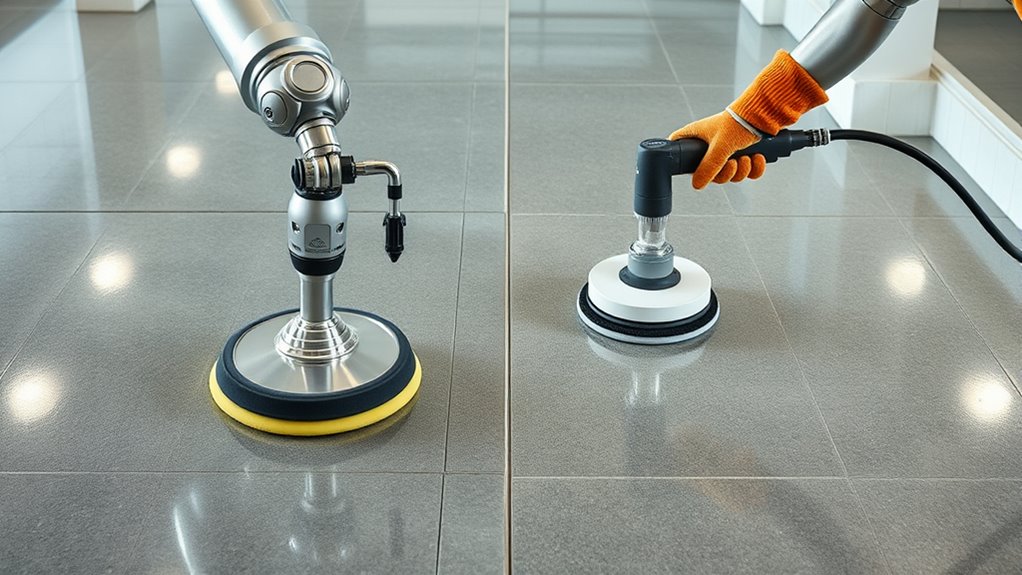

When choosing between robotic and manual polished concrete, consider your project’s size and complexity. Robots excel on large, flat surfaces, offering consistent, quick results with less effort—perfect for big, uniform areas. Manual polishing gives you more control for intricate designs or irregular surfaces, ideal for detail work or small projects. If you want to understand which method suits your needs best, explore the key differences that can make or break your finish.
Key Takeaways
- Robots excel in large, flat surfaces requiring uniform, rapid finishing, ensuring high consistency and efficiency.
- Manual polishing is preferable for intricate, detailed, or irregular surfaces needing finesse and adaptability.
- Robotic systems are ideal for high-volume projects where speed and cost-effectiveness outweigh detailed customization.
- Manual methods allow better handling of surface imperfections and complex geometries that robots may struggle with.
- Choice depends on project size, complexity, and desired finish quality; large-scale, uniform projects favor robots, while detailed work favors manual polishing.
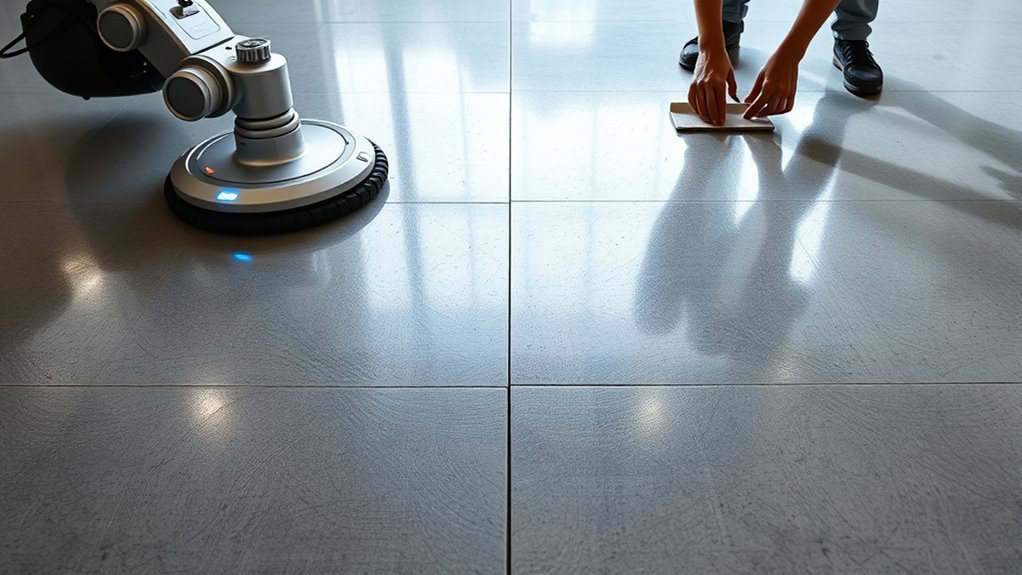
When it comes to polishing concrete surfaces, the choice between robotic and manual methods can substantially impact your project’s efficiency and quality. Understanding the strengths and limitations of each approach helps you make the best decision for your specific needs. Robotic polishing has become increasingly popular due to its consistency and automation, but it’s not always the perfect solution. Manual polishing, on the other hand, offers flexibility and precision in certain situations. Recognizing when each method wins allows you to optimize your workflow and achieve better results.
Robotic systems excel in projects that demand uniformity and speed. They are particularly effective for large, flat surfaces where consistency is key. Once programmed, a robotic polisher can operate continuously with minimal supervision, reducing labor costs and fatigue. This automation ensures a high level of uniformity in the finish, which is essential for commercial spaces or large-scale installations. Additionally, robotic equipment often comes with advanced sensors and adaptive features that help maintain consistent pressure and movement, minimizing human error. If your project involves extensive areas that require a smooth, even finish, robotic polishing can markedly improve efficiency and quality.
Robotic polishing ensures speed, uniformity, and consistency for large-scale flat surface projects.
However, robotic systems have limitations that make manual polishing the better choice in certain circumstances. For intricate designs, edges, corners, or irregular surfaces, manual polishing provides the dexterity and finesse that robots currently can’t match. Human operators can adapt their technique to handle unique surface conditions, repair imperfections, and work in tight spaces where robotic equipment might struggle to maneuver. When dealing with detailed patterns or decorative finishes, manual polishing allows for greater control and craftsmanship. Furthermore, in smaller projects or renovation work where the scope doesn’t justify investing in expensive robotic machinery, manual methods tend to be more cost-effective and practical.
Another critical factor is the level of surface preparation needed. Robotic systems are highly efficient once the surface is well-prepared and flat, but they can struggle with uneven or damaged surfaces. Manual polishing gives you the flexibility to address imperfections directly, smoothing out irregularities before the final finish. This hands-on approach is invaluable when working on surfaces that require detailed attention or have unique challenges. Additionally, modern robotic systems are increasingly integrating advanced sensors and adaptive features, but they still may not fully replace the nuanced touch of experienced human operators in complex scenarios.
Ultimately, choosing between robotic and manual polishing depends on your project size, complexity, and desired finish quality. Robotic methods shine in large-scale, uniform applications where speed and consistency matter most. Manual polishing remains essential for detailed work, complex surfaces, or smaller projects where customization and precision are priorities. By understanding these distinctions, you can better match your tools to your project’s demands, ensuring a high-quality finish delivered efficiently.
Frequently Asked Questions
How Does Robot Polishing Impact Overall Project Timelines?
Robot polishing speeds up your project timelines markedly. It allows you to cover large areas quickly with consistent results, reducing the time needed for manual labor. Plus, robots work efficiently with fewer breaks, minimizing delays. You’ll notice faster project completion, which helps you stick to tight schedules and reduces overall costs. So, if you want quicker turnaround times without sacrificing quality, robot polishing is a smart choice for your project.
What Are the Environmental Benefits of Robotic Versus Manual Polishing?
Robotic polishing offers significant environmental benefits because it uses less water and energy compared to manual methods. Robots are more precise, reducing waste and over-polishing, which conserves resources. They also operate efficiently, cutting down on time and energy consumption. By choosing robotic polishing, you help lower your project’s carbon footprint, promote sustainable practices, and minimize environmental impact, making it a smarter, eco-friendly option for your concrete finishing needs.
Can Robots Handle Custom or Intricate Concrete Designs Effectively?
Like Da Vinci’s intricate sketches, robots can handle custom or intricate concrete designs effectively. They’re precise, consistent, and programmable, allowing you to achieve detailed patterns with ease. While manual polishing offers artistic flexibility, robots excel in replicating complex, detailed designs with uniformity and speed. If your project demands intricate, consistent detailing, embracing robotic technology can bring your vision to life with remarkable accuracy and efficiency.
What Safety Considerations Are Involved With Robotic Polishing Equipment?
You should always prioritize safety when working with robotic polishing equipment. Make sure you wear proper protective gear like gloves, goggles, and ear protection. Keep a safe distance from moving parts, and guarantee the work area is clear of obstructions. Regularly inspect the robot for any malfunctions, and follow manufacturer instructions carefully. Training your team on safe operation practices minimizes accidents and keeps everyone safe during the polishing process.
How Does the Cost of Robotic Polishing Compare Long-Term to Manual Methods?
Imagine investing in a sturdy ship that sails smoothly through rough waters. Over time, robotic polishing may cost more upfront, but it’s like that ship’s engine—built to last and cut down on labor costs. Manual methods, like rowing, require constant effort and replacements. Long-term, robotic systems often save you money through increased efficiency and less downtime, making them a smart investment for sustained quality and lower operational costs.
Conclusion
So, whether you prefer your concrete polished by a tireless robot or a human with a mop, remember: in the battle of precision versus personality, you’re the real winner. Imagine a robot elegantly gliding across the floor, while the manual worker passionately insists they’re “still the best.” Either way, your shiny floors will shine—just don’t forget to thank the robot for its relentless efficiency or the worker for their heartfelt elbow grease. The choice is yours!