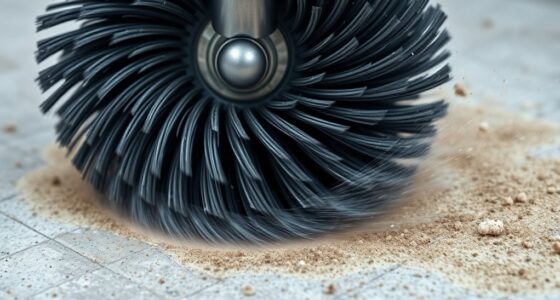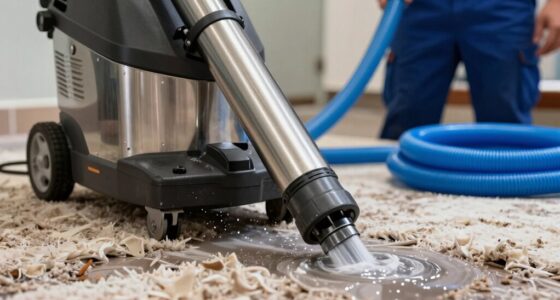
Burnishers and buffers are quite different tools for floor care. Burnishers operate at high RPMs, creating heat and friction for a glossy, mirror-like finish on surfaces like vinyl and terrazzo. Buffers work at lower speeds, ideal for gentle cleaning, polishing, and surface restoration on wood, tile, or metal. Choosing the right tool depends on whether you want a durable, high-gloss shine or a gentle polish. Keep exploring to find out how to maximize each tool’s benefits.

Get cleaning gear delivered free with Prime
- Fast, free delivery on millions of items
- Prime Video, Amazon Music and more included
- Member-only deals all year
Key Takeaways
- Burnishers use high RPMs to create a mirror-like, durable high-gloss finish, while buffers provide gentle cleaning and polishing at lower speeds.
- Burnishers are ideal for vinyl, linoleum, and terrazzo floors; buffers are versatile for wood, tile, and metal surfaces.
- Burnishers generate heat and friction for a polished look; buffers remove minor scratches and dirt without high heat.
- Proper maintenance ensures consistent high-gloss results from burnishers and effective cleaning from buffers.
- Choosing the right tool depends on whether a high-gloss finish or gentle polishing is required.

Ever wondered how to achieve a flawless finish on your surfaces? Understanding the difference between burnishers and buffers is essential for that perfect look. Both tools are designed to enhance surfaces, but they serve distinct purposes and produce different surface finishes. Recognizing these differences helps you select the right equipment and maintain it properly, guaranteeing maximum performance and longevity.
Discover the key differences between burnishers and buffers for optimal surface finishing and maintenance.
A burnisher is a heavy-duty machine that uses high RPMs to create a shiny, mirror-like surface on floors, especially vinyl, linoleum, or terrazzo. Its primary goal is to produce a high-gloss finish quickly and efficiently. When using a burnisher, you focus on generating heat and friction to smooth out the surface and achieve that polished look. However, to keep the surface finish consistent and avoid damage, proper equipment maintenance is critical. Regularly inspecting the pads, replacing worn-out parts, and cleaning the machine prevent uneven burnishing and prolong its lifespan. This maintenance not only preserves your equipment but also guarantees your surfaces receive a uniform, professional finish, reducing the risk of scratches or dull spots. Additionally, understanding the surface types helps you select the appropriate tool and avoid damage, ensuring optimal results.
On the other hand, buffers are generally lighter and more versatile, used for cleaning, polishing, and light surface restoration. They operate at lower speeds compared to burnishers and are suitable for a variety of surfaces, including wood, metal, and tile. Buffers are excellent for removing minor scuffs, dirt, and light scratches, leaving a smooth, shiny surface. When you use a buffer, you’re not just improving appearance but also extending the life of your surfaces through gentle cleaning and polishing. Proper equipment maintenance is key to ensure their effectiveness. Regularly changing pads, cleaning the machine after use, and checking electrical components help guarantee your buffer remains reliable and safe to operate, providing consistent surface finish results. Moreover, maintaining the correct machine settings will help you achieve the best possible finish without damaging delicate surfaces.
Choosing between a burnisher and a buffer depends on your specific needs—whether you want a high-gloss, durable floor finish or a more delicate, versatile polish. Proper equipment maintenance is essential for both tools to function at their best, delivering a professional-looking surface finish every time. When you take care of your equipment and understand their functions, you’ll find that achieving a flawless surface isn’t just about the tool but also about keeping it in top condition. This attention to detail leads to better results, longer-lasting equipment, and surfaces that look pristine with minimal effort.
As an affiliate, we earn on qualifying purchases.
Frequently Asked Questions
Are Burnishers or Buffers Better for Delicate Surfaces?
You should favor burnishers for delicate surfaces because they are gentler and offer better surface compatibility. Buffers, with their more abrasive action, might damage fragile materials. Using the right technique with a burnisher guarantees effective polishing without risking harm. So, for sensitive surfaces, burnishers are the safer choice, providing effective results while preserving the integrity of the material.
Can Burnishers and Buffers Be Used Interchangeably?
You can’t always use burnishers and buffers interchangeably because they serve different purposes in surface preparation and tool maintenance. Buffers are designed to clean and polish surfaces, while burnishers smooth and shine without removing material. Using the wrong tool can damage delicate surfaces or reduce effectiveness. Always choose the appropriate tool based on your specific needs, and follow proper maintenance practices to guarantee they work efficiently and last longer.
What Safety Precautions Should I Take When Using These Tools?
Think of using burnishers and buffers as steering a ship through stormy seas. You should wear protective gear like goggles and masks to shield yourself from splashes and dust. Make certain proper ventilation to keep fumes and particles away, much like clearing the storm’s chaos. Always read the manufacturer’s instructions, keep a fire extinguisher nearby, and stay alert. Safety precautions turn these tools into smooth sailing, not treacherous waters.
How Long Does It Typically Take to See Results?
You’ll usually see results within a few minutes to an hour, depending on your polishing techniques and surface preparation. For best outcomes, confirm the surface is thoroughly cleaned and prepped before you start. Consistent, gentle pressure combined with proper tool use accelerates the process. Keep in mind, patience and attention to detail in your polishing techniques help achieve a smooth, shiny finish faster, making your project look professional and polished.
Are There Specific Products Recommended for Each Tool?
Think of your tools as trusted allies on your polishing journey. For burnishers, opt for soft, gentle compounds that enhance shine without harshness. Buffers thrive with abrasive compounds designed for swift, smooth polishing. Always prioritize proper tool maintenance—clean and inspect regularly—to keep them performing at their best. The right products and care turn mundane tasks into a symphony of shining brilliance, making your efforts truly rewarding.
Conclusion
Now that you understand the difference, think of burnishers and buffers as the brushstrokes on your masterpiece. Burnishers add that polished, reflective glow—the final touch that reveals your true brilliance. Buffers, on the other hand, are the gentle waves that smooth out imperfections, preparing your surface for greatness. Choosing the right tool is like selecting the right melody—you create harmony, making your work shine with purpose and clarity.
Halloween Picks
halloween
As an affiliate, we earn on qualifying purchases.