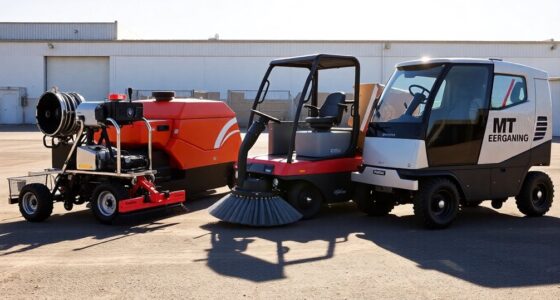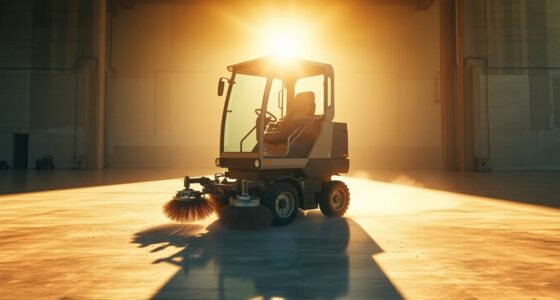
UHS burnishers and scrubbers serve different cleaning purposes. Burnishers focus on creating a high-gloss, reflective shine on well-maintained floors, making surfaces look polished and attractive, with minimal water or chemicals used. Scrubbers, on the other hand, are designed to remove soil, dirt, and stains from heavily soiled areas, often requiring more water and chemicals. If you want to know which tool fits your needs, exploring their benefits will help you choose wisely.

Get cleaning gear delivered free — and shop member deals
- Fast, free delivery on millions of items
- Access to Prime Big Deal Days deals on October 6–7
- Prime Video, Amazon Music and more included
Key Takeaways
- Burnishers enhance floor shine through polishing, creating a glossy, reflective surface, while scrubbers focus on removing dirt and stains deeply.
- Burnishers use high-speed pads with minimal water and chemicals, promoting an eco-friendly, sustainable finish; scrubbers require more cleaning solutions and water.
- Burnishers are ideal for maintaining well-kept floors’ appearance, whereas scrubbers are better suited for heavily soiled surfaces needing deep cleaning.
- Burnishers typically have lower ongoing costs and energy use, making them cost-effective for shine preservation; scrubbers involve higher operational expenses.
- Choosing between them depends on whether the goal is a high-gloss aesthetic (burnishers) or thorough soil removal (scrubbers).
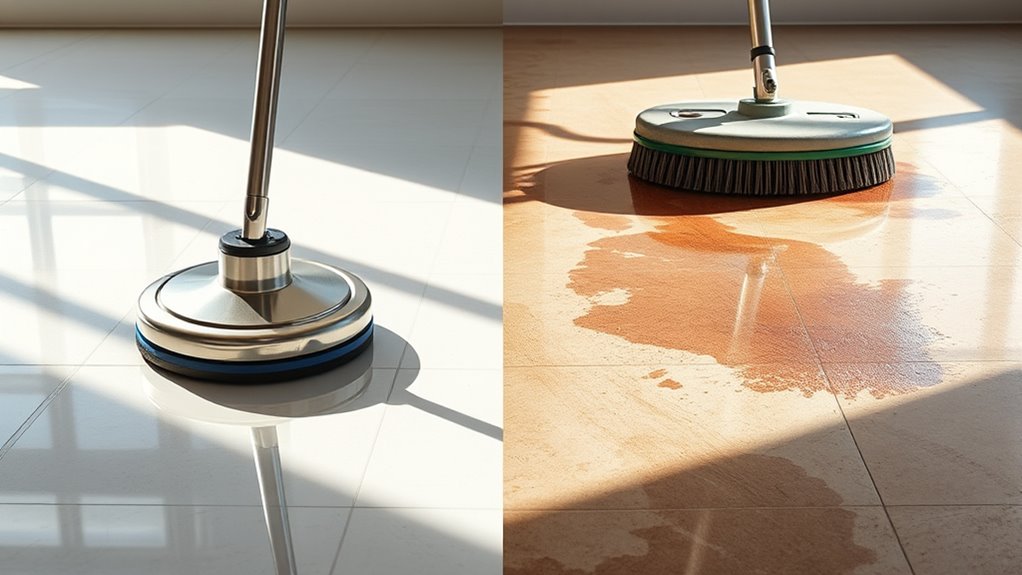
When choosing between UHS burnishers and scrubbers, understanding their differences is essential for achieving ideal floor maintenance. Both machines serve important roles but are designed for distinct tasks, and knowing which to use can impact your cleaning efficiency, environmental footprint, and budget. UHS burnishers excel at providing a high-gloss shine on well-maintained floors, making them ideal for areas where appearance matters most. They use high-speed rotating pads or brushes to polish the surface, creating a reflective finish that enhances the overall look. In contrast, scrubbers focus on soil removal, aggressively cleaning and deep-cleaning floors to eliminate dirt, grime, and stains.
Eco-friendly cleaning is a significant factor when choosing between these two. Burnishers typically consume less water and cleaning solutions because they primarily polish rather than wash away dirt. This reduces chemical use and water consumption, aligning with sustainable practices. On the other hand, scrubbers often require more water and cleaning solutions to effectively lift and remove soil, which can increase waste and chemical runoff. If your priority is eco-friendly cleaning, burnishers might be the better choice, especially when combined with environmentally safe cleaning agents. They help minimize your ecological footprint while maintaining the aesthetic appeal of your flooring.
Additionally, considering the power consumption of each machine is important for cost and energy efficiency. Burnishers generally have a higher initial investment cost but lower ongoing expenses, since they use less water, fewer chemicals, and require less maintenance. Their energy consumption is also relatively low compared to scrubbers, which often run at higher power levels due to their more intensive cleaning action. Scrubbers tend to be more expensive upfront, and the ongoing costs of cleaning solutions, water, and maintenance can add up quickly, especially if used frequently. When considering long-term expenses, burnishers may prove more economical if your main goal is maintaining a shiny, polished look without heavy soil removal. Conversely, if your facility deals with high soil loads and needs frequent deep cleaning, scrubbers might justify the higher cost with their thorough cleaning capabilities.
Ultimately, your decision should balance the need for eco-friendly practices and cost efficiency with your specific cleaning requirements. If your floors are relatively clean and you want to preserve their shine, burnishers are a smart, sustainable choice. If you’re tackling heavily soiled surfaces, scrubbers provide the necessary power but come with higher environmental and financial costs. By understanding these factors, you can select the appropriate equipment, ensuring your floors stay spotless and your cleaning practices remain aligned with your sustainability and budget goals.
As an affiliate, we earn on qualifying purchases.
Frequently Asked Questions
Which Equipment Is More Cost-Effective Long-Term?
You’ll find that scrubbers are more cost-effective long-term because they provide better soil removal, reducing the need for frequent deep cleaning, which lowers overall maintenance costs. While burnishers have lower initial costs, their higher maintenance and labor costs add up over time. A thorough cost comparison shows scrubbers save you money by maintaining cleaner floors efficiently, making them a smarter investment for ongoing cleaning needs.
Can Burnishers Be Used on All Floor Types?
You can’t paint with a broad brush—burnishers aren’t suitable for all floor types. Their floor compatibility hinges on surface preparation and the material’s finish. For example, polished concrete floors respond well, but delicate surfaces like vinyl or epoxy might get damaged. Always check manufacturer guidelines and test a small area first. Using the right equipment for your specific floor ensures a brilliant shine without risking surface damage.
How Often Should Each Machine Be Maintained?
You should follow specific maintenance schedules for each machine to guarantee ideal performance and extend equipment longevity. Burnishers typically need daily cleaning and periodic pad or disc replacements, while scrubbers require more frequent checks on brushes, tanks, and filters. Regular maintenance prevents breakdowns, keeps your equipment running smoothly, and maximizes lifespan. Adjust your schedule based on usage intensity and manufacturer recommendations to maintain efficiency and avoid costly repairs.
Do Burnishers Produce More Slip Hazards?
Think of burnishers like polished ice rinks—beautiful but slippery. Yes, burnishers can increase slip hazards due to their high-gloss finish, raising safety concerns. The shiny surface, while attractive, may reduce traction, especially when wet or worn. To minimize slip risk, you should implement regular maintenance, clear signage, and proper training, ensuring safety isn’t compromised for that perfect shine.
Are There Environmental Impacts Associated With Each?
You should consider that burnishers tend to produce fewer environmental emissions because they use less water and chemicals, reducing runoff. Scrubbers, on the other hand, often generate more chemical runoff due to their cleaning agents and water use, which can harm local ecosystems. Both options have environmental impacts, but burnishers generally pose less risk related to chemical runoff and emissions, making them a more eco-friendly choice.
Conclusion
When choosing between UHS burnishers and scrubbers, remember that burnishers shine surfaces quickly, but scrubbers remove stubborn soil more effectively. Did you know that facilities using burnishers see a 30% faster shine turnaround? Consider your cleaning needs carefully—if quick gloss is your goal, burnishers are ideal; for deep cleaning, scrubbers win. Ultimately, understanding these tools helps you keep your space spotless and gleaming, making your job easier and more efficient.
Fall Picks
fall essentials
As an affiliate, we earn on qualifying purchases.