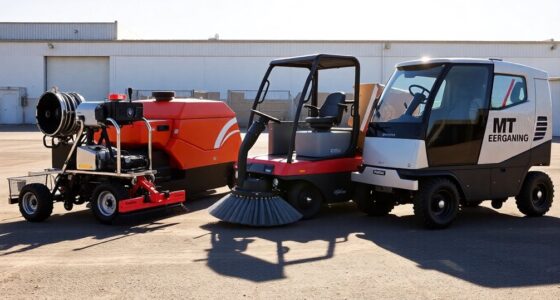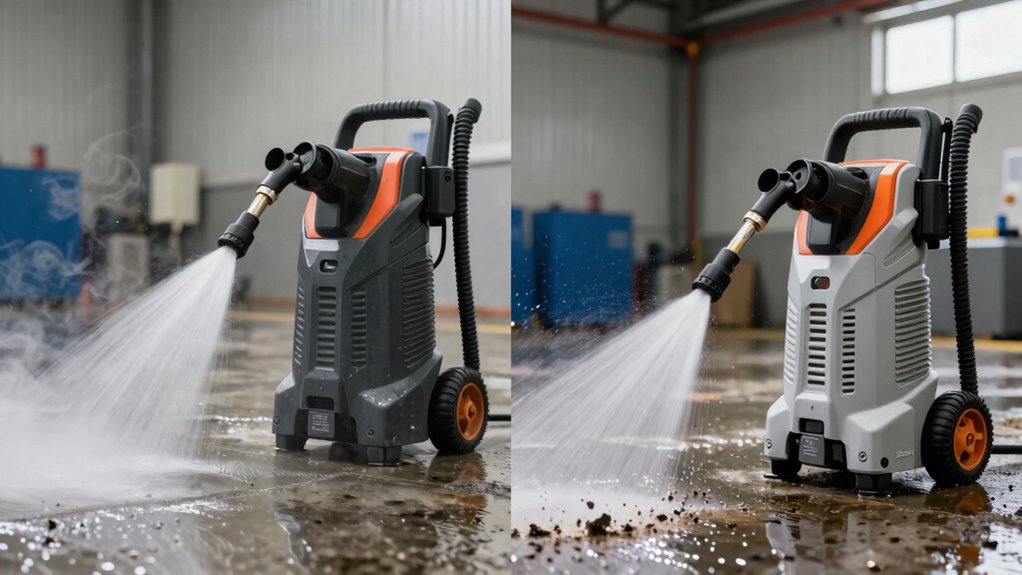

If you’re choosing between hot and cold water pressure washers for your facility, consider your cleaning needs. Hot water models excel at removing grease, oil, and stubborn stains quickly, often reducing chemical use and supporting eco-friendly practices. Cold water units are better for light dirt and general cleaning with lower energy costs and less maintenance. To find out which option fits your budget and specific tasks best, explore the detailed differences further.

Get cleaning gear delivered free with Prime
- Fast, free delivery on millions of items
- Prime Video, Amazon Music and more included
- Member-only deals all year
Key Takeaways
- Hot water washers excel at removing grease, oil, and stubborn stains, ideal for industrial and heavy-duty cleaning.
- Cold water units are cost-effective, energy-efficient, and suitable for light-duty cleaning tasks involving dirt and dust.
- Hot water models reduce chemical use and promote eco-friendly cleaning by leveraging heat to break down residues.
- Cold water pressure washers are simpler, with lower maintenance needs and higher reliability over time.
- The choice depends on cleaning intensity, budget, environmental goals, and specific facility requirements.
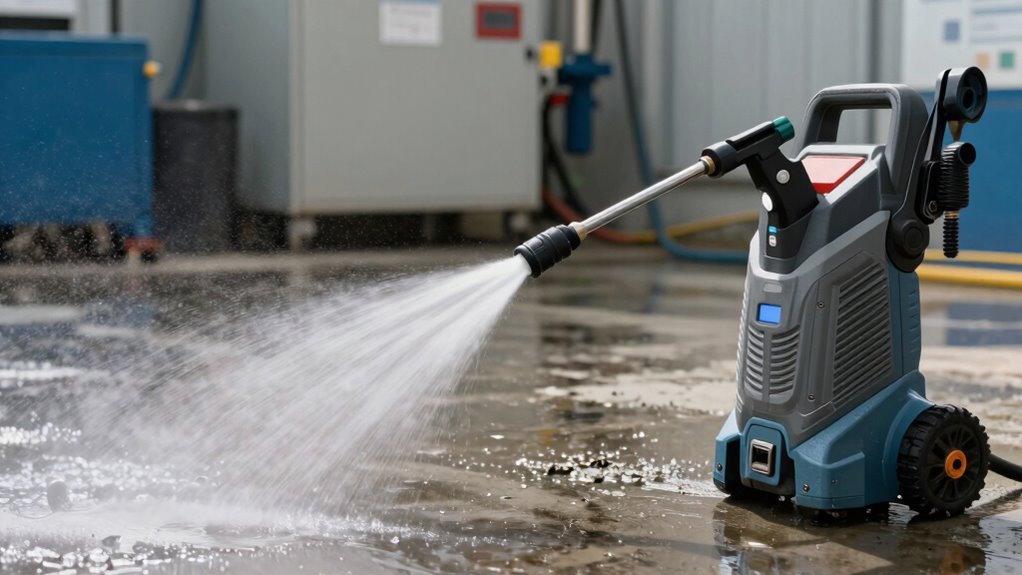
When choosing a pressure washer for your facility, understanding the differences between hot water and cold water models is essential. Hot water pressure washers heat water to a high temperature, which makes them highly effective at cutting through grease, oil, and grime. Cold water units, on the other hand, use unheated water to clean surfaces. This fundamental difference impacts not only cleaning performance but also environmental considerations and maintenance requirements.
Hot water washers excel at removing grease and grime, while cold water models are ideal for general cleaning tasks.
Hot water pressure washers are often preferred when tackling stubborn stains, especially in industrial or commercial settings. The heat helps break down oils and residues more quickly, leading to faster cleaning times. This efficiency can contribute to eco-friendly cleaning practices by reducing the need for harsh chemicals, as the heat does much of the work. By relying less on chemical cleaners, you minimize environmental impact and promote sustainability. However, hot water models typically consume more energy due to their heating components, which can increase operational costs over time. Regular maintenance for hot water units involves checking and replacing heating elements, ensuring proper insulation, and maintaining the boiler system. These maintenance requirements, while essential, can be more involved compared to cold water models, often requiring specialized knowledge or service. Additionally, hot water units often incorporate heating systems that are more complex and require careful upkeep. Understanding the energy consumption of these units can help manage ongoing operational expenses effectively. Moreover, considering the cost efficiency of hot water units is important for long-term budgeting, especially in high-use scenarios. Selecting the right type also involves evaluating the environmental impact, which can vary depending on the energy source and usage patterns.
Cold water pressure washers are generally less expensive upfront and tend to have simpler designs with fewer components that need maintenance. They are well-suited for general cleaning tasks that involve dirt, dust, or loose debris, such as cleaning outdoor surfaces, equipment, or vehicles. Since they don’t heat water, their operation is more energy-efficient, leading to lower ongoing costs. They also tend to be more environmentally friendly in terms of energy consumption, especially when used for light-duty tasks. Maintenance for cold water units is usually straightforward, focusing on hose checks, pump maintenance, and replacing worn nozzles. Because there’s no heating system involved, these models tend to have fewer parts that could fail, making them more reliable over the long term. Recognizing these cost differences can help in making a more informed decision based on your facility’s cleaning needs and budget.
Ultimately, your choice depends on the specific cleaning needs of your facility. If you regularly deal with grease, oil, or heavily soiled surfaces, a hot water pressure washer can save you time and reduce chemical use, aligning with eco-friendly cleaning goals. Conversely, if your tasks involve light cleaning or you need a cost-effective, low-maintenance solution, a cold water model might be the better fit. Both options have their advantages and trade-offs, but understanding these differences helps you select the right equipment for your facility’s efficiency, environmental impact, and maintenance needs.
hot water pressure washer for industrial use
As an affiliate, we earn on qualifying purchases.
As an affiliate, we earn on qualifying purchases.
Frequently Asked Questions
Which Pressure Washer Is More Energy-Efficient for Large Facilities?
A cold water pressure washer is generally more energy-efficient for large facilities because it consumes less energy, focusing on water pressure rather than heating. You’ll find it has lower energy consumption and better temperature efficiency for routine cleaning tasks. If you’re prioritizing energy savings and cost-effectiveness, a cold water unit is the better choice, especially when hot water isn’t necessary for the cleaning job at hand.
How Do Maintenance Costs Compare Between Hot and Cold Water Units?
Like a well-oiled machine from the days of steam engines, hot water units typically have higher maintenance expenses due to more complex components. However, their energy consumption can be more efficient for tough jobs, potentially offsetting upkeep costs. Cold water washers usually cost less to maintain but may need more frequent repairs, especially when handling stubborn grime. So, your choice depends on balancing initial costs against long-term maintenance and energy savings.
Are There Environmental Concerns With Hot Water Pressure Washing?
Hot water pressure washing has some environmental concerns, mainly due to higher water consumption and energy use, which impact the environment more than cold water units. You may worry about environmental impact and water waste, especially if runoff contains detergents or contaminants. To minimize these effects, guarantee proper waste water management and consider eco-friendly detergents. While hot water units are effective, balancing cleaning efficiency and environmental responsibility is key.
Can Cold Water Pressure Washers Effectively Remove Oil Stains?
Cold water pressure washers can effectively remove oil stains, especially when combined with the right detergents and cleaning agents. You’ll find that for stain elimination, cold water models work well on lighter or less stubborn oil spots. However, for tougher, deeply embedded oil, hot water washers often provide better results. Still, with proper technique and cleaning solutions, cold water pressure washers can handle most everyday oil removal tasks efficiently.
What Safety Precautions Are Specific to Hot Water Pressure Washers?
Think of hot water pressure washers as a finely tuned orchestra—every safety measure must be in harmony. You should undergo safety training to understand risks, handle equipment carefully, and wear protective gear like gloves and goggles. Always check hoses and connections before use, keep a safe distance from the nozzle, and never point it at yourself or others. Proper safety precautions guarantee you wield this powerful tool responsibly and avoid accidents.
Conclusion
Choosing between hot and cold water pressure washers is like picking the right tool for a specific job—you wouldn’t use a paintbrush to cut wood. I once saw a facility save thousands by switching to hot water for grease-heavy equipment, proving it’s the powerhouse for stubborn grime. Remember, understanding your cleaning needs helps you make the best choice, ensuring your facility stays spotless and efficient—like a well-oiled machine running smoothly.
Halloween Picks
halloween
As an affiliate, we earn on qualifying purchases.