To validate cleaning with ATP testing, start by selecting surfaces you want to check, like high-touch areas. Use a swab or sponge to collect samples and insert them into the ATP testing device. The device will give you a RLUs reading; lower numbers mean cleaner surfaces. Compare these results to your established threshold, such as 100 RLUs or less. Consistently meeting this standard confirms effective cleaning—learn more about setting thresholds and troubleshooting for reliable validation.
Key Takeaways
- Select critical surfaces and collect samples using swabs or sponges covering the entire area.
- Insert samples into the ATP testing device and record RLUs for contamination levels.
- Compare RLU results against established thresholds (e.g., 100 RLUs) to determine cleanliness.
- Repeat testing periodically to monitor cleaning consistency and validate ongoing procedures.
- Document all results and take corrective actions if RLUs exceed acceptable limits to ensure validation.
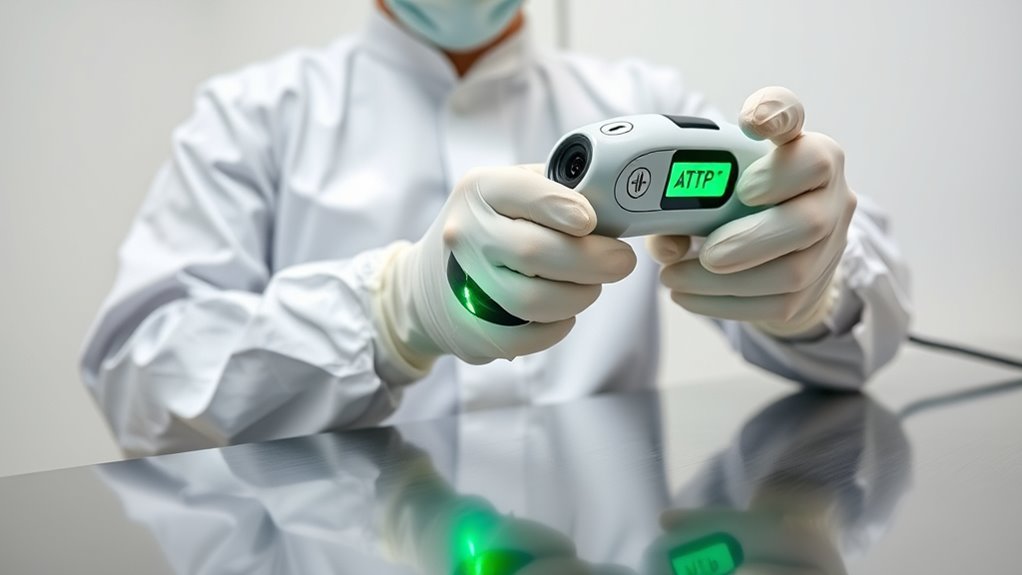
Cleaning validation is essential to guarantee surfaces are truly sanitary, and ATP testing offers a quick, reliable way to verify cleanliness. When you’re concerned about surface contamination, traditional visual inspections or microbiological testing can be time-consuming and sometimes inconclusive. ATP testing procedures, on the other hand, provide immediate feedback by measuring the presence of organic residues that indicate contamination. This method detects adenosine triphosphate (ATP), a molecule found in all living cells, making it a universal marker for biological residues left behind after cleaning.
ATP testing quickly verifies surface cleanliness by detecting organic residues, ensuring sanitation and reducing contamination risks.
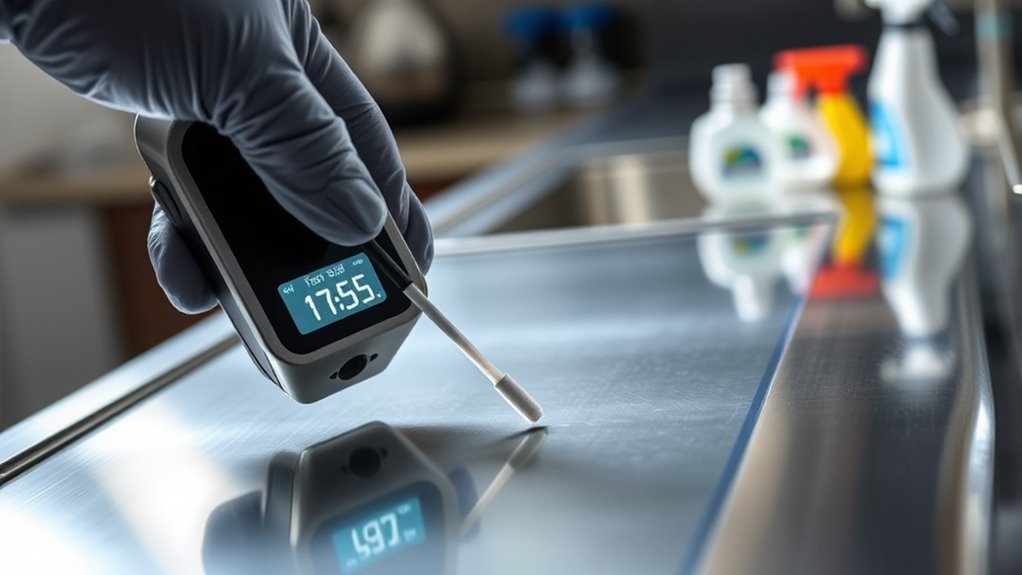
To effectively validate your cleaning process, you need to understand how ATP testing procedures work. First, you select the surfaces you want to test, typically high-touch areas or critical control points. Using a swab or a sponge, you collect a sample from the surface, making sure to cover the entire area thoroughly. The swab is then inserted into the ATP testing device, which quickly analyzes the sample for ATP presence. The device provides a readout, usually in relative light units (RLUs), indicating the level of surface contamination. Lower RLU values show cleaner surfaces, while higher values suggest residual organic matter that may require further cleaning.
You’ll want to establish acceptable RLU thresholds based on your industry standards or internal protocols. For example, a common benchmark might be 100 RLUs or less for food manufacturing surfaces. Once you’ve tested multiple surfaces and confirmed they meet your criteria, you can confidently validate that your cleaning procedures are effective. If some surfaces show higher readings, you’ll need to review your cleaning methods, identify possible contamination sources, and re-clean those areas before retesting.
Implementing ATP testing procedures regularly allows you to monitor the ongoing effectiveness of your cleaning protocols. It also helps you identify potential issues early, preventing product contamination or regulatory non-compliance. Remember, ATP testing is not a substitute for microbiological testing when you need to detect specific pathogens, but it’s an excellent tool for rapid sanitation verification. Consistent use of ATP testing enables you to maintain high cleanliness standards, reduce contamination risks, and streamline your validation process.
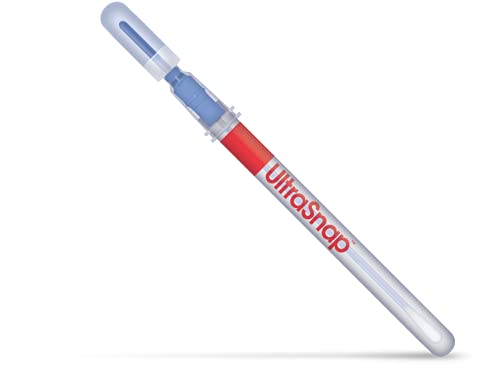
Hygiena™ UltraSnap™ Surface ATP Test Device (100 Tests)
Results in 10 seconds – Get test results in 10 seconds when used with Hygiena's EnSURE Touch luminometer
As an affiliate, we earn on qualifying purchases.
As an affiliate, we earn on qualifying purchases.
Frequently Asked Questions
How Often Should ATP Testing Be Performed?
You should perform ATP testing regularly to guarantee surface residue is minimized, typically after each cleaning or sanitation process. Testing frequency depends on your industry, but daily or weekly checks are common for high-risk areas like kitchens or healthcare settings. By consistently monitoring, you can quickly identify contamination issues, maintain hygiene standards, and ensure cleaning protocols are effective, keeping your environment safe and compliant.
What Are the Limitations of ATP Testing?
ATP testing has limitations like surface variability, which can affect accuracy due to different materials or textures that may trap residues or interfere with readings. Equipment compatibility is also essential; some ATP testers may not work well with certain surfaces or cleaning agents. You should consider these factors to guarantee reliable results, and supplement ATP testing with visual inspections or microbiological tests when necessary for a thorough validation.
Can ATP Testing Detect All Types of Contaminants?
ATP testing can’t detect all types of contaminants because it primarily measures organic material, like bacteria and food residues, on surfaces. If contaminants are non-organic, such as chemical spills or certain pathogens, ATP testing might not identify them. You need to take surface cleanliness into account and set appropriate ATP thresholds to guarantee accurate validation. Regularly calibrate your ATP meter and interpret results within context to get the best insights into your cleaning effectiveness.
What Are the Cost Implications of ATP Testing?
Think of ATP testing as planting seeds in your cleaning garden. The initial setup costs might seem like buying a new tool, but in the long run, it helps you spot issues early, saving money. Conducting regular testing, based on your testing frequency and cost analysis, guarantees your cleaning remains effective without overspending. This investment keeps your space safe and your budget balanced, much like nurturing a healthy, thriving garden.
How Do ATP Results Correlate With Microbiological Testing?
ATP results often show a good microbial correlation, but ATP accuracy can vary based on sample collection and surface type. You should interpret ATP readings as an indicator of general cleanliness rather than a direct measure of microbial presence. While high ATP levels suggest possible microbial contamination, confirmatory microbiological testing provides definitive results. Combining ATP testing with microbiological tests ensures a more thorough evaluation of your cleaning efficacy.
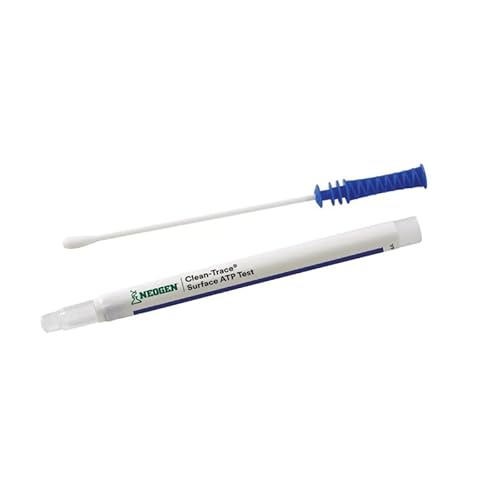
Neogen® Clean-Trace® ATP UXC100 Surface Swabs – Fast and Accurate Hygiene Monitoring 100/CS
Rapid Results: Delivers fast, accurate cleanliness verification by measuring ATP levels on surfaces.
As an affiliate, we earn on qualifying purchases.
As an affiliate, we earn on qualifying purchases.
Conclusion
As you complete your ATP testing, imagine each surface gleaming with freshness, a silent affirmation to your thoroughness. The tiny flashes of light from the testing device confirm your efforts, like stars guiding you through a spotless night. With every swipe and scan, you build confidence, turning cleanliness into a rhythm you can trust. Keep this rhythm steady, and let your diligent hands and sharp eyes continue to shine, ensuring every surface remains a beacon of hygiene.
RLU cleaning validation meter
As an affiliate, we earn on qualifying purchases.
As an affiliate, we earn on qualifying purchases.

Bio Shield Tech Hygiena Ultrasnap Surface ATP Test Devices, ATP Testing Kit, User-Friendly, Biological Contamination Tests Kit Used with Hygiena Luminometers US2020 (100 Per Box)
CLEAN SCIENTIFICALLY:This Ultrasnap ATP surface test is a key component of the cleaning verification solution. It works hand-in-hand…
As an affiliate, we earn on qualifying purchases.
As an affiliate, we earn on qualifying purchases.