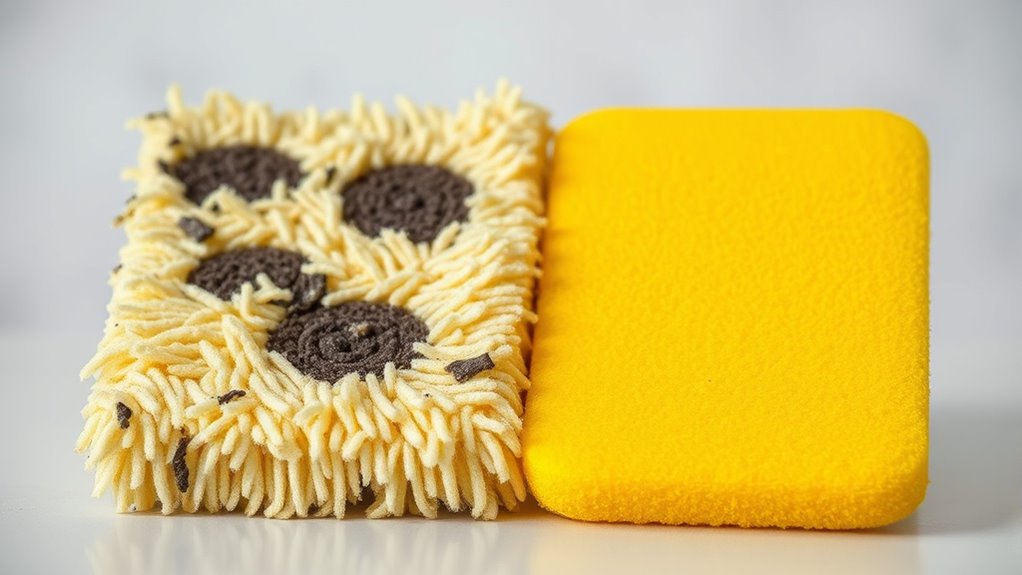

You should replace your scrubbing pad when you notice signs of wear like frayed edges, thinning, or missing fibers. If it’s not cleaning effectively, leaving grime or bacteria behind, it’s time for a new one. Also, if it smells bad, feels sticky, or has debris hiding in damaged areas, those are clear signs to switch it out. Keeping an eye on these indicators guarantees your cleaning tools stay effective—learn more to maintain hygiene and performance.

Get cleaning gear delivered free with Prime
- Fast, free delivery on millions of items
- Prime Video, Amazon Music and more included
- Member-only deals all year
Key Takeaways
- Inspect for visible signs of wear like frayed edges, thinning, or torn fibers.
- Check cleaning effectiveness; if stains persist, replace the pad.
- Monitor odor and texture; a foul smell or slimy feel indicates it’s time for replacement.
- Consider usage frequency; high-volume or heavy-duty use accelerates wear, prompting earlier replacement.
- Regularly evaluate hygiene; replace when debris, bacteria, or damage compromise cleaning performance.
Knowing when to replace a scrubbing pad is essential to guarantee your cleaning remains effective and hygienic. Over time, even the best pads wear down, compromising their ability to remove dirt and bacteria efficiently. If you ignore signs of wear, your cleaning effectiveness diminishes, and you risk falling short of hygiene standards. Regularly evaluating your scrubbing pad ensures you maintain a safe and clean environment, whether in a commercial kitchen, a busy household, or a food processing facility.
Regularly evaluate and replace your scrubbing pad to ensure effective, hygienic cleaning in any environment.
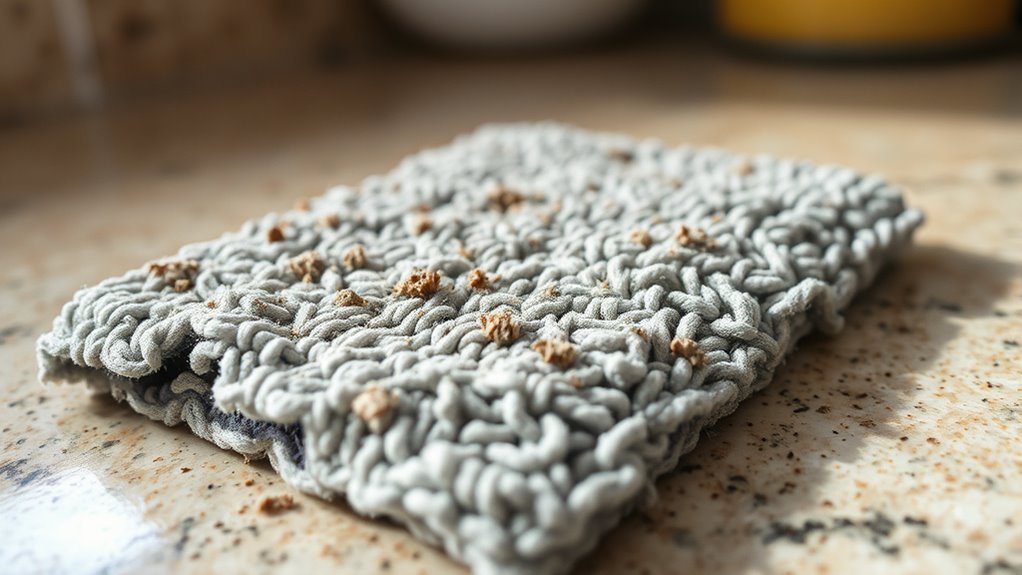
One of the clearest indicators that it’s time to replace your scrubbing pad is visible deterioration. Look for frayed edges, torn fibers, or significant thinning. If the pad appears shredded or heavily worn, it no longer provides the scrubbing power needed for thorough cleaning. When fibers are missing or the surface looks uneven, debris and grime can hide in the damaged areas, making it impossible to achieve proper hygiene standards. Continuing to use a worn-out pad can spread bacteria instead of removing it, defeating the purpose of cleaning altogether.
Another key factor is the pad’s ability to trap dirt and bacteria. A worn or heavily soiled pad loses its absorbency and scrubbing capability. If you notice that your efforts aren’t removing stains or residues as effectively as they used to, it’s a sign that the pad’s cleaning effectiveness has declined. Persistent grime may indicate that bacteria and germs are lingering, which can be especially problematic in environments with strict hygiene requirements. Replacing the pad ensures you’re not just moving dirt around but actually eliminating it.
Frequency of use also influences when you should change your scrubbing pad. High-volume or intensive cleaning routines cause faster wear, so inspect your pad regularly during these times. Even with lighter use, it’s good practice to replace your pad every few weeks to prevent bacterial buildup. Always wash or sanitize the pad after each use, but remember that even properly cleaned pads can degrade over time and need replacing to uphold hygiene standards.
Trust your senses. If your pad smells bad despite cleaning, or if it has a sticky or slimy feel, it’s time for a replacement. Odors and sliminess are signs of bacterial growth, which poses health risks. Don’t overlook these cues—prioritize replacing the pad to ensure your cleaning remains both effective and hygienic. Regularly checking your scrubbing pad and replacing it when needed guarantees effective cleaning results and helps you maintain a safe environment.
Additionally, understanding the importance of home theatre projectors, including high-quality visuals and proper setup, emphasizes the need for effective cleaning tools to keep your equipment functioning optimally.
Frequently Asked Questions
Can I Reuse a Scrubbing Pad After Cleaning It?
Yes, you can reuse a scrubbing pad after cleaning it. Make sure to use proper cleaning techniques, like rinsing thoroughly and disinfecting, to remove food particles and bacteria. Store the pad in a dry, well-ventilated area to prevent mold. Regularly inspecting the pad helps you decide if it’s still effective or if it’s time to replace it. Proper cleaning and storage extend its lifespan and ensure safe use.
What Types of Scrubbing Pads Are Most Durable?
Think of your scrubbing pad as a trusty steed—some are built to last through rough terrains. You’ll find that pads made from rubber or microfiber boast high abrasion resistance, making them more durable. These materials offer exceptional longevity, standing up to tough scrubbing tasks without falling apart. When choosing, look for pads with reinforced fibers or dense textures, ensuring you get a product that’s as tough as it is reliable.
How Often Should I Replace Different Types of Pads?
You should substitute scrubbing pads based on their pad lifespan and replacement frequency. Generally, heavy-duty pads last longer, about 2-4 weeks, while softer or thinner pads may need replacement every 1-2 weeks. Check for signs of wear like fraying or loss of abrasiveness regularly. When you notice these, it’s time to replace the pad to ensure effective cleaning and prevent scratches or contamination.
Are There Eco-Friendly Options for Replacement Pads?
You can find eco-friendly replacement pads made from biodegradable materials or recyclable options. Look for pads labeled as biodegradable, which break down naturally, reducing landfill waste. Recyclable options can often be processed and reused, cutting down on plastic waste. When choosing, consider the environmental impact and your cleaning needs. Switching to these sustainable choices helps protect the planet while keeping your surfaces clean effectively.
Can I Sterilize a Used Scrubbing Pad for Reuse?
Sure, you can sterilize a used scrubbing pad for reuse. To do so, try boiling it in water, microwaving it, or using a disinfectant solution. These sterilization methods help eliminate germs and prolong pad longevity. However, keep in mind that over time, pads may deteriorate or lose effectiveness, so regularly inspecting and replacing them when they show wear is key to maintaining cleanliness and preventing bacterial buildup.
Conclusion
So, next time you’re scrubbing away, pay close attention to your pad’s condition. When it starts to lose its grip, leave streaks, or shows signs of wear, it’s probably time to replace it. But here’s the catch—sometimes, a little damage can hide beneath the surface, quietly undermining your cleaning efforts. Trust your instincts, stay vigilant, and remember: the right moment to swap out your pad might just be the key to spotless results—if you know where to look.
Fall Picks
fall essentials
As an affiliate, we earn on qualifying purchases.