Chemical metering systems precisely control the flow and dosage of chemicals in water treatment and industrial processes. They include pumps, valves, and sensors that work together to guarantee chemicals are added accurately and consistently at the right time. This automation helps prevent over- or under-dosing, optimize process efficiency, and improve safety. Understanding how these systems operate will give you deeper insights into maintaining effective and safe chemical management.

Get cleaning gear delivered free with Prime
- Fast, free delivery on millions of items
- Prime Video, Amazon Music and more included
- Member-only deals all year
Key Takeaways
- Chemical metering systems precisely control the dosage of chemicals into processes, ensuring optimal treatment and safety.
- They utilize specialized pumps, flow sensors, and controllers to maintain accurate and consistent chemical flow rates.
- Automation integration allows real-time adjustments based on system feedback, reducing manual intervention and errors.
- Proper calibration and maintenance are essential for sustained accuracy and to handle corrosive or viscous chemicals.
- These systems enhance process efficiency, safety, and cost-effectiveness by preventing over- or under-dosing.

Chemical metering systems are vital tools that precisely control the delivery of chemicals into water treatment, industrial processes, or other applications. When you’re working with these systems, achieving accurate pumping precision is vital. You want to guarantee that the right amount of chemical is added at the right time, without over- or under-dosing. This precision directly impacts the effectiveness of your process, whether it’s neutralizing pH, disinfecting water, or controlling corrosion. Proper flow regulation is the backbone of this accuracy, allowing you to maintain consistent chemical concentrations and maximize operational efficiency.
In a chemical metering system, flow regulation devices such as valves, pumps, and controllers work together to manage the rate at which chemicals are dispensed. You need to select equipment that can accurately measure and adjust flow rates based on your specific requirements. Modern systems often incorporate flow sensors and digital controllers that provide real-time feedback, enabling you to fine-tune the chemical feed. This continuous regulation helps prevent wastage and reduces the risk of chemical overdosing, which can be costly or hazardous. The key is to match the flow regulation capabilities of your system to your application’s demands, guaranteeing stable and predictable chemical delivery.
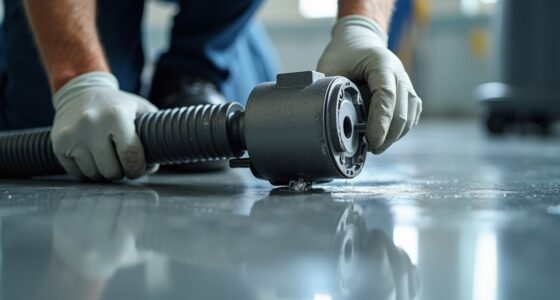
Pumping precision plays a pivotal role in maintaining consistent flow regulation. You should choose pumps that are designed for accurate dosing, such as peristaltic, diaphragm, or gear pumps. These pumps provide a high degree of repeatability, so the volume of chemicals being pumped remains steady over time. The ability to precisely control the pump’s output means you can meet strict process specifications, whether you’re dosing small amounts or large volumes. Regular calibration and maintenance of these pumps are essential to preserve their accuracy, especially when handling chemicals that can be corrosive or viscous. Additionally, understanding battery technologies can help in selecting reliable power sources for automated chemical metering systems, ensuring uninterrupted operation.
Furthermore, integrating automation technologies enhances flow regulation and pumping precision. Automated systems can adjust chemical feed rates automatically based on process feedback, reducing manual intervention and human error. You can program these systems to respond to changes in water quality or process conditions instantly, maintaining ideal chemical levels without constant oversight. This level of control not only improves process consistency but also boosts safety by minimizing exposure to hazardous chemicals.
As an affiliate, we earn on qualifying purchases.
Frequently Asked Questions
What Are the Common Types of Chemical Metering Systems?
You’ll find various chemical metering systems, including diaphragm, piston, and peristaltic types. These systems guarantee chemical compatibility with different solutions, preventing corrosion and damage. Regular system calibration is essential for maintaining accuracy, especially when handling precise dosages. By choosing the right system and performing routine calibration, you ensure safe, efficient, and reliable chemical delivery tailored to your specific application needs.
How Do Chemical Metering Systems Ensure Safety?
You guarantee safety in chemical metering systems by following strict hazard prevention measures and safety protocols. Regular maintenance and calibration reduce leaks and accidents, while automatic shutoff features activate if irregularities occur. Training staff on proper handling minimizes risks, and using protective gear safeguards against exposure. These steps create a safer environment, preventing hazards and ensuring smooth, secure operation of the system.
What Maintenance Is Required for Chemical Metering Equipment?
You need to regularly inspect your chemical metering equipment, focusing on corrosion prevention by checking for leaks or corrosion signs. Perform calibration procedures periodically to guarantee accurate chemical delivery. Clean the equipment as needed, and replace worn parts promptly. Keep documentation of maintenance activities, and follow manufacturer guidelines to maintain ideal performance and safety. Proper maintenance extends equipment lifespan and guarantees precise chemical dosing, preventing costly errors or safety hazards.
How Is Accuracy Monitored in Chemical Dosing?
You monitor accuracy in chemical dosing by regularly performing calibration procedures and checking sensor accuracy. Calibration guarantees your system’s measurements stay precise, while sensor checks help identify any drift or malfunction. You should schedule these tests consistently and compare readings against known standards. When discrepancies occur, recalibrate or replace sensors as needed, maintaining reliable chemical delivery. This proactive approach keeps dosing accurate and prevents issues downstream.
Can Chemical Metering Systems Be Automated for Remote Control?
Imagine you’re in a sci-fi film—yes, chemical metering systems can definitely be automated for remote control. You can set up remote operation with integrated sensors and controllers, allowing you to monitor and adjust dosing from anywhere. Automated calibration guarantees accuracy stays high, even over long periods. This technology streamlines your process, reduces manual errors, and keeps your system running smoothly without needing constant on-site attention.
Conclusion
Understanding chemical metering systems helps you make certain of precise chemical dosing, which is key for safety and efficiency. When you choose the right system and keep it well-maintained, you’re playing it smart and reaping the benefits. Remember, a stitch in time saves nine—address issues early to prevent bigger problems down the road. Mastering these systems empowers you to optimize operations and avoid costly mistakes, proving that knowledge truly is power in managing chemical processes effectively.
Fall Picks
fall essentials
As an affiliate, we earn on qualifying purchases.