
To maximize grip and traction, choose tires and casters with the right rubber compounds and treads for your surface. Softer rubber offers better contact on rough or slippery floors, while aggressive treads improve grip on uneven terrain. Understanding the coefficient of friction helps you select wheels that reduce slippage, boosting safety and efficiency. Keep in mind, matching your wheel type to your environment is key—stick around to learn more about optimizing traction for your needs.

Get cleaning gear delivered free with Prime
- Fast, free delivery on millions of items
- Prime Video, Amazon Music and more included
- Member-only deals all year
Key Takeaways
- Rubber composition and hardness directly influence tire and caster grip by affecting surface contact and wear resistance.
- Tread patterns enhance traction by channeling debris and increasing contact area, especially on rough or uneven surfaces.
- The coefficient of friction (COF) measures the grip strength; higher COF reduces slippage and improves safety.
- Environment factors like wet, oily, or smooth indoor floors determine optimal tire and caster rubber types and tread designs.
- Proper selection of tires and casters based on surface and load improves operational safety, efficiency, and longevity.
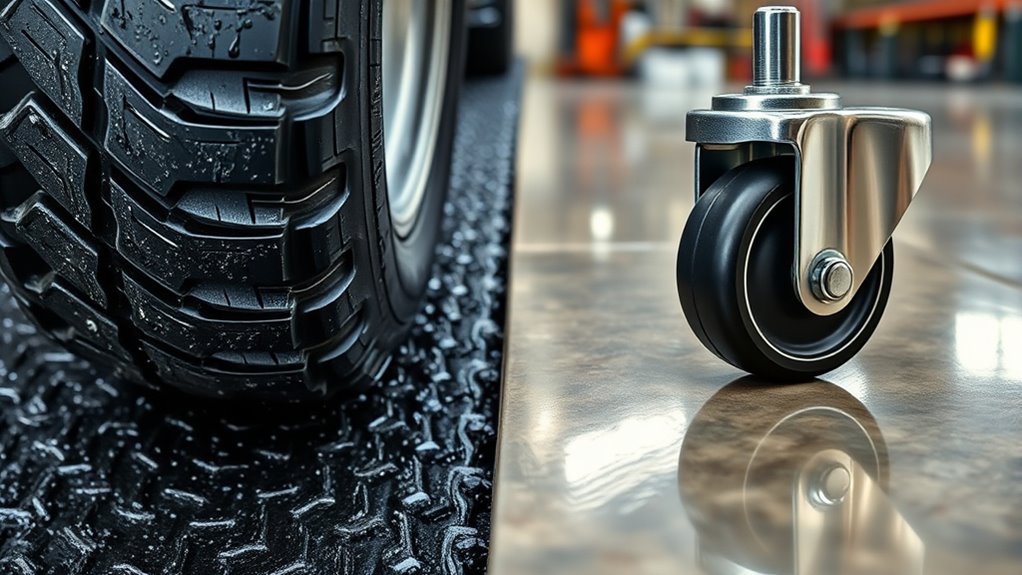
Understanding the relationship between tires, casters, and the coefficient of friction (COF) is essential for selecting the right wheels for your equipment. When evaluating tires, the rubber composition plays a vital role in determining grip and traction. Different rubber formulas—such as natural rubber, synthetic compounds, or blends—offer varying levels of softness, durability, and grip. Softer rubber tends to provide better traction because it molds more closely to the surface, increasing the contact area. Conversely, harder rubber resists wear but may compromise grip, especially on uneven or slippery surfaces. Selecting the appropriate rubber composition depends on your environment and load requirements, as well as the desired balance between longevity and traction.
Choosing the right rubber composition enhances traction and durability based on your environment and load needs.
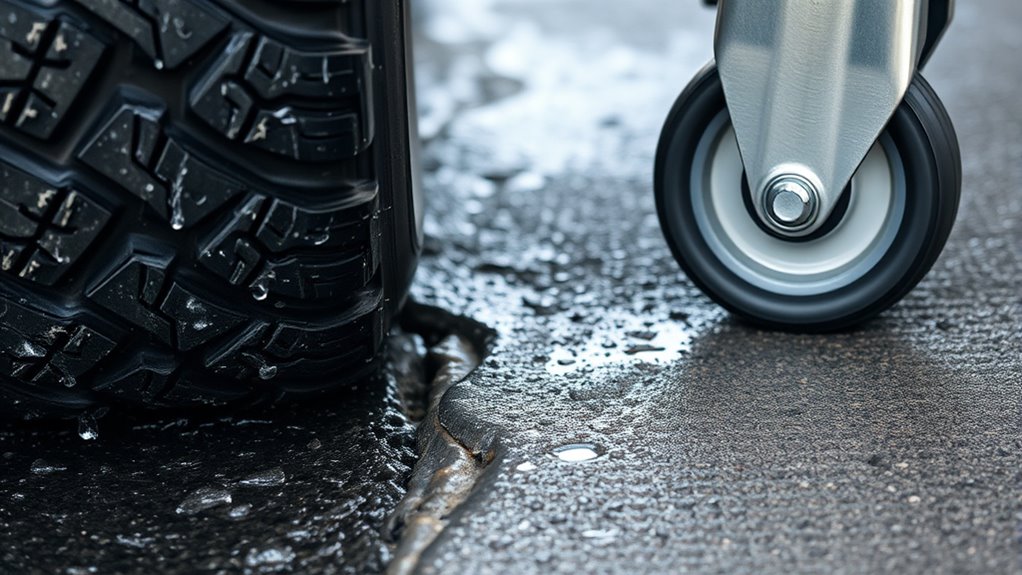
Another key factor influencing grip is the tread pattern. Just like on a vehicle tire, tread patterns on industrial tires and casters are designed to channel away debris, improve surface contact, and enhance traction. Aggressive, deep treads are effective on loose or uneven terrain, providing better grip by biting into the surface. Smooth or minimal tread designs, on the other hand, excel on smooth indoor floors, where they maximize the contact patch and reduce rolling resistance. The choice of tread pattern directly impacts the coefficient of friction; more aggressive treads generally increase COF on rough surfaces, while smoother treads maximize traction on polished floors. When selecting tires or casters, consider the typical surface you’ll encounter to match your tread pattern accordingly.
The interaction between rubber composition and tread pattern influences the overall coefficient of friction, which is key for safety and efficiency. The COF determines how much force is needed to start or maintain movement between the wheel and the surface. Higher COF means better grip, reducing slippage and making equipment safer to operate, especially on inclined or slippery surfaces. If you’re working in an environment with frequent wet or oily conditions, selecting tires with a rubber composition designed for high grip and tread patterns that channel moisture away becomes essential. Conversely, for indoor applications on smooth floors, a hard rubber with a low-profile tread pattern may deliver superior performance without excessive wear. Additionally, understanding the COF variations across different surfaces helps in selecting the optimal wheel configurations for safety and efficiency.
In essence, understanding how rubber composition and tread patterns influence grip helps you make informed choices. Tailoring these aspects to your specific needs ensures your equipment maintains maximum traction, reduces slippage, and operates safely and efficiently. By considering these factors, you maximize the interaction between your wheels and the surface, which directly affects your productivity and safety.
As an affiliate, we earn on qualifying purchases.
Frequently Asked Questions
How Does Temperature Affect Tire Grip and Traction?
Temperature effects can substantially influence tire grip and traction, causing grip variability depending on conditions. As temperatures rise, rubber softens, improving grip on dry surfaces but risking reduced traction on wet or icy roads. Conversely, cold temperatures harden the rubber, decreasing grip and making traction less reliable. You should always consider temperature changes when evaluating tire performance, as they directly impact safety and handling in different environments.
What Are the Best Casters for Outdoor Uneven Surfaces?
You should select heavy-duty casters with large wheel sizes, like 8 to 12 inches, for outdoor uneven surfaces. Opt for caster wheels made from durable tire materials such as rubber or polyurethane, which provide better grip and traction on rough terrain. Larger wheels roll more smoothly over bumps, reducing effort and improving maneuverability. These features guarantee your equipment remains stable and moves easily even on challenging outdoor terrains.
How Is COF Measured in Laboratory Settings?
Think of CoF testing as your scientific compass, guiding you through laboratory standards. You measure it by placing a sample on a standardized surface, then pulling or pushing to determine the force needed to initiate or maintain movement. This process, akin to a delicate dance, follows strict laboratory standards to guarantee accuracy. By conducting CoF testing properly, you get reliable data to select the best materials for your specific traction needs.
Can Tire Tread Design Improve Traction on Wet Surfaces?
Yes, tire tread patterns can improve wet surface traction. You should choose tires with deep, wide grooves and sipes that channel water away from the contact patch. These designs help prevent hydroplaning and maintain grip on wet roads. When selecting tires, look for those optimized for wet conditions, as their tread patterns are specifically engineered to enhance traction and safety in rainy or wet environments.
How Does Load Weight Influence Caster Performance and Grip?
You’ll find that load weight directly impacts caster performance and grip by affecting load distribution. When you evenly distribute weight, casters maintain better stability, improving grip and reducing wheel slippage. Conversely, uneven loads can cause caster instability, decreasing traction and increasing wear. So, always guarantee proper load distribution to maximize caster grip, stability, and overall performance, especially on challenging surfaces where grip is critical.
Conclusion
Understanding grip and traction is essential for choosing the right tires, casters, and coatings. For example, imagine a warehouse that switches to high-traction tires on rainy days; they reduce slips and improve safety. By selecting the appropriate options, you guarantee smooth, secure movement in any environment. Don’t underestimate the impact of proper grip—investing in quality equipment or coatings can prevent accidents and boost efficiency in your operations.
Halloween Picks
halloween
As an affiliate, we earn on qualifying purchases.