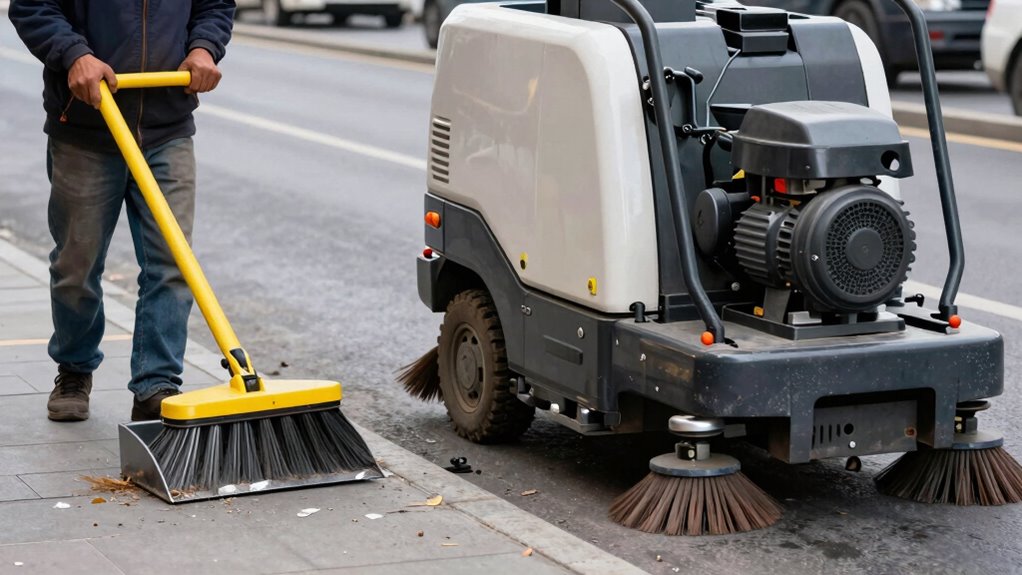
If you’re cleaning small to medium spaces like sidewalks or indoor areas, push sweepers are your best choice—they’re simple, eco-friendly, and cost-effective. For larger, heavy-duty jobs like expansive outdoor surfaces or heavily soiled areas, powered sweepers boost efficiency and reduce manual effort. Knowing where each works best can save time and money. Keep exploring to find out how to choose the right sweeper for your specific needs and environment.

Get cleaning gear delivered free — and shop member deals
- Fast, free delivery on millions of items
- Access to Prime Big Deal Days deals on October 6–7
- Prime Video, Amazon Music and more included
Key Takeaways
- Push sweepers are ideal for small to medium indoor or outdoor areas like sidewalks and parking lots.
- Powered sweepers excel in large, heavy-duty outdoor environments with extensive debris or dirt.
- Manual push sweepers offer cost-effective, eco-friendly cleaning with no power requirements.
- Powered sweepers improve efficiency and reduce labor in extensive or heavily soiled areas.
- Terrain complexity and safety features influence the choice between manual and powered sweeping equipment.
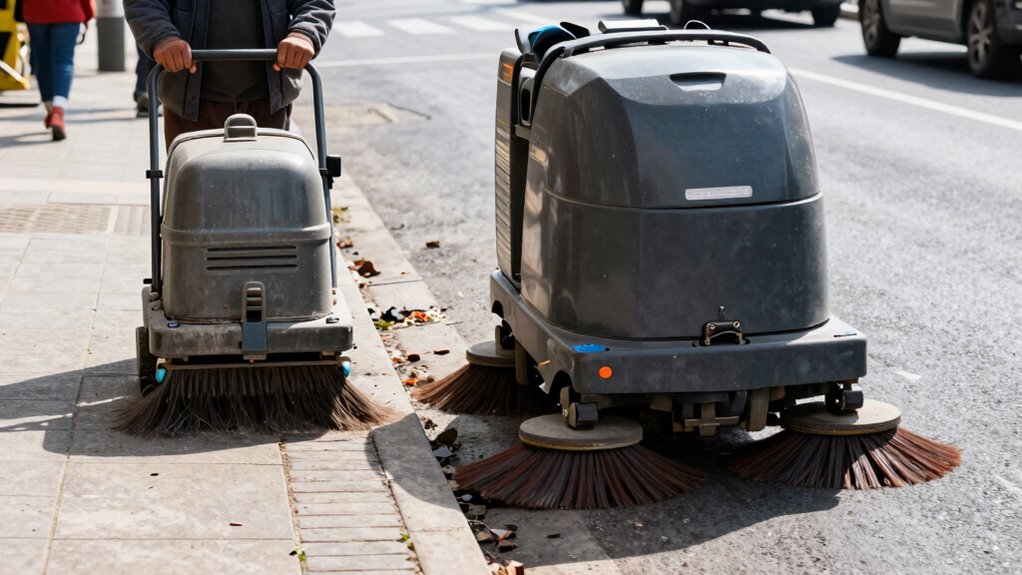
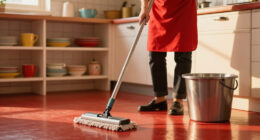
When it comes to choosing the right sweeping equipment, understanding the differences between push sweepers and powered sweepers is essential. Push sweepers are manually operated, meaning you push or pull them across the surface to collect debris. They’re simple, lightweight, and require no power source, making them ideal for small to medium-sized areas like sidewalks, parking lots, or indoor spaces. Their manual operation allows you to control the pace and pressure, which can be an advantage for delicate surfaces or areas needing gentle cleaning. Additionally, because they don’t rely on electricity or fuel, push sweepers are highly energy-efficient, reducing operational costs and environmental impact. This makes them a practical choice for organizations aiming to minimize energy consumption and maintenance expenses.
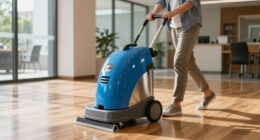
However, push sweepers do have limitations. Their efficiency drops when it comes to large-scale cleaning projects or heavily soiled surfaces. Since they depend solely on human effort, you might find yourself exhausted after extended use, and the time it takes to cover large areas can be significant. This is where powered sweepers become advantageous. Powered sweepers use motors—either electric or gas-powered—to automate the sweeping process, markedly increasing productivity. They’re designed for heavy-duty applications, capable of handling large debris, thick layers of dirt, or expansive outdoor environments with less physical effort on your part. This not only boosts efficiency but also saves time, allowing you to complete more work in less time. Moreover, advancements in powered sweeper technology have improved their maneuverability, making them suitable for a variety of complex terrains and confined spaces.
Furthermore, the choice between push and powered sweepers often depends on the specific type of terrain and cleaning needs, highlighting the importance of assessing your environment before making a decision. In addition, selecting the right equipment can also influence long-term operational costs, which is an important consideration for budget-conscious organizations. Modern powered sweepers also incorporate safety features to enhance operator security during use, which is another factor to consider when choosing equipment. Energy efficiency is another critical factor. While powered sweepers consume energy, many modern models are built with energy-saving features that reduce power consumption without sacrificing performance. Electric models, in particular, are more environmentally friendly and cost-effective over time, especially if you already have access to electrical outlets or batteries. In contrast, push sweepers don’t need any energy input, making them the most energy-efficient choice in that regard. Yet, their manual operation means they rely entirely on human effort, which can be a limitation in terms of fatigue and throughput. For large or heavily soiled areas, powered sweepers are often the more practical choice due to their increased efficiency, especially when long-term operational costs are considered.
manual push sweeper for sidewalks
As an affiliate, we earn on qualifying purchases.
As an affiliate, we earn on qualifying purchases.
Frequently Asked Questions
How Do Maintenance Costs Compare Between Push and Powered Sweepers?
You’ll find that maintenance expenses for push sweepers are generally lower compared to powered sweepers because they have fewer moving parts and no engine. The cost comparison shows push sweepers require less routine maintenance and repairs, saving you money over time. Powered sweepers, while more expensive initially and in ongoing upkeep, offer efficiency for larger areas. Your choice depends on balancing upfront costs with long-term maintenance expenses.
Are There Environmental Benefits to Using One Type Over the Other?
Using push sweepers can be more eco-friendly because they require no fuel or electricity, supporting emission reduction and eco-friendly practices. Powered sweepers, however, may emit pollutants unless they’re electric models. If you’re aiming for sustainability, choosing push sweepers helps minimize your carbon footprint. But if efficiency and large-scale cleaning are priorities, electric or low-emission powered sweepers still contribute to emission reduction efforts.
Which Sweeper Type Is More Suitable for Indoor Cleaning?
You should choose a push sweeper for indoor cleaning, as it typically produces lower noise levels, making it less disruptive and more suitable for indoor environments. Push sweepers also help maintain better indoor air quality since they don’t generate the same dust and emissions as powered sweepers. Their quieter operation makes them ideal for spaces where noise sensitivity matters, such as offices or homes.
How Does Operator Training Differ for Push Versus Powered Sweepers?
You’ll find operator training for push sweepers simpler, focusing on basic skills like pushing and maneuvering, while powered sweepers demand more advanced training programs due to their complexity. Operator skill development for powered sweepers includes understanding controls, safety procedures, and maintenance. With the right training, you’ll master both types quickly, but powered sweepers require a steeper learning curve to guarantee safe and effective operation.
What Safety Precautions Are Necessary for Powered Sweeper Operation?
When operating a powered sweeper, you need to prioritize safety by wearing appropriate safety gear like gloves, eye protection, and hearing protection. Always review emergency procedures before starting, such as how to shut down the machine quickly if needed. Keep clear of moving parts, and make certain the area is free of obstacles. Regular maintenance checks and proper training help prevent accidents and guarantee safe, efficient operation.
Conclusion
Ultimately, choosing between push sweepers and powered sweepers depends on your specific space and speed needs. Push sweepers shine in tight, tender corners, offering agility and ease. Powered sweepers power through large, laborious loads, making your cleanup quicker and more thorough. By matching the machine to your mess, you’ll master maintenance with minimal fuss. So, whether you’re tackling tight turns or tackling vast vistas, pick the perfect partner to keep your space spotless, swift, and sensational.
Fall Picks
fall essentials
As an affiliate, we earn on qualifying purchases.