Before using propane or diesel sweepers indoors, guarantee the area is well-ventilated to prevent harmful fumes and prevent oxygen displacement. Check tanks for leaks and store fuels away from heat or open flames. Keep fire extinguishers nearby and clear the workspace of obstacles and combustible materials. Use appropriate safety gear like masks or respirators, especially in poorly ventilated spaces. Staying aware of these safety measures helps protect you from fire and health hazards; more tips follow to keep you safe.
Key Takeaways
- Ensure adequate ventilation and use exhaust systems to prevent fume buildup indoors.
- Confirm storage tanks and fuel containers are sealed, properly maintained, and away from heat sources.
- Use appropriate personal protective equipment, such as masks or respirators, in enclosed spaces.
- Keep the workspace free of combustible materials and obstacles to minimize fire risks.
- Have certified fire extinguishers nearby and follow strict fueling and handling safety protocols.
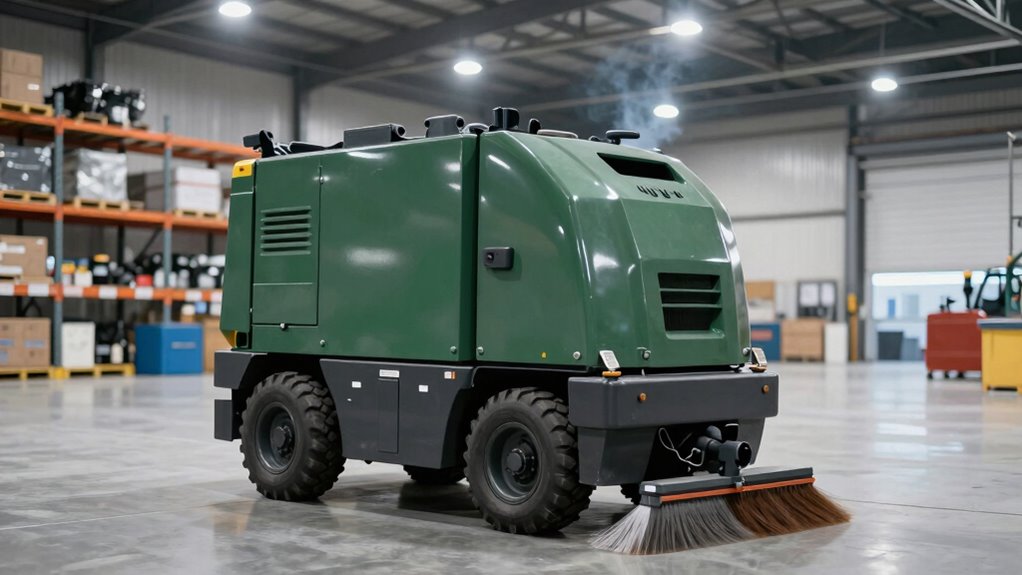
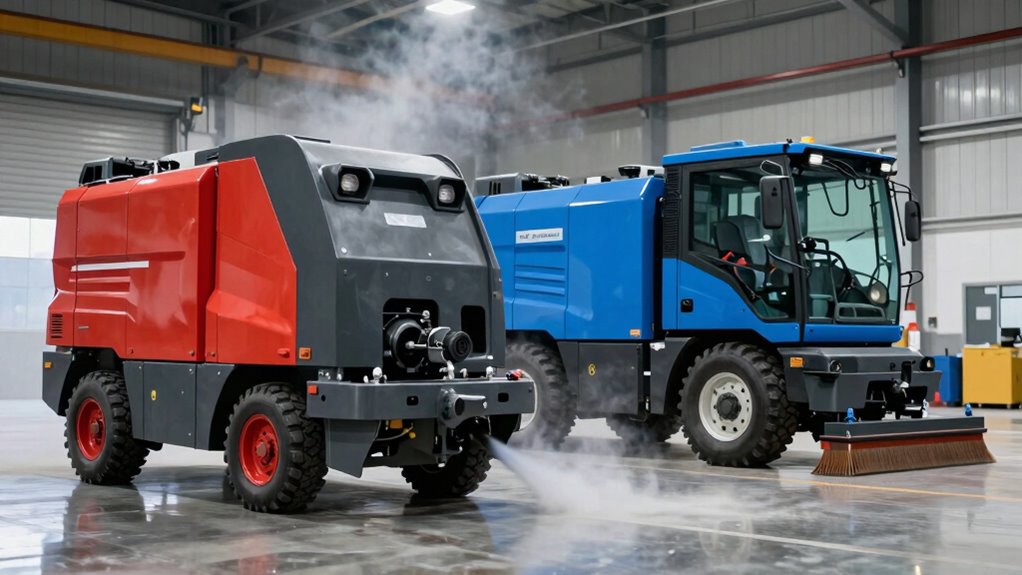
Have you ever wondered whether it’s safe to operate propane or diesel sweepers indoors? It’s a common question, and the answer depends on understanding essential safety considerations. Fuel safety is paramount when using these machines inside enclosed spaces. Propane and diesel fuels are highly flammable, so you need to handle them with care. Always inspect fuel tanks for leaks or damage before operation, and never fill tanks near open flames or heat sources. It’s vital to store fuel safely, making sure containers are sealed and kept away from areas with high foot traffic or sources of ignition. When operating, make sure you’re following manufacturer instructions precisely, especially regarding fueling procedures. Proper fueling reduces the risk of spills or vapors escaping, which could lead to dangerous fires or explosions.
Ventilation requirements are equally critical. Indoor environments can quickly become hazardous if fumes accumulate. Propane, being a gas, can displace oxygen in the air, creating a suffocation risk. Diesel fumes contain pollutants and particulates that are harmful to breathe over time. You must guarantee adequate ventilation whenever operating these sweepers indoors. This means having exhaust systems or fans that can effectively remove fumes from the workspace. Without proper ventilation, toxic gases can build up, leading to health issues for anyone nearby and increasing fire hazards. You should also consider the size of the space; larger areas with good airflow are safer for indoor operation, but even then, continuous monitoring of air quality is essential. Additionally, understanding the flammability of fuels is crucial for preventing accidents and ensuring safety during operation. It’s also important to be aware of air quality standards and testing to make sure the environment remains safe during and after use.
Furthermore, it’s vital to recognize that fuel storage should adhere to strict safety protocols, including proper containers and designated areas, to mitigate potential hazards. Implementing safety protocols for handling and storage can significantly reduce the risk of accidents. You need to think about the environment where you’re working. Check that the space is free from combustible materials or obstacles that could interfere with the sweeper’s operation or increase fire risk. Never operate propane or diesel sweepers in confined, poorly ventilated spaces unless you have a certified ventilation system in place. It’s also wise to have fire extinguishers nearby, rated for flammable liquids and gases, just in case. Proper ventilation can significantly reduce the buildup of dangerous fumes and improve overall safety. Always wear appropriate safety gear, including masks or respirators, especially if ventilation isn’t perfect.
indoor propane sweeper safety gear
As an affiliate, we earn on qualifying purchases.
As an affiliate, we earn on qualifying purchases.
Frequently Asked Questions
Are Propane or Diesel Sweepers Safer for Indoor Use Than Electric Models?
Propane sweepers are generally safer for indoor use than diesel models because they produce lower noise levels and fewer emissions. While electric sweepers are quiet and eco-friendly, propane units offer better fuel efficiency, allowing longer operation without frequent refueling. Diesel sweepers tend to emit more fumes and noise, making them less suitable indoors. So, for safety and comfort, propane sweepers are usually the better choice indoors.
How Often Should Indoor Propane or Diesel Sweepers Be Maintained?
You should maintain indoor propane or diesel sweepers regularly, ideally following the manufacturer’s maintenance schedules. Check fuel efficiency by inspecting fuel lines, filters, and engine components frequently to prevent costly repairs. Regularly clean and service parts like spark plugs and air filters to guarantee peak performance. Consistent maintenance not only enhances safety and fuel efficiency but also prolongs the sweeper’s lifespan, keeping your indoor environment safe and efficient.
Can Propane or Diesel Sweepers Be Used in Poorly Ventilated Spaces?
You shouldn’t use propane or diesel sweepers in poorly ventilated spaces, even with emission controls. Ventilation requirements are essential because these sweepers produce harmful emissions that can build up quickly indoors. Without proper airflow, you risk health hazards and potential code violations. Always make sure adequate ventilation and adhere to safety guidelines, as these measures help protect your crew and maintain a safe working environment.
What Are the Emissions Standards for Indoor Propane or Diesel Sweepers?
You need to follow strict emission regulations and safety protocols when using propane or diesel sweepers indoors. These standards limit harmful emissions like carbon monoxide and nitrogen oxides, guaranteeing a safer environment. Always check local regulations before operation, maintain equipment properly, and ensure proper ventilation. By adhering to these standards and protocols, you reduce health risks and stay compliant, making indoor sweeping safer for everyone involved.
Do Indoor Sweepers Require Special Training to Operate Safely?
Yes, indoor sweepers require special training to operate safely. You need to understand operator safety protocols, including proper handling of fuel sources and awareness of ventilation requirements. Training helps you recognize potential hazards like emissions buildup and guarantees you follow safety procedures. With proper instruction, you’ll know how to operate the equipment effectively while minimizing health risks and maintaining good indoor air quality.
Conclusion
So, next time you think about boosting your indoor cleaning with propane or diesel sweepers, remember—what seems like a quick fix might just turn your spotless space into a smoky mess. Irony’s the twist: these powerful machines promise efficiency but could leave you breathing in more than just dust. Ultimately, it’s not just about cleaning faster but doing it smarter and safer—sometimes, the old-fashioned way is the real clean sweep.