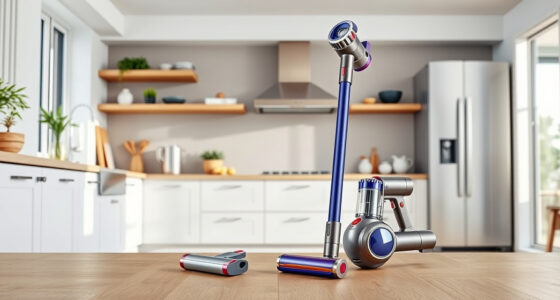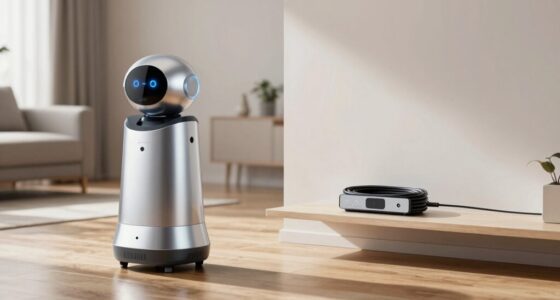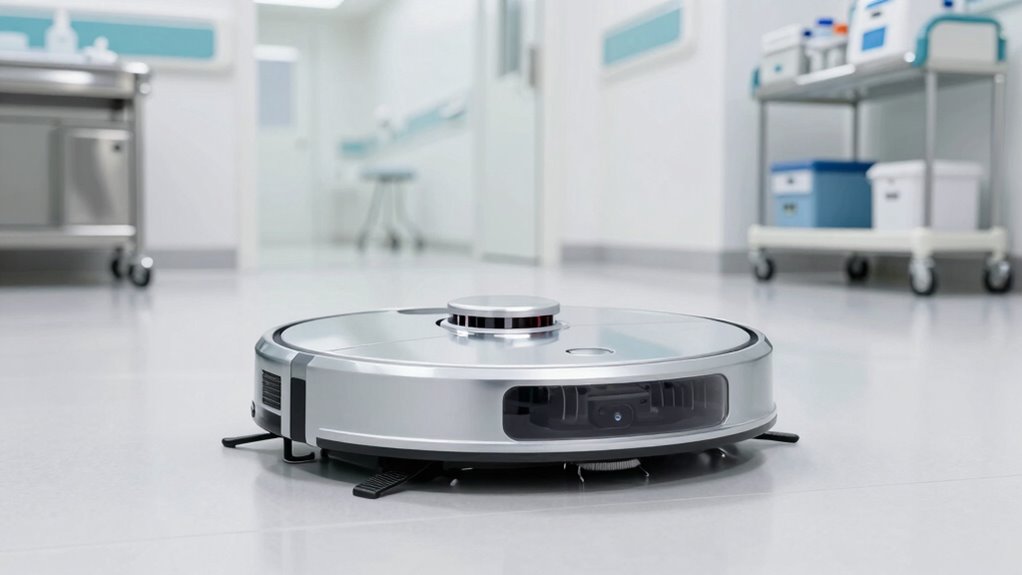
A hospital cleaning robot must navigate smoothly, avoiding obstacles and adapting to different spaces using advanced sensors and algorithms. It should include sterilization features like UV-C light and electrostatic sprayers to guarantee high hygiene standards. Safety is key, so obstacle detection and emergency stops protect staff and patients. Integration with management systems helps monitor cleaning progress. If you’re curious about how these features work together for a safer environment, keep exploring the details.
Key Takeaways
- Advanced navigation and obstacle avoidance ensure thorough cleaning in complex hospital layouts without supervision.
- Equipped with UV-C sterilization and electrostatic sprayers effectively disinfect high-touch surfaces.
- Safety features like obstacle detection and emergency stops prevent accidents and ensure reliable operation.
- Real-time monitoring and system integration support compliance, accountability, and efficient infection control.
- Designed for continuous, quiet operation during off-peak hours, maintaining high hygiene standards with minimal disruption.
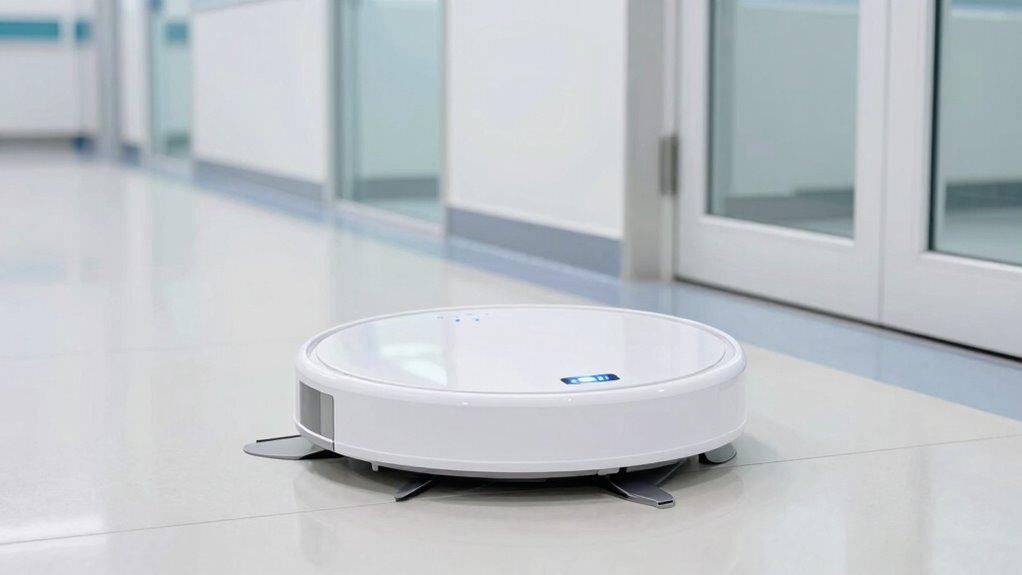
Have you ever wondered how hospitals maintain such high cleanliness standards while managing tight schedules and staffing shortages? The answer lies in the advanced technology behind cleaning robots designed specifically for healthcare environments. These robots are built for precision, efficiency, and safety, making them suitable for the demanding hospital setting. One of the most critical features is advanced robot navigation. Unlike conventional cleaning devices, these robots use sophisticated algorithms and sensors to navigate complex layouts seamlessly. They can map out rooms, avoid obstacles, and adapt to changes in real time. This guarantees thorough cleaning without the need for constant human supervision, saving time and reducing the risk of cross-contamination. Their ability to navigate precisely means they can clean hard-to-reach areas, such as under beds and behind equipment, which are often missed during manual cleaning. Additionally, some cleaning robots incorporate adaptive algorithms, allowing them to improve their performance over time based on the environment and cleaning patterns. In environments with high infection risks, the integration of sterilization technology further ensures surfaces are disinfected effectively. The use of advanced sensors enhances their ability to operate safely around people and delicate equipment, minimizing potential accidents. Incorporating real-time monitoring capabilities, these robots can provide instant feedback on cleaning progress, enhancing oversight and accountability in infection control measures—this is especially important for maintaining compliance with health standards. Moreover, ongoing innovations in robotic sterilization methods continue to expand their capabilities, making them even more effective in healthcare settings.
Hospitals rely on advanced cleaning robots with smart navigation to ensure thorough, efficient, and safe sanitation.
Sterilization technology is equally essential in determining a cleaning robot’s suitability for hospitals. Medical environments require not just visible cleanliness but also elimination of pathogens, bacteria, and viruses. These robots are equipped with cutting-edge sterilization tools, such as UV-C light or electrostatic sprayers, that disinfect surfaces effectively. UV-C sterilization, for instance, can kill a wide range of microorganisms within minutes, making it ideal for high-touch surfaces and shared spaces. Electrostatic sprayers deliver disinfectant evenly over surfaces, ensuring thorough coverage, even on irregular or difficult-to-reach areas. The integration of sterilization technology into cleaning robots guarantees that hospitals meet strict hygiene standards without disrupting daily operations or requiring extensive manual effort. Furthermore, ongoing research and development continue to enhance sterilization methods, increasing their speed and effectiveness for healthcare applications.
Additionally, hospitals demand reliability and safety from their cleaning robots. These machines are designed with safety features to prevent accidents, such as obstacle detection sensors and emergency stop functions. They also operate quietly, minimizing disruption to staff and patients. Their durability and ability to operate continuously during off-peak hours help hospitals maintain consistent cleanliness routines. Moreover, user-friendly interfaces and remote control capabilities make it easy for staff to monitor and manage cleaning cycles efficiently. Proper training and maintenance are also crucial to ensure these robots operate safely and effectively over time. As the technology advances, integration with hospital management systems can further streamline cleaning schedules and reporting, enhancing overall hospital hygiene management.
In essence, a cleaning robot suitable for hospitals combines intelligent navigation, robust sterilization technology, safety, and ease of operation. These features enable hospitals to uphold stringent hygiene standards consistently, even amid staffing challenges and tight schedules. By leveraging such advanced robotic solutions, healthcare facilities can ensure a safer, cleaner environment for patients and staff alike—one that meets the highest standards of cleanliness and infection control.

OUKESEN Window Cleaning Robot,9000Pa Sauction & 75N Cleaning Force with 4 Water Spray Support 5 Cleaning Modes & Remote Control,Window Cleaner Robot for Wet Cleaning Frame & Frameless Windows & Tiles
- Strong Suction Power: 9000Pa vacuum with 75N cleaning force
- Edge and Corner Detection: 8 radars for 360° coverage and obstacle avoidance
- Versatile Cleaning Modes: Multiple modes for different surfaces and stains
As an affiliate, we earn on qualifying purchases.
As an affiliate, we earn on qualifying purchases.
Frequently Asked Questions
How Do Cleaning Robots Handle Biohazard Waste?
Cleaning robots handle biohazard waste through specialized biohazard containment systems. They are equipped with secure compartments that safely collect and contain waste, preventing exposure. The robots follow strict waste disposal protocols, guaranteeing contaminated materials are transported to designated disposal areas. This process minimizes human contact with biohazards, maintains hygiene standards, and ensures safe, efficient waste management in hospital environments.
Are Cleaning Robots Effective Against Hospital-Specific Pathogens?
Think of cleaning robots as vigilant guardians, armed with advanced technology that targets hospital-specific pathogens. They follow strict sterilization protocols, much like knights adhering to code, ensuring infection control remains uncompromised. These robots are highly effective against bacteria, viruses, and other harmful microorganisms, reducing the risk of hospital-acquired infections. Their precision and consistency make them indispensable allies in maintaining a sterile, safe environment for patients and staff alike.
What Is the Battery Life of Hospital Cleaning Robots?
Hospital cleaning robots typically offer a battery longevity of around 3 to 6 hours, depending on the model and cleaning tasks. You’ll find that their power efficiency is optimized for extended use, allowing them to cover large areas without frequent recharging. This guarantees consistent cleaning schedules, minimizing downtime and maintaining high hygiene standards. Choose robots with longer battery life to maximize operational efficiency in busy hospital environments.
How Do Robots Navigate Complex Hospital Layouts?
You’ll find that hospital cleaning robots navigate complex layouts effectively through advanced robot mapping and obstacle avoidance technology. They create detailed digital maps of the environment, allowing precise movement around furniture, equipment, and people. Using sensors and real-time data, they detect obstacles and adjust their paths instantly, ensuring thorough cleaning without collisions. This combination of robot mapping and obstacle avoidance guarantees safe, efficient navigation in challenging hospital environments.
Can Cleaning Robots Operate During Hospital Working Hours?
Yes, cleaning robots can operate during hospital working hours. You just need to guarantee proper robot maintenance and provide user training to staff. Regular maintenance keeps robots functioning efficiently, while training helps staff understand how to operate and troubleshoot them safely. This way, robots can seamlessly work alongside hospital staff, maintaining cleanliness without disrupting daily activities, and ensuring a hygienic environment for patients and visitors.
Conclusion
Choosing the right cleaning robot for hospitals is like selecting a guardian for the health of everyone inside. When you prioritize advanced disinfection, reliable navigation, and safety features, you’re empowering this robotic ally to be a steadfast protector. It’s more than just a tool; it’s a beacon of cleanliness shining through the chaos. With the right robot, you’re not just cleaning — you’re creating a sanctuary where health can truly flourish.