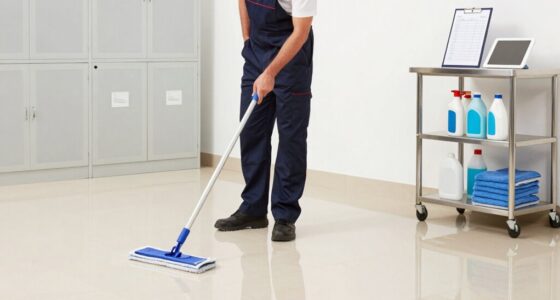

To decide between day and night cleaning, consider your business type, customer expectations, and staff preferences. If you prioritize immediate cleanliness and direct supervision, daytime cleaning might be better. For minimizing disruptions and ensuring thorough cleaning, night shifts could work best. Think about safety, logistics, and your operational flow before making a choice. Exploring these factors further can help you pick the best option for your needs and goals.

Get cleaning gear delivered free with Prime
- Fast, free delivery on millions of items
- Prime Video, Amazon Music and more included
- Member-only deals all year
Key Takeaways
- Consider customer preferences for minimal disruption and a clean environment during business hours.
- Evaluate the nature of your business to determine if daytime or nighttime cleaning better suits operational needs.
- Assess staffing availability, safety protocols, and employee comfort for overnight or daytime shifts.
- Weigh the benefits of supervision and immediate feedback against potential operational disruptions.
- Use advanced cleaning technology to enhance efficiency and minimize impact regardless of cleaning schedule.
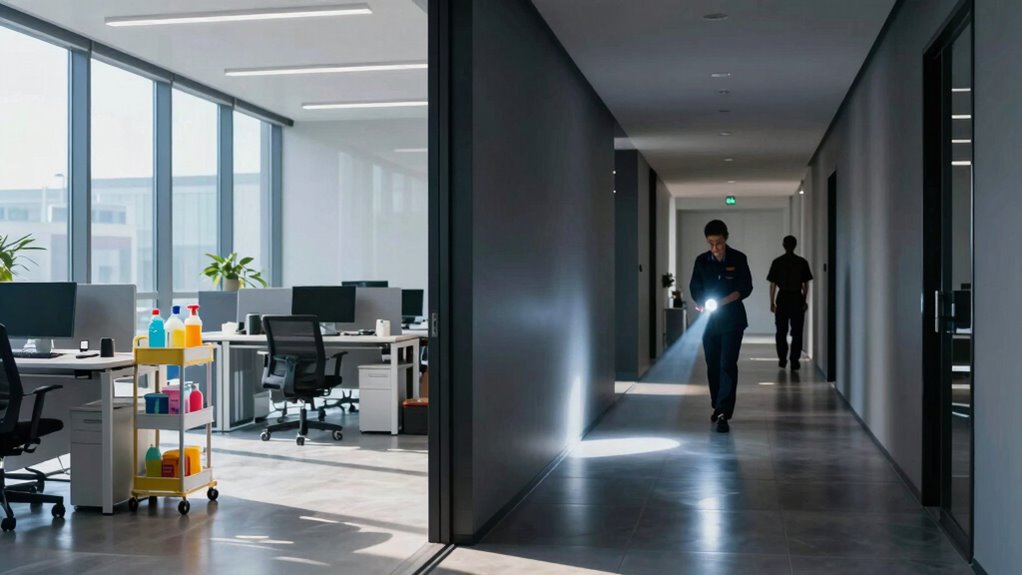
Choosing between day cleaning and night cleaning depends on your facility’s specific needs and priorities. As a manager, you need to weigh factors like employee productivity and customer preferences to make the best choice. Day cleaning involves your staff working during regular business hours, which can boost employee engagement and oversight. When employees are on-site during the day, you can easily supervise their work, provide immediate feedback, and ensure tasks are completed efficiently. Plus, daytime cleaning can foster a sense of teamwork and accountability, as staff members are more visible and accessible. However, performing cleaning tasks during business hours might momentarily disrupt your daily operations, especially if your space is busy or sensitive to noise and activity.
Choosing between day and night cleaning depends on your facility’s needs and priorities.
On the other hand, night cleaning typically happens after your customers or clients have left for the day. This approach minimizes disruption, allowing your business to run smoothly during peak hours. With fewer customers around, your staff can focus solely on cleaning without the pressure of ongoing operations, which often results in a more thorough job. Night cleaning also offers the advantage of improved customer experience; visitors or clients won’t be inconvenienced by cleaning equipment or workers, and your facility can present a pristine environment each morning. Additionally, considering the impact of cleaning schedules on overall indoor air quality can help in making a more informed decision. It’s important to recognize that cleaning technology advancements can significantly enhance efficiency regardless of the schedule you choose. Moreover, the adoption of advanced cleaning equipment can optimize cleaning processes during either shift, ensuring high standards are maintained.
Furthermore, integrating proper safety protocols into your cleaning procedures during night shifts can help mitigate potential risks associated with late-hour cleaning. Nevertheless, you need to contemplate how this scheduling affects employee productivity. Night shifts might require different staffing arrangements or shift preferences, and some employees may find working overnight less motivating or more challenging. Additionally, managing staff during late hours can involve increased logistical considerations, like transportation and safety protocols.
Customer preferences play a crucial role in deciding the right cleaning schedule. If your clientele values a consistently spotless environment and your business operates primarily during daytime hours, day cleaning could be more appealing. Conversely, if your industry emphasizes a clean, professional look without interference, night cleaning might be the better choice. You should also factor in the nature of your business; for example, retail stores often prioritize daytime cleaning to ensure a welcoming shopping experience, while hospitality or healthcare facilities may opt for nighttime cleaning to maintain uninterrupted service.
Ultimately, your decision hinges on balancing these factors. If employee productivity and immediate oversight are top priorities, and your business can accommodate some daytime disruption, day cleaning makes sense. If minimizing customer disturbance and ensuring a spotless environment for opening hours are more critical, night cleaning might be your best option. Incorporating technology in cleaning can also help streamline operations and improve efficiency regardless of the chosen schedule. No matter which you choose, aligning your cleaning schedule with your facility’s specific needs will help you maintain a clean, efficient, and customer-friendly environment.
commercial floor cleaning machines
As an affiliate, we earn on qualifying purchases.
As an affiliate, we earn on qualifying purchases.
Frequently Asked Questions
What Are the Cost Differences Between Day and Night Cleaning?
The cost comparison between day and night cleaning varies, often favoring night cleaning due to lower labor costs and scheduling flexibility. Night cleaning can be more economical as it avoids peak hours and minimizes disruptions, potentially reducing overtime or premium pay. However, some facilities might face higher security or staffing costs at night. You should weigh these factors to determine which option balances budget and convenience best for your needs.
How Does Cleaning Impact Building Security and Access?
Cleaning impacts building security and access by requiring strict security protocols and access control measures. When you schedule cleaning, guarantee that only authorized personnel can enter sensitive areas. During night cleaning, implement secure access controls like keycards or biometric systems to prevent unauthorized entry. Clear communication and monitoring help maintain safety while keeping the building secure, regardless of whether cleaning occurs during the day or night.
Are There Specific Industries Better Suited for Day or Night Cleaning?
Certain industries, like healthcare and retail, are better suited for day cleaning because of industry compatibility and the need for minimal disruption during business hours. Conversely, manufacturing and warehousing often benefit from night cleaning due to scheduling flexibility, allowing operations to run smoothly without interference. You should consider your industry’s specific needs and your scheduling options to choose the most effective cleaning time, ensuring safety and efficiency.
What Safety Precautions Are Necessary for Night Cleaning Crews?
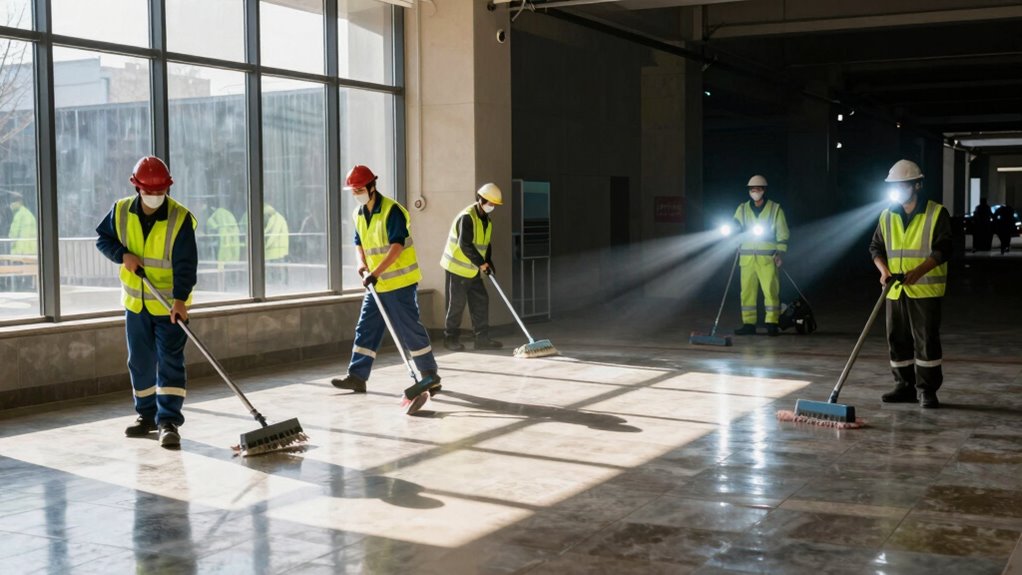
Imagine shadows merging with blinking safety lights as you work at night. You must prioritize worker visibility by wearing reflective gear, ensuring lighting is adequate, and marking hazardous zones. Emergency protocols are essential—know evacuation routes, keep communication devices handy, and conduct regular safety drills. These precautions protect your crew from unseen dangers, making nighttime cleaning safer despite the quiet darkness.
How Does Cleaning Timing Affect Tenant or Employee Satisfaction?
Cleaning timing considerably impacts tenant comfort and employee productivity. During the day, tenants appreciate minimal disruptions, leading to higher satisfaction. Night cleaning can boost productivity by allowing staff to work without interruption, but it might affect employee comfort if noise levels are high or if it disrupts sleep. You should weigh these factors carefully, balancing tenant needs with employee well-being, to choose the most suitable cleaning schedule.
Conclusion
In the end, choosing between day and night cleaning depends on your business’s unique needs and customer flow. Remember, about 60% of retail stores prefer night cleaning to minimize disruptions. This statistic highlights how many businesses prioritize customer experience and efficiency. Whichever option you choose, guarantee it aligns with your operational goals. By making an informed decision, you’ll create a cleaner, more welcoming environment that benefits both your staff and your clients.
Halloween Picks
halloween
As an affiliate, we earn on qualifying purchases.