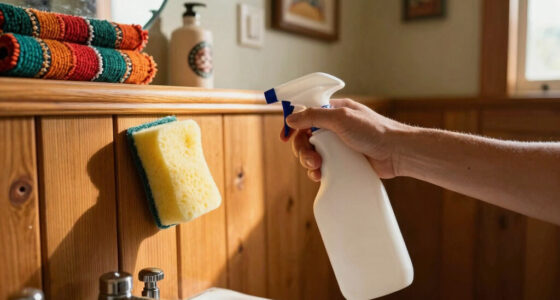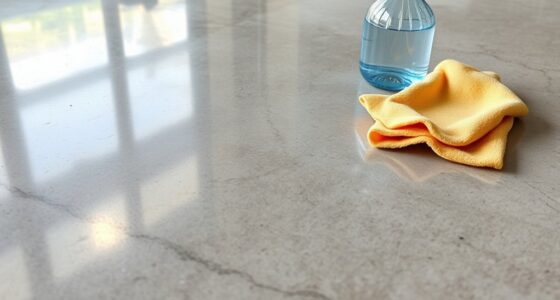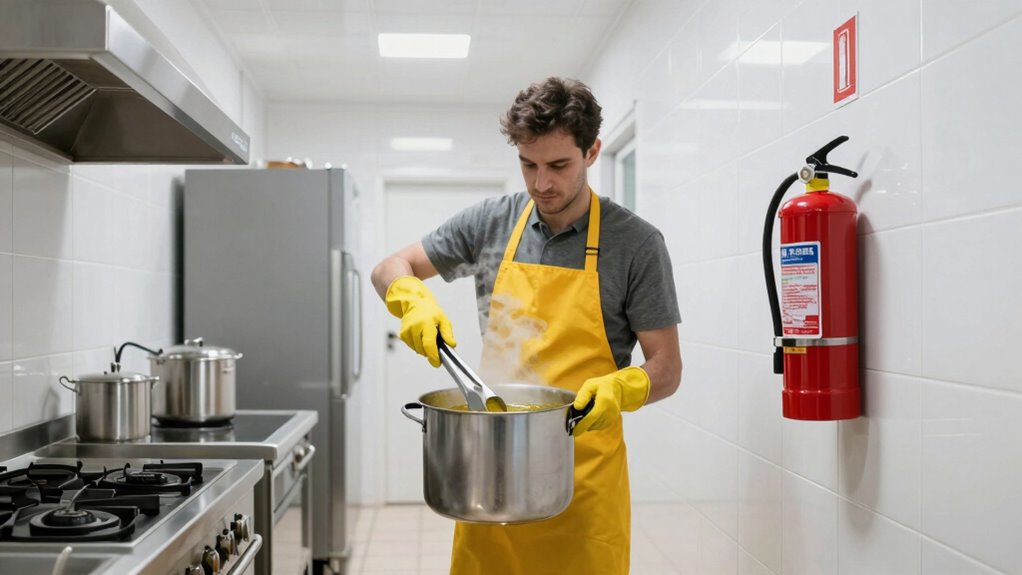

To handle greasy kitchen corridors safely, clean regularly using heavy-duty degreasers and microfiber cloths to break down grease buildup. Always guarantee proper ventilation by turning on exhaust fans and inspecting vents frequently to prevent fire hazards. Keep corridors dry, well-ventilated, and free of clutter, and respond promptly to any grease accumulation. Proper tools, safety gloves, and scheduled maintenance help keep your space safe. Continue exploring for more tips on maintaining a safe, grease-free environment.

Get cleaning gear delivered free with Prime
- Fast, free delivery on millions of items
- Prime Video, Amazon Music and more included
- Member-only deals all year
Key Takeaways
- Regularly clean corridors with microfiber cloths and environmentally friendly degreasers to prevent grease buildup.
- Ensure proper ventilation during and after cleaning to disperse airborne grease and moisture.
- Inspect and maintain ventilation systems, including ducts and exhaust hoods, to prevent fire hazards.
- Use safety gloves and appropriate tools to handle grease cleaning safely and avoid skin irritation.
- Establish a routine cleaning schedule to address grease early and maintain a safe, non-slippery environment.
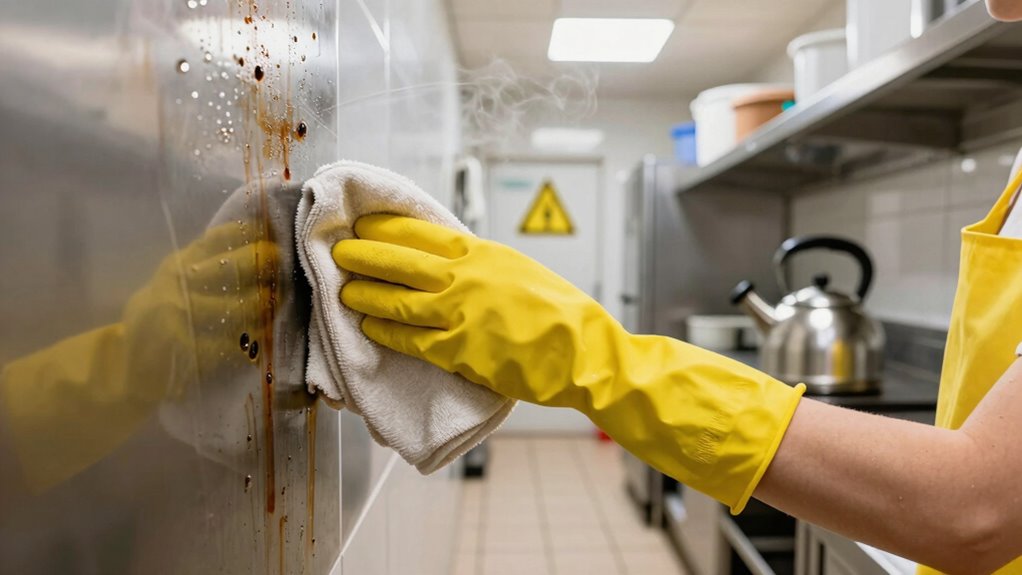
Greasy kitchen corridors can quickly become a stubborn and unsightly problem if not addressed promptly. The buildup of grease isn’t just an eyesore; it also poses safety risks and can compromise indoor air quality. To keep your kitchen safe and clean, you need to act quickly and efficiently. The first step involves gathering the right cleaning equipment. Use heavy-duty degreasers, scrub brushes, microfiber cloths, and safety gloves to tackle the grease buildup. Avoid using harsh chemicals that might damage surfaces or pose health risks. Instead, opt for environmentally friendly cleaning agents designed specifically for grease removal. When cleaning, focus on high-touch areas like door handles, light switches, and corners where grease tends to accumulate.
In addition to cleaning equipment, maintaining and inspecting your ventilation systems is essential. Grease and grime tend to clog vents and exhaust fans over time, reducing airflow and increasing the risk of fire hazards. Regularly check your ventilation systems for signs of grease buildup. If you notice a greasy film or a decrease in airflow, it’s time for a thorough cleaning. Turn off the ventilation system before cleaning to avoid spreading grease particles into the air. Use appropriate tools, like brushes and degreasers, to scrub exhaust hoods, filters, and ducts. Consider scheduling professional cleaning periodically to guarantee your ventilation system remains effective and free of dangerous grease deposits. Incorporating regular maintenance routines can significantly prevent the accumulation of grease and extend the lifespan of your ventilation systems. Additionally, understanding the importance of proper ventilation system maintenance can help you develop a comprehensive plan for a safer kitchen environment. Regularly inspecting and cleaning these systems also helps prevent fire hazards caused by grease buildup, which is a critical safety concern. Staying informed about grease accumulation and its risks is essential for proactive kitchen safety.
Handling greasy corridors isn’t just about cleaning; it’s about creating a proactive maintenance routine. Establish a regular cleaning schedule to prevent grease from becoming a stubborn problem. This routine should include daily wiping of high-traffic areas and weekly deep cleans with industrial-grade equipment. Remember, the sooner you address grease buildup, the easier it is to keep your corridors looking pristine. Proper ventilation system maintenance also plays a key role in controlling grease and moisture levels. Use exhaust fans during and after cooking to draw out airborne grease and moisture, preventing it from settling on surfaces.
Ultimately, maintaining greasy kitchen corridors requires a combination of the right cleaning equipment, routine inspections of ventilation systems, and proactive cleaning schedules. By taking these steps, you’re guaranteeing a safer, more hygienic environment for everyone. Regular attention and prompt action will help you avoid long-term issues, saving time and money down the line. Keep your corridors clean, well-ventilated, and safe by staying vigilant and using the appropriate tools and techniques.
heavy-duty degreaser for kitchen
As an affiliate, we earn on qualifying purchases.
As an affiliate, we earn on qualifying purchases.
Frequently Asked Questions
Can I Use Homemade Solutions to Remove Grease From Corridors?
Yes, you can use homemade solutions to remove grease from corridors. Natural remedies like a mixture of vinegar and baking soda are effective and environmentally friendly. However, for stubborn grease, commercial cleaners designed for kitchen surfaces may work better. Always test a small area first, and make sure good ventilation while cleaning. Combining natural remedies with commercial products can give you the best results in safely and effectively removing grease.
How Often Should I Clean Greasy Kitchen Corridors?
Think of your greasy kitchen corridors like a garden that needs regular tending. You should clean them at least once a week to prevent build-up. Proper kitchen ventilation helps reduce grease accumulation, while grease traps catch much of the residue. Regular cleaning keeps the air fresh and prevents dangerous slips. By staying consistent, you maintain a safe, clean environment, just like tending to a healthy garden.
Are There Eco-Friendly Options for Degreasing?
Yes, there are eco-friendly options for degreasing your kitchen corridors. You can use eco-friendly solvents like citrus-based cleaners or vinegar solutions, which effectively cut through grease without harmful chemicals. Biodegradable cleaners are also a great choice—they break down naturally and are safe for the environment. Using these options helps you keep your kitchen safe and clean while reducing your ecological footprint.
What Safety Gear Is Recommended During Cleaning?
Did you know that improper cleaning can lead to slips and respiratory issues? During cleaning, you should wear protective gloves to prevent skin irritation and a respirator mask to avoid inhaling harmful fumes. These safety gear items are essential for safeguarding your health, especially when using strong degreasers. Always make certain the gear fits properly and is in good condition to maximize protection and make your cleaning safer.
How to Prevent Grease Buildup in the First Place?
To prevent grease buildup, you should focus on good ventilation and managing cooking fumes. Always turn on your ventilation systems before cooking, and keep them running during and after to capture airborne grease particles. Regularly clean your exhaust fans and filters to prevent grease accumulation. Using a splatter guard can also minimize grease splatters, reducing the need for frequent deep cleaning and keeping your kitchen safer and cleaner.
Conclusion
So, next time you tackle a greasy kitchen corridor, remember that regular cleaning and proper ventilation are your best allies. Some believe a dash of vinegar can cut through grease effortlessly, but science shows that using the right degreaser is more effective. Don’t rely on myths—stick to proven cleaning methods. By staying vigilant and informed, you’ll keep your kitchen safe, spotless, and free from slip hazards. Clean smart, and enjoy a safer cooking space!
Fall Picks
fall essentials
As an affiliate, we earn on qualifying purchases.