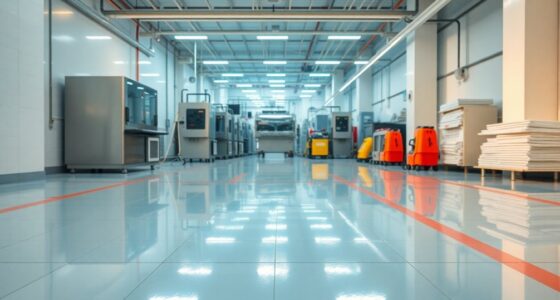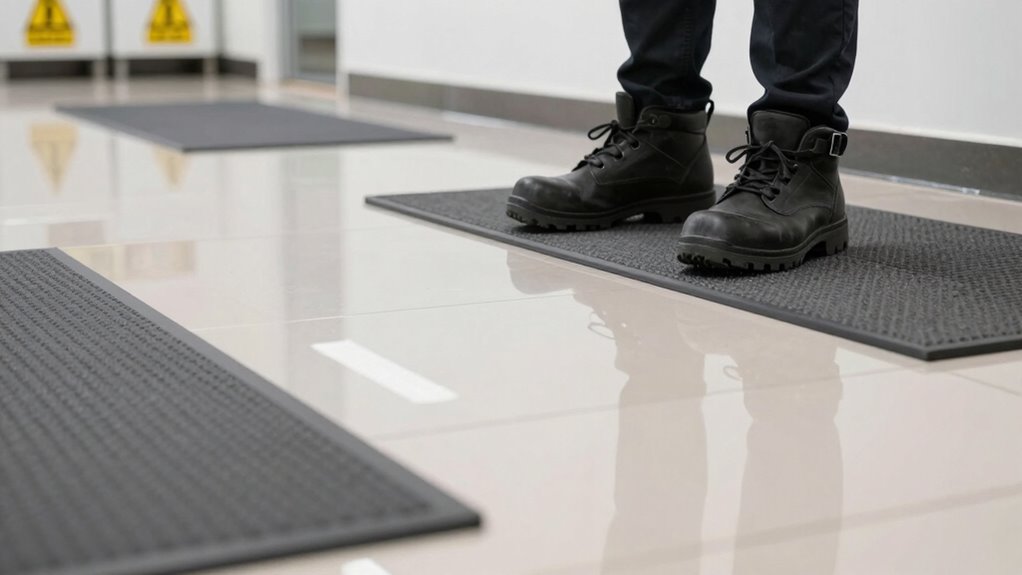

To improve safety on smooth polished floors, start by applying anti-slip coatings and textured layers to increase traction. Make certain the area is well-lit and clearly marked with warning signs, especially when wet. Encourage slip-resistant footwear and place mats in high-traffic zones. Regularly inspect and maintain the floor, repairing any damages promptly. Keep the surface clean and free of debris to prevent slips. If you want to learn more, there are additional steps you can take to keep everyone safe.
Key Takeaways
- Apply anti-slip treatments or textured coatings to increase traction on polished surfaces.
- Ensure proper lighting and clear signage to highlight wet or hazardous areas.
- Encourage footwear with slip-resistant soles and provide shoe covers at entrances.
- Regularly inspect and maintain floors, repairing cracks and worn areas promptly.
- Place non-slip mats or rugs in high-traffic or wet zones to prevent slips.
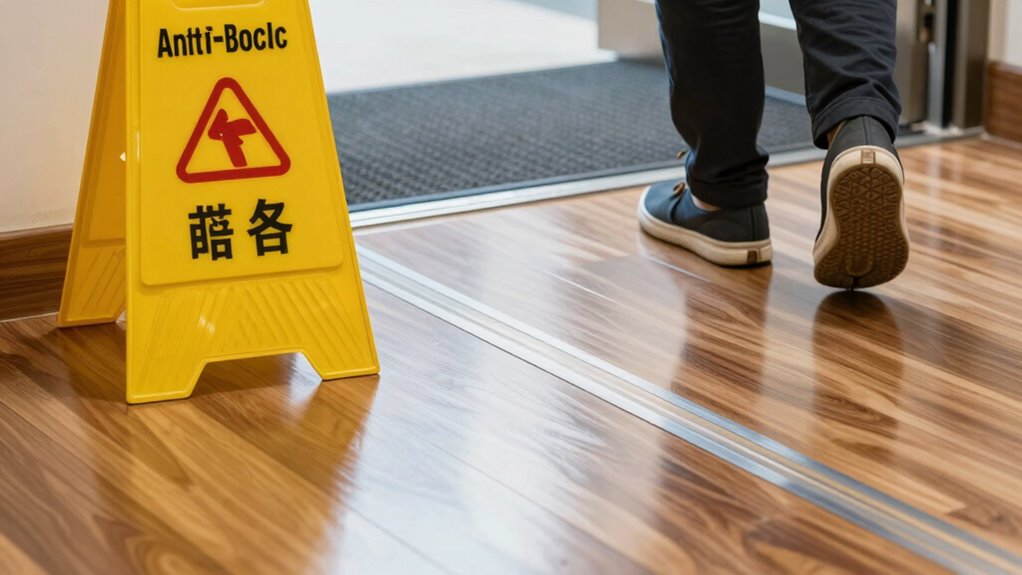
Smooth floors can be stylish and functional, but they also pose unique safety risks that you need to address. One of the most important concerns is preventing slips and falls, which can cause injuries ranging from minor bruises to serious fractures. To improve safety on polished floors, you should focus on enhancing slip resistance. Using anti-slip treatments or coatings designed specifically for smooth surfaces can make a noticeable difference. These products create a textured layer that increases traction without compromising the aesthetic appeal of the floor. Additionally, placing non-slip mats or rugs in high-traffic areas can provide extra grip and reduce the likelihood of slipping. Regularly cleaning the floors to remove dust, debris, and spills also plays a crucial role in maintaining slip resistance. When liquids or other slippery substances are left on polished surfaces, the risk of accidents skyrockets, so quick cleanup is essential. Proper maintenance and floor safety measures are vital for preventing accidents and ensuring a safe environment. Footwear safety is another key aspect of keeping yourself and others safe on smooth floors. Encourage the use of appropriate footwear with slip-resistant soles, especially in workplaces or environments with frequent foot traffic. Shoes with rubber soles and good tread can considerably improve grip, reducing the chances of slipping. Avoid walking in socks or smooth-soled footwear that lacks traction, as these are common culprits of slips on polished surfaces. If you’re responsible for managing a space, consider implementing a footwear policy that promotes safety and provides guidance on suitable shoes for your environment. Providing slip-resistant shoe covers or mats at entrances can also help maintain safer conditions, especially during wet or icy weather. Lighting plays a surprisingly essential role in safety as well. Well-lit areas make it easier to see potential hazards, including wet patches or uneven flooring. Bright, even lighting reduces shadows that might hide hazards and ensures that you can identify risks before they cause accidents. Combining good lighting with clear signage, such as “Caution: Slippery When Wet,” can alert everyone to exercise extra caution. Regular inspections of the flooring for cracks, loose tiles, or worn areas can prevent trip hazards before they become dangerous. Keeping the floor surface well-maintained and promptly repairing any damage preserves its integrity and safety. Incorporating proper cleaning routines can further enhance the longevity and safety of polished floors. Employing non-slip coatings and regular floor inspections can significantly reduce the risk of accidents in environments with polished surfaces. Paying attention to floor maintenance and ensuring that surfaces are kept in optimal condition is essential for long-term safety.
anti-slip floor coating for polished floors
As an affiliate, we earn on qualifying purchases.
As an affiliate, we earn on qualifying purchases.
Frequently Asked Questions
What Types of Footwear Are Best for Slippery Floors?
You should wear slip-resistant shoes or non-slip footwear to stay safe on slippery floors. Look for shoes with rubber soles and good tread patterns, as they provide better grip and stability. Avoid smooth-soled shoes or high heels, which increase the risk of slipping. Proper footwear helps improve traction, reduces falls, and keeps you safer while walking on polished, slick surfaces. Always choose footwear designed specifically for slip prevention.
How Often Should Floor Safety Measures Be Reviewed?
You should review your floor safety measures regularly, ideally every three to six months. Conduct floor safety audits and hazard assessments during these reviews to identify new risks or changes in the environment. Staying proactive guarantees you catch potential hazards early and update safety protocols accordingly. Consistent reviews help maintain a safe environment, especially on smooth polished floors, reducing slips and falls and promoting overall safety.
Are There Specific Cleaning Products That Increase Slip Risk?
Like walking on ice, certain cleaning agents can increase slip risk on polished floors. You should avoid harsh chemicals and choose those with low slip potential. Some cleaning products contain oils or residues that make surfaces slick. Applying slip-resistant coatings can also help enhance safety. Always read labels carefully, and opt for cleaners that are specifically designed for polished floors to minimize hazards and maintain a safe environment.
Can Floor Mats Improve Safety on Polished Surfaces?
Yes, floor mats can improve safety on polished surfaces by enhancing slip resistance. Choose mats with a textured surface or rubber backing designed for high-traffic areas, as they add grip and reduce the risk of slipping. Properly placed mats help break up smooth floor texture, providing better traction. Regularly cleaning and inspecting them makes sure they maintain their slip-resistant properties, keeping your environment safer.
What Are Quick Fixes for Sudden Slippery Spots?
When you encounter sudden slippery spots, quickly contain the spill using spill containment measures to prevent accidents. Then, apply slip-resistant coatings to the affected area to improve traction immediately. These coatings create a textured surface that reduces the risk of slipping. For long-term safety, consider adding mats and regularly maintaining the floor. Always address spills promptly to keep your environment safe and prevent potential falls.
Conclusion
So, next time you marvel at those gleaming, mirror-like floors, remember—they’re just waiting for that perfect slip-up. With a little caution and some simple tricks, you can turn those dangerous dance floors into safe havens. After all, who wouldn’t want to avoid that spectacular, unintended slide into disaster? Keep your footing firm, stay alert, and maybe—just maybe—you’ll outsmart those sneaky, polished temptresses of peril. Stay safe, or at least try to look stylish while falling!