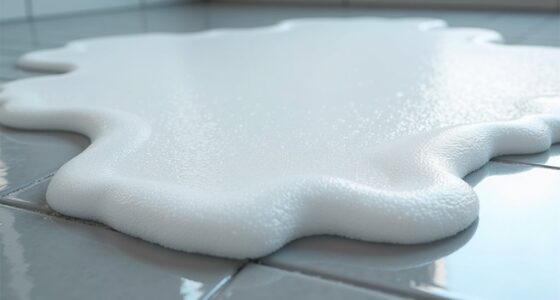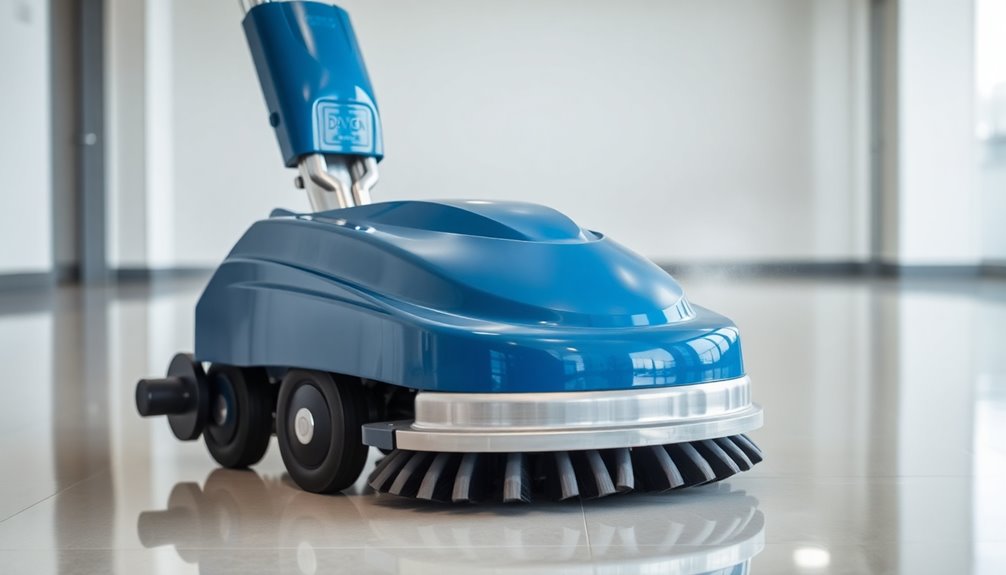

To use a commercial floor scrubber, start by prepping the area; clear out loose debris and dust mop the floor. Fill the solution tank with water and cleaning solution at the right ratio. Begin scrubbing from the furthest corner, moving in straight, overlapping lines towards the exit. Keep an eye on the recovery tank and empty it as needed. After cleaning, rinse tanks and check the scrubber for wear. There's more to master for optimal results.

Get cleaning gear delivered free with Prime
- Fast, free delivery on millions of items
- Prime Video, Amazon Music and more included
- Member-only deals all year
Key Takeaways
- Thoroughly prepare the area by removing debris and dust mopping before operating the scrubber.
- Fill the solution tank with water and the appropriate cleaning solution, checking for leaks.
- Start scrubbing from the furthest corner and move in straight, overlapping lines toward the exit.
- Monitor the recovery tank closely, emptying it as needed to maintain suction power and prevent overflow.
- After cleaning, rinse both tanks thoroughly and inspect the scrubber for wear or damage to ensure its longevity.
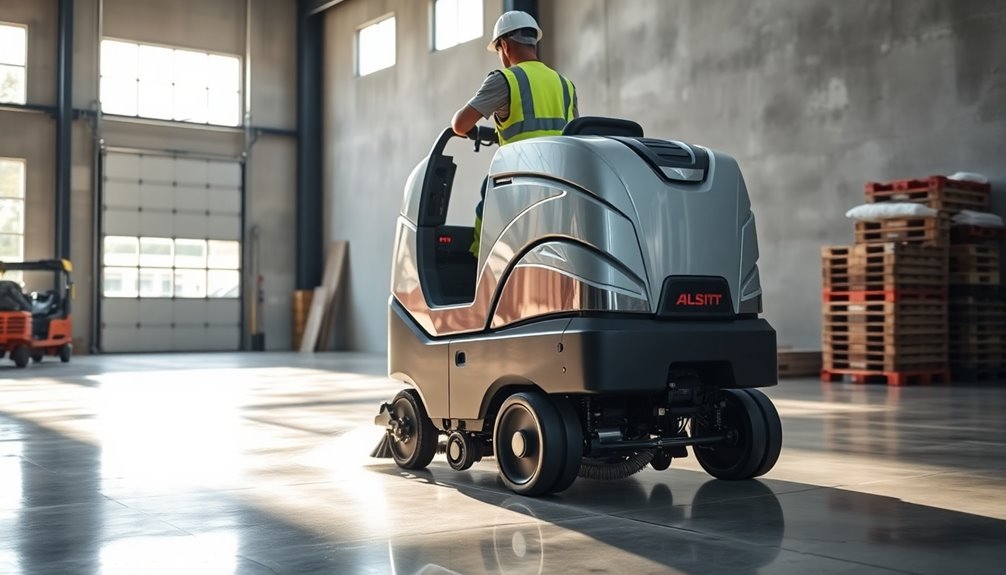
Using a commercial floor scrubber can transform your cleaning routine, making it faster and more efficient. To get started, you'll want to prepare the area by removing any loose debris from the floor. Dust mopping is essential at this stage to ensure optimal cleaning efficiency. Once the floor is clear, you're ready to operate a floor scrubber effectively.
Next, you'll need to fill the solution tank with water and the appropriate cleaning solution. Make sure to follow the recommended ratio, as it's vital that the solution is suitable for the type of flooring you're cleaning. A well-prepared solution tank will help you achieve a thorough clean, maximizing the scrubber's performance.
When you begin using the floor scrubber, start in the furthest corner of the area you're cleaning. This strategy helps you avoid re-cleaning spots and allows you to move in straight, overlapping lines toward the exit. This method not only enhances efficiency but also ensures that you cover every inch of the surface.
As you scrub, keep an eye on the recovery tank. It's crucial to monitor the recovery tank during use, emptying it as needed to prevent overflow. Maintaining suction power throughout the cleaning process is essential for achieving the best results.
The debris hopper is another important aspect of the commercial floor scrubber. Make sure it's clear before you start and check it periodically during use. If it fills up, it can hinder the scrubber's performance, impacting the overall quality of your clean.
After you've completed the cleaning, don't forget to take care of your equipment. A thorough rinse of both the recovery and solution tanks is necessary to prevent odors and bacteria buildup. This step not only helps maintain the cleanliness of the machine but also ensures its longevity.
Regular care will keep your commercial floor scrubber in top shape, ready for your next cleaning routine.
Products Worth Considering

Google Nest Learning Thermostat (3rd Gen), Stainless Steel, with 3 Temperature Sensors and elago Wall Plate

Google Nest Learning Thermostat (4th Gen) with Nest Temperature Sensor (2nd Gen), Silver

Hisense E6SR Series 55-Inch 4K UHD Hi-QLED Roku Smart TV
As an affiliate, we earn on qualifying purchases.
Frequently Asked Questions
How to Operate an Industrial Floor Scrubber?
To operate an industrial floor scrubber, start by clearing the area of debris.
Then, fill the solution tank with the recommended cleaning solution mixed correctly with water.
Power on the machine, lower the brush or pad, and move in straight, overlapping lines for even coverage.
Keep an eye on the recovery tank and empty it when it's full.
After you're done, clean both tanks and charge the machine for next time.
How to Use a Commercial Floor Buffer?
Using a commercial floor buffer is like orchestrating a dance on a polished stage.
Start by ensuring the floor's free of debris, as a clean canvas enhances your performance. Choose the right pad, like selecting the perfect shoes for your routine, and fill the machine with the right cleaning solution.
Glide across the floor in smooth, overlapping movements, leaving behind a shine that reflects your effort.
After the show, care for your equipment to keep the dance going.
Do You Put Soap in a Floor Scrubber?
Yes, you should put soap in a floor scrubber. Just make sure to follow the manufacturer's guidelines for the right cleaning solution.
Mix the detergent with water according to the product label to avoid excess foaming. It's best to add water first, then detergent, to minimize bubbles.
Also, use a neutral pH, low foaming detergent to protect your floors and keep your scrubber running efficiently.
Don't forget to clean the recovery tank regularly!
How Do You Use a Floor Scrubber Ride?
You might think using a ride-on floor scrubber is complicated, but it's really straightforward!
First, clear the area of debris and fill the solution tank with water and cleaner. Adjust the settings for speed and water flow, then start from the farthest corner, moving in straight, overlapping rows.
Once you're done, empty and rinse the recovery tank to keep odors away and ensure your scrubber's ready for next time.
Conclusion
Using a commercial floor scrubber isn't just about cleaning; it's like giving your floors a rejuvenating spa treatment. With the right techniques and a bit of practice, you'll transform dull surfaces into gleaming reflections of your hard work. Remember to maintain your equipment and follow the steps outlined, and soon, you'll breeze through cleaning tasks with ease. Embrace the shine, and let your floors tell the story of your dedication and care.