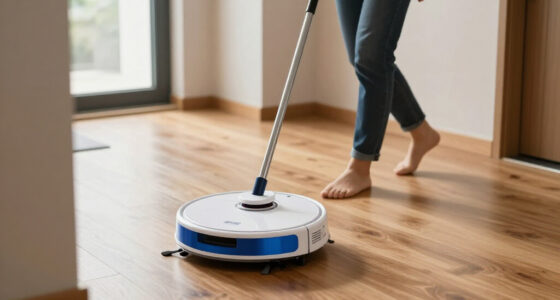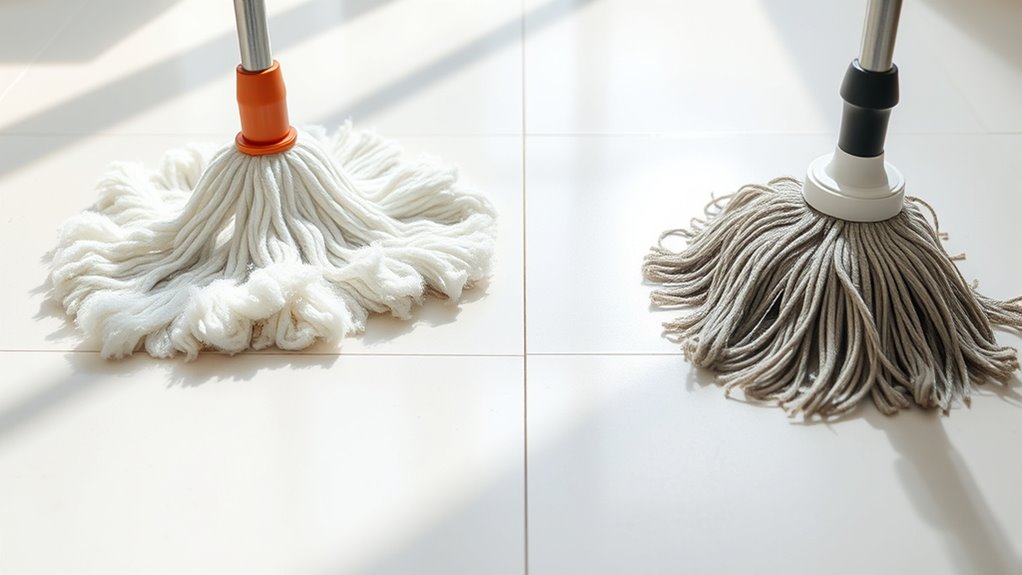

For your linoleum floors, dry mopping is best for daily dust and dirt removal, helping keep the surface clean without damage. Use a microfiber or soft-bristled broom for quick touch-ups and to prevent scratches. Damp mopping is more suited for deeper cleaning when floors look dull or sticky, using a gentle cleaner with a damp mop. Knowing when and how to switch between these methods helps extend your floor’s lifespan—keep exploring to learn more about proper techniques.
Listen free for 30 days with Audible
Thousands of audiobooks and originals — cancel anytime.
As an affiliate, we earn on qualifying purchases.
Key Takeaways
- Dry mopping is best for daily maintenance and preventing dirt buildup, especially in high-traffic areas.
- Damp mopping is suitable for deeper cleaning when floors appear dull, sticky, or stained.
- Use dry mops with microfiber or soft bristles to avoid scratching and maintain surface integrity.
- Damp mopping requires a well-wrung mop and gentle solutions to prevent water damage or warping.
- Switch between dry and damp mopping based on cleaning needs to preserve linoleum’s appearance and durability.
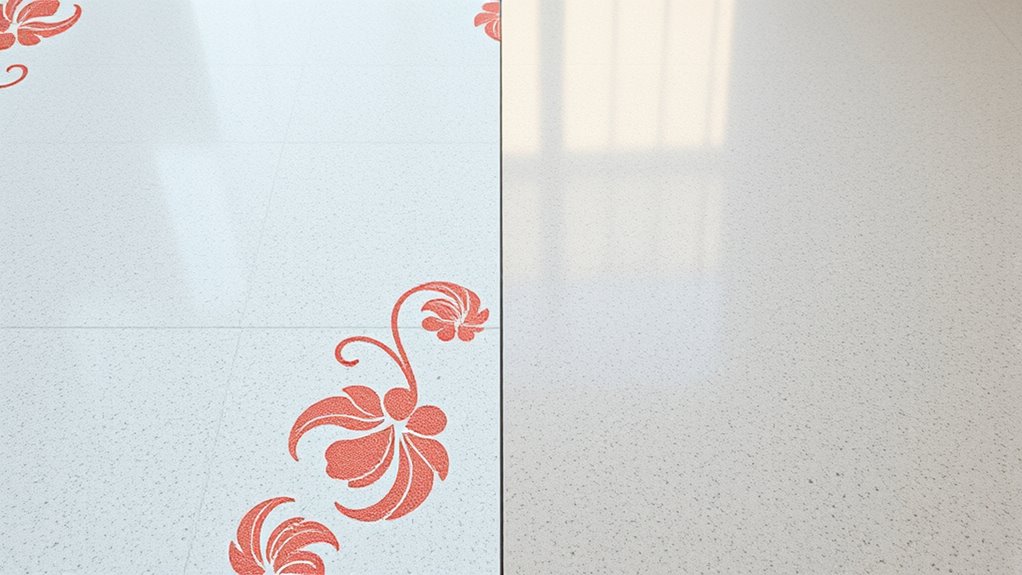
When you opt for a dry mop, you’re fundamentally removing loose dirt, dust, and debris from the surface without adding moisture. This method is excellent for daily maintenance, especially in high-traffic areas. It’s quick, convenient, and prevents dirt from settling into the floor’s surface or grout lines. Plus, it minimizes the risk of water seeping into seams or edges, which can cause damage over time. Use a microfiber or soft-bristled broom or a dry microfiber mop to effectively gather particles without scratching the surface. Regular dry mopping can also help maintain the long-lasting durability of your linoleum floors by preventing abrasive buildup.
On the other hand, damp mopping is ideal for deeper cleaning sessions or when your floor looks dull or sticky. When you use a damp mop, you need to be careful with your cleaning solutions. Harsh chemicals can degrade the linoleum or cause discoloration, so opt for pH-neutral or specially formulated linoleum cleaning solutions. These gentle formulas effectively lift dirt and stains without harming the material. To do this properly, wring out your mop thoroughly so it’s just damp, not soaked. Excess water can seep into the seams, causing the flooring to swell or warp over time. Apply the damp mop in smooth, controlled strokes, making sure to rinse and wring it frequently to avoid redistributing dirt.
Use pH-neutral or specialized linoleum cleaners with a damp mop for safe, effective deep cleaning.
Knowing when to switch between dry and damp mopping depends on your cleaning needs. For regular touch-ups, a dry mop suffices. For more thorough cleans, especially after spills or heavy traffic, damp mopping with the right cleaning solutions is your best bet. Always remember to dry the floor afterward if you do a damp clean; this prevents water spots and keeps your linoleum looking fresh. With consistent care, using the appropriate mopping techniques and cleaning solutions, your linoleum floors will remain beautiful, durable, and eco-friendly for years to come.
microfiber dry mop for linoleum floors
As an affiliate, we earn on qualifying purchases.
As an affiliate, we earn on qualifying purchases.
Frequently Asked Questions
Can Linoleum Floors Be Safely Cleaned With Vinegar?
Yes, you can safely clean linoleum floors with vinegar since it’s an eco-friendly solution. Vinegar cleaning effectively removes dirt and grime without harsh chemicals. To use, mix equal parts of white vinegar and water, then damp mop the floor. Avoid soaking the linoleum, and don’t use vinegar on unsealed floors, as it might cause damage. Overall, vinegar is a safe, natural choice for maintaining your linoleum floors.
How Often Should I Dry Mop My Linoleum Floors?
Think of your linoleum floors as a garden needing regular watering. You should dry mop your floors at least once a week to keep dust and debris from settling, forming a solid foundation for your maintenance routine. If you notice more dirt or footprints, increase the frequency. Consistent dry mopping prevents grime buildup, helping your floors stay vibrant and lasting longer, like a well-tended garden in full bloom.
Is Steam Cleaning Suitable for Linoleum Surfaces?
Steam cleaning can be suitable for linoleum surfaces if done carefully, as it offers a deep cleaning option that lifts dirt and grime effectively. However, you should use a low-heat setting and avoid excess moisture to prevent damage or warping. Always test a small, inconspicuous area first. When done properly, steam cleaning can refresh your linoleum floors without harsh chemicals, keeping them clean and well-maintained.
What Are the Best Cleaning Products for Linoleum Floors?
You want the best cleaning products for your linoleum floors, so choose gentle cleaning agents that won’t damage the surface. Use a mild soap or a specially formulated linoleum cleaner, and consider applying a quality floor polish to protect and shine. Avoid harsh chemicals, abrasive scrubbers, and ammonia-based products, which can harm the laminate. Regularly cleaning with the right products keeps your floors looking fresh, clean, and well-maintained.
Can Damp Mopping Cause Damage to Linoleum Flooring?
Damp mopping, if done correctly with proper mop techniques, generally won’t harm your linoleum flooring. However, using excessive water or cleaning too frequently can cause swelling or warping over time. To avoid this, guarantee you wring out the mop thoroughly and stick to a regular cleaning schedule. This way, you keep your floor clean without risking damage, maintaining its appearance and longevity.
Conclusion
When it comes to cleaning your linoleum floors, choosing between a dry or damp mop can feel like deciding whether to tame a wild beast or just give it a gentle hug. Use a damp mop for everyday messes—it’s like giving your floor a revitalizing shower. But save the dry mop for the deep clean—it’s like wielding a mighty sword to banish stubborn dirt. Master these, and your floors will shine brighter than the sun!
Flea & tick season Picks
flea and tick prevention
As an affiliate, we earn on qualifying purchases.