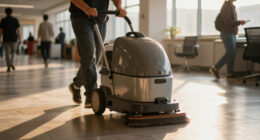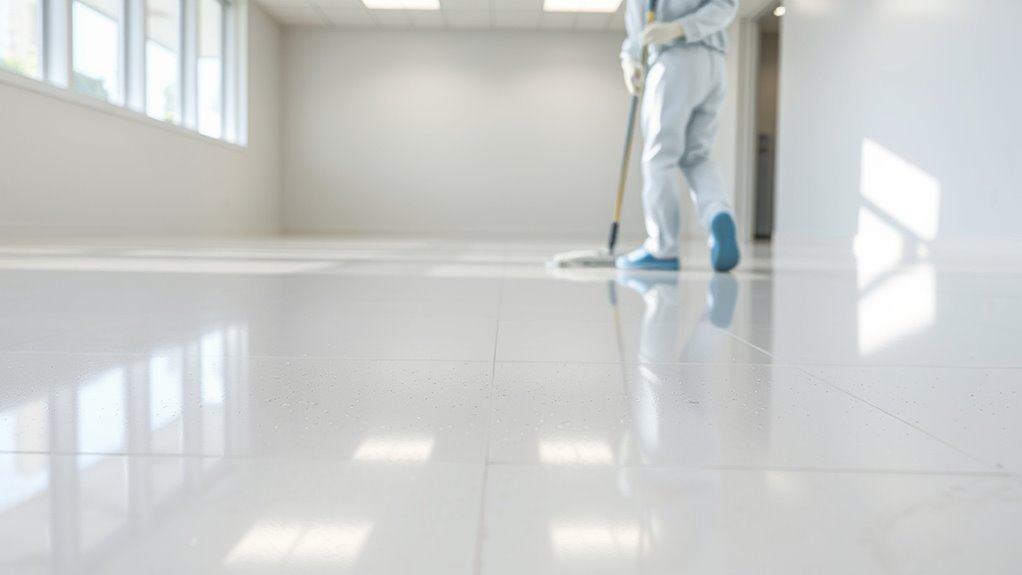

To keep your epoxy floors allergy-safe and dust-free, vacuum regularly with a soft-bristled brush or a hard-surface setting vacuum designed for epoxy. Move slowly and systematically, paying special attention to edges and corners. Use entry mats to reduce dirt, maintain air filtration, and store dust-generating items away. Choosing the right equipment makes a big difference. Stay consistent with your routine, and you’ll learn simple tips to maintain a spotless, durable, and healthy epoxy surface.
Listen free for 30 days with Audible
Thousands of audiobooks and originals — cancel anytime.
As an affiliate, we earn on qualifying purchases.
Key Takeaways
- Use vacuum cleaners with soft brushes or hard-surface settings for gentle, effective dust removal.
- Vacuum daily in high-traffic areas to prevent dust buildup and maintain a clean epoxy surface.
- Implement entry mats and air filtration to minimize airborne dust particles settling on floors.
- Move slowly and systematically during vacuuming, focusing on corners and edges for thorough cleaning.
- Regularly maintain equipment and avoid harsh brushes to protect epoxy finishes while controlling dust.

Are dust particles ruining the look and durability of your epoxy floors? If so, it’s time to take a closer look at your cleaning routine and implement effective dust control measures. Dust can settle quickly on epoxy surfaces, causing scratches, dullness, and even compromising their structural integrity over time. To keep your floors looking pristine and allergy-safe, you need to master proper vacuum techniques and adopt reliable dust prevention strategies. These methods aren’t just about aesthetics—they’re about maintaining a healthier environment for everyone in your space.
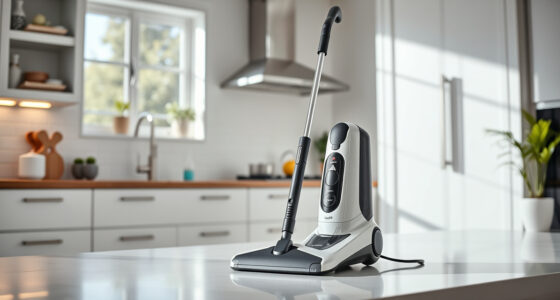
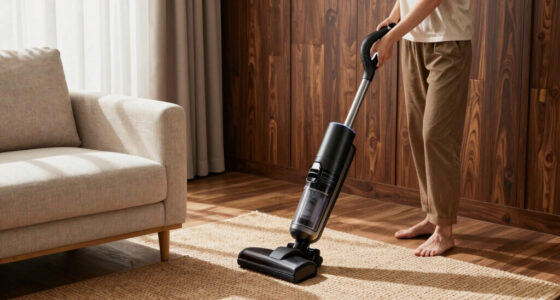
First, focus on your vacuum techniques. Not all vacuums are created equal, especially when it comes to epoxy floors. You want a vacuum with a soft-bristled brush or a setting specifically designed for hard surfaces. This minimizes the risk of scratching or scuffing the glossy finish. When vacuuming, move slowly and systematically across the entire surface, ensuring you reach into corners and along edges where dust tends to accumulate. Use gentle, overlapping passes to lift stubborn dirt without disturbing the epoxy’s coating. Regular vacuuming, ideally daily if the space sees high traffic, prevents dust from settling deep into the surface, making cleaning easier and more effective. Remember, a good vacuum isn’t just about suction power; it’s about the right attachments and technique. Additionally, selecting a vacuum designed for epoxy floors can help protect the surface while effectively removing debris.
HEPA filter vacuum for epoxy floors
As an affiliate, we earn on qualifying purchases.
As an affiliate, we earn on qualifying purchases.
Frequently Asked Questions
What Are the Best Vacuum Options for Epoxy Floor Dust Removal?
You should choose a vacuum with excellent filtration, like one with HEPA filters, to effectively trap epoxy dust particles. Cordless vacuums are convenient for mobility and quick cleanups, making them ideal for epoxy floors. Look for models with strong suction, durable filters, and lightweight design, so you can easily maneuver and guarantee dust doesn’t escape back into the air, keeping your workspace safe and allergy-friendly.
How Often Should I Perform Dust Control on Epoxy Floors?
You should perform dust control on epoxy floors daily to keep up with occupational hazards and allergy prevention. Dust can settle faster than you think, creating a potential health risk if disregarded. Regular sweeping and vacuuming prevent dust buildup, safeguarding your health and maintaining a clean environment. Staying consistent ensures that allergens don’t accumulate, helping you breathe easier and stay safe from health issues related to dust exposure.
Can I Use Household Cleaning Products for Dust Removal?
You shouldn’t use household cleaners for dust removal on epoxy floors, as they may contain chemicals that damage the epoxy or leave residues. Instead, opt for DIY dusting methods like a microfiber mop or a damp cloth to safely remove dust without risking harm. These methods are allergy-safe, effective, and help maintain the integrity of your epoxy floors, ensuring a clean, dust-free surface without using potentially harmful household cleaning products.
Are There Specific Masks Recommended for Dusting Epoxy Floors?
When dusting epoxy floors, you should opt for a dust mask with N95 or higher ratings to guarantee proper epoxy dust safety. These masks filter out fine particles, protecting your lungs from allergens and dust. Coincidentally, using the right dust mask recommendations helps you breathe easier and maintains a safer environment. Always wear your mask properly, especially during extensive cleaning, to minimize dust inhalation and keep your space allergy-safe.
What Are the Signs of Poor Dust Control Impacting Air Quality?
If you notice increased sneezing, coughing, or itchy eyes, poor dust control might be affecting your air quality. You could also see airborne allergens lingering in the air or find floor contamination with dust particles. These signs indicate that dust isn’t being managed properly, which can compromise indoor air quality and trigger allergies. Regular cleaning and proper dust containment are essential to keep airborne allergens low and maintain a safe environment.
Conclusion
By staying consistent with dust control on your epoxy floors, you’re creating a safer, allergy-friendly environment. Regular cleaning and proper maintenance are key to keeping dust at bay. Remember, a clean floor is a happy floor—don’t wait until dust piles up to act. With a proactive routine, you’ll enjoy a healthier space and peace of mind. Keep dust in check, and you’ll keep allergies away. After all, prevention is better than cure.
Flea & tick season Picks
flea and tick prevention
As an affiliate, we earn on qualifying purchases.