
Choosing between a disc and cylindrical scrubbing head depends on your surface and cleaning needs. If your surfaces are flat like floors or countertops, a disc head offers even pressure and smooth results. For textured or uneven surfaces such as grout lines or machinery, a cylindrical brush provides better scrubbing power and access. Understanding their design, materials, and maintenance tips helps you pick the right tool—keep going to discover which head suits your specific tasks best.
Key Takeaways
- Disc scrubbers are best for flat surfaces, providing even pressure and gentle cleaning, while cylindrical heads excel on textured or uneven surfaces.
- Disc heads feature flat, abrasive pads suitable for polishing and light cleaning; cylindrical heads have rotating brushes ideal for heavy-duty scrubbing.
- Choose disc heads for delicate surfaces to prevent damage; opt for cylindrical brushes when tackling stubborn grime or crevices.
- Maintenance differs: disc pads require regular cleaning and replacement; cylindrical brushes need thorough cleaning to remove debris and maintain bristle integrity.
- Surface type and cleaning job dictate the ideal head: flat surfaces favor disc heads; textured or hard-to-reach areas benefit from cylindrical brushes.
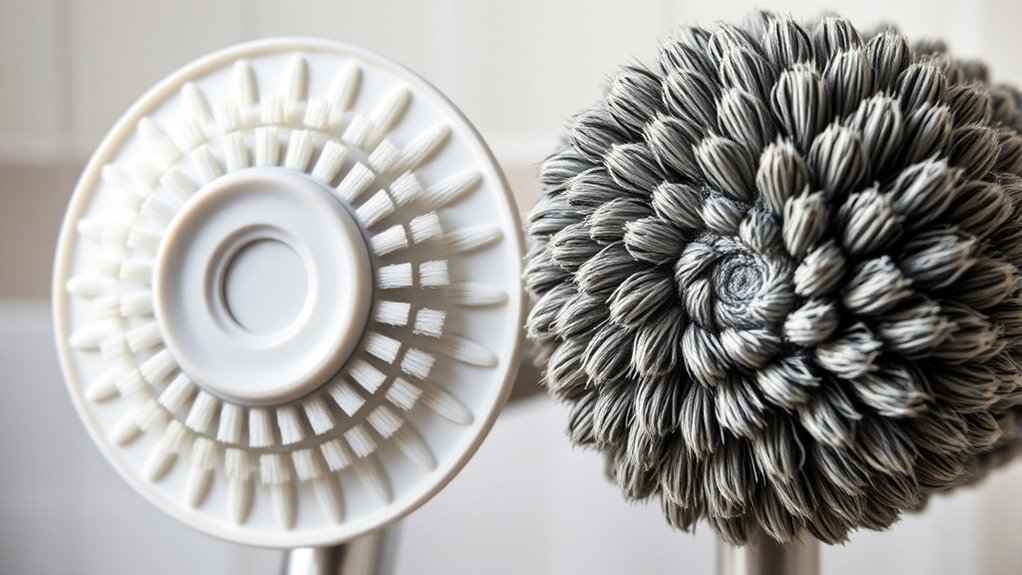
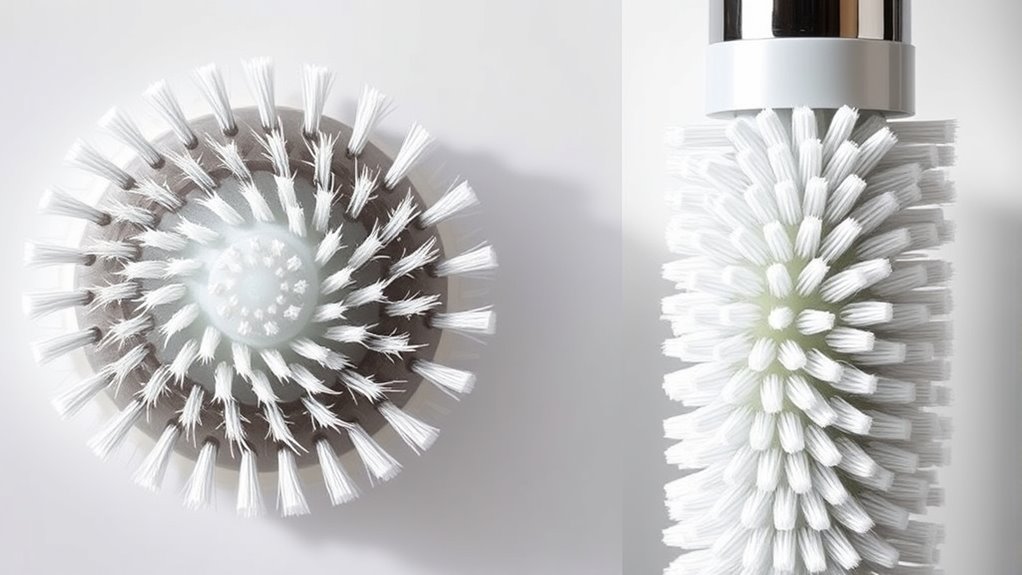
Are you unsure which scrubbing head suits your cleaning needs best—disc or cylindrical? Choosing the right tool depends on the surface you’re tackling and the level of cleaning power you require. Both types have their unique advantages, but understanding their differences can help you make a smarter choice. Disc scrubbers typically feature a flat, round surface with abrasive materials attached to their face. These heads are excellent for cleaning flat surfaces like floors, countertops, and tiles because they provide even pressure and a consistent scrub. Cylindrical heads, on the other hand, are long, tube-shaped brushes that rotate along their axis. They excel at cleaning uneven or textured surfaces, such as grout lines, pipes, or intricate machinery.
When selecting between them, consider the abrasive materials used in each. Disc heads often utilize pads with varying grit levels, from gentle polishing to aggressive grinding. For delicate surfaces, softer abrasives minimize damage, while rougher materials are suitable for stubborn grime or heavy-duty cleaning. Cylindrical heads tend to have bristles made from durable plastics or metal wires, which can handle tougher grime and more abrasive conditions. If you’re working with delicate surfaces, verify the abrasive materials are compatible to avoid scratches or damage. For tougher jobs, cylindrical brushes might be more effective due to their aggressive bristles.
Maintenance tips also play an essential role in your decision. Disc heads require regular cleaning to prevent buildup of debris and to prolong their lifespan. Remove and rinse pads after each use, and replace worn abrasives promptly. Cylindrical brushes can trap dirt deeply within their bristles, so thorough cleaning is vital—use a wire brush or compressed air to keep them in top shape. Both heads benefit from routine inspection for loose or damaged abrasive materials that could compromise their cleaning efficiency. Proper maintenance not only extends the life of your scrubbing heads but also guarantees consistent performance.
Top picks for "disc cylindrical scrubb"
Open Amazon search results for this keyword.
As an affiliate, we earn on qualifying purchases.
Frequently Asked Questions
Which Scrubbing Head Is More Eco-Friendly?
You’ll find the cylindrical scrubbing head more eco-friendly due to its lower environmental impact. It often uses eco-friendly materials that are biodegradable or recyclable, reducing waste and pollution. Additionally, cylindrical heads tend to last longer, decreasing the need for frequent replacements. By choosing a cylindrical head, you support sustainability efforts and minimize your carbon footprint, making it a smarter, greener option for cleaning routines.
Can Disc and Cylindrical Heads Be Used Together?
Yes, you can use disc and cylindrical heads together, but you need to verify head compatibility first. Some machines are designed to accommodate both types, allowing you to switch based on cleaning needs. Combining these heads can boost cleaning efficiency, especially for different surfaces or stubborn dirt. Just guarantee your equipment supports both head styles to avoid damage and maximize performance. Always follow manufacturer guidelines for safe and effective use.
How Long Does Each Scrubbing Head Typically Last?
Think of your scrubbing heads as loyal workers—each has a lifespan to keep up with. Typically, a disc head lasts around 100-200 hours, while cylindrical heads often work for 150-250 hours. The abrasive material impacts their durability, with coarser abrasives wearing faster. For ideal results, monitor the replacement intervals and replace them when they show signs of wear to keep your cleaning efficient and effective.
Are There Specific Surfaces Better Suited for One Type?
You’ll find that disc scrubbing heads work best on smooth, flat surfaces like concrete or tiles, enhancing cleaning effectiveness without causing damage. Cylindrical heads excel on uneven or textured surfaces such as rough concrete or industrial flooring, providing better surface compatibility. Choosing the right head depends on your surface type; using the appropriate one guarantees ideal cleaning results and prevents surface damage.
What Maintenance Is Required for Each Scrubbing Head?
You’ll find that cylindrical heads generally require less maintenance, with simple brush replacements, while disc heads might need more frequent cleaning of their pads. Regularly inspect for wear and debris to maintain cleaning efficiency. When comparing costs, cylindrical heads often cost less upfront and in upkeep, making them a budget-friendly option. Proper maintenance guarantees peak performance, prolongs lifespan, and keeps your cleaning process smooth and effective.
Conclusion
Ultimately, choosing between a disc and cylindrical scrubbing head depends on your specific needs. Some say the disc offers better precision, while others swear by the cylindrical for its efficiency on larger surfaces. But what if the real secret lies in combining both? Recent studies suggest that hybrid approaches might be the key to best cleaning. So, don’t just settle—experiment and see which head truly works best for your unique tasks!