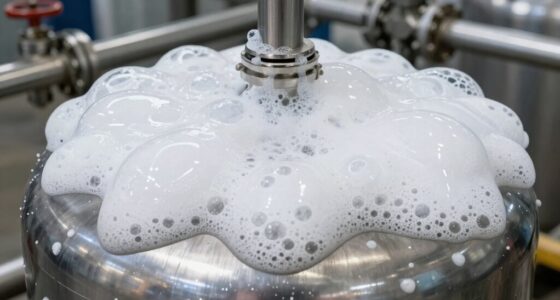
To manage foam in recovery tanks, actively monitor foam levels and use chemical suppressants that break down foam, ensuring proper dosing and application. Keep agitation and aeration systems functioning well to prevent foam formation and help existing foam collapse. Maintain regular inspections and train your team to spot early signs of foam issues, adjusting operations as needed. Implementing these strategies can boost efficiency and reduce downtime—stay with us to explore more effective foam control techniques.

Get cleaning gear delivered free with Prime
- Fast, free delivery on millions of items
- Prime Video, Amazon Music and more included
- Member-only deals all year
Key Takeaways
- Use chemical foam suppressants compatible with the specific foam type to effectively break down foam buildup.
- Maintain proper agitation and aeration in tanks to prevent foam formation and promote collapse of existing foam.
- Regularly monitor foam levels and adjust chemical dosing or operational parameters as needed for optimal control.
- Train personnel to recognize early foam issues and perform timely maintenance or chemical application to prevent operational disruptions.
- Implement a combination of physical methods and chemical additives alongside ventilation to ensure comprehensive foam management.

Foam buildup in recovery tanks can disrupt processes and reduce efficiency if not managed properly. When foam forms excessively, it can interfere with the separation of materials, hinder liquid flow, and cause inaccuracies in measurements. To prevent these issues, foam suppression techniques are essential. One effective approach involves using chemical additives specifically designed to break down foam and prevent its formation. These additives work by reducing surface tension, making it harder for foam to sustain itself, which keeps the tank’s environment stable and functioning smoothly.
Implementing chemical additives requires understanding the type of foam you’re dealing with and selecting the right product. Some foam suppressants are designed for organic foams, while others target protein-based or synthetic foams. When you add these chemicals, follow the manufacturer’s instructions carefully, as improper dosing can either be ineffective or cause chemical buildup, which might complicate the recovery process. Regularly monitoring foam levels after adding these agents allows you to adjust the dosage as needed, guaranteeing the best control without overusing chemicals.
Aside from chemical additives, maintaining proper agitation and aeration in the recovery tanks can also help reduce foam formation. Proper mixing prevents localized foam pockets from developing and encourages the collapse of existing foam. Ensuring that the tank’s ventilation systems are functioning correctly can further minimize foam buildup, as trapped air often contributes to foam stability. Combining physical control methods with chemical additives offers a complete strategy for foam management.
It’s also vital to train your team on foam control procedures. They should understand how and when to apply foam suppressants, recognize early signs of foam problems, and know how to adjust operations accordingly. Consistent maintenance schedules and routine inspections will help identify foam issues before they escalate, saving you time and resources. If foam persists despite these measures, consider reviewing your chemical additive choice or consulting with a specialist to refine your approach.
Ultimately, managing foam effectively involves a mix of proactive chemical suppression and operational adjustments. When you control foam build-up, you not only improve process efficiency but also extend the lifespan of your equipment and ensure more accurate recovery results. Staying vigilant and responsive to foam-related issues helps you keep your recovery tanks running at peak performance, minimizing downtime and maximizing productivity. Additionally, understanding the influence of technology on foam formation can help you develop more targeted and effective control strategies.
chemical foam suppressants for recovery tanks
As an affiliate, we earn on qualifying purchases.
As an affiliate, we earn on qualifying purchases.
Frequently Asked Questions
How Can I Prevent Foam Formation Before It Starts?
To prevent foam formation before it starts, you should use chemical additives designed to suppress foam, which can break the surface tension early. Additionally, consider equipment modifications like installing foam control devices or aeration controls to minimize foam buildup. Regular maintenance and proper tank design also help. By proactively applying these measures, you keep foam under control, reducing disruptions and maintaining efficient recovery tank operations.
What Are the Environmental Impacts of Foam Suppressants?
Foam suppressants act like guardians, but their environmental impacts can ripple like stones in a pond. Biodegradable agents and chemical alternatives reduce harm, breaking down quickly and minimizing pollution. Yet, some suppressants may still introduce toxins or disrupt ecosystems if misused. By choosing eco-friendly options, you protect aquatic life and preserve nature’s delicate balance while efficiently managing foam. Your mindful choices guarantee a cleaner, healthier environment for all.
Are There Eco-Friendly Foam Control Options Available?
Yes, eco-friendly foam control options are available. You can choose biodegradable agents and natural surfactants that break down easily and cause less environmental harm. These alternatives effectively manage foam without introducing harmful chemicals into your recovery tanks. By opting for these sustainable solutions, you protect aquatic life and reduce pollution, making your operations safer and more environmentally responsible. Always check product labels to ascertain they meet eco-friendly standards.
How Often Should Foam Levels Be Monitored?
Think of foam stability like a delicate balance beam—you need to keep a close eye on it. You should monitor foam levels daily, especially during peak processing times, to prevent overflow or contamination. Regular checks allow you to adjust tank aeration as needed, ensuring foam doesn’t get out of control. Consistent monitoring helps maintain efficient operations and keeps your recovery tanks running smoothly, avoiding costly disruptions.
Can Foam Management Techniques Affect Product Quality?
Yes, foam management techniques can affect product quality. If you don’t control foam stability, it may lead to excessive foam that traps contaminants, risking product contamination. Proper techniques, like adjusting chemical levels or using foam breakers, help maintain ideal foam stability, ensuring the product remains pure and meets quality standards. Ignoring foam issues can compromise your product, so proactive management is essential for consistent quality.
Conclusion
By keeping a close eye on foam, you’re like a skilled captain steering through choppy waters, steering your recovery tank smoothly through turbulent times. When you control foam buildup, you prevent chaos from brewing beneath the surface, ensuring everything runs like clockwork. So, stay vigilant, adjust your techniques, and let your efforts be the steady hand guiding your operation to calm, clear waters. Mastering foam management keeps your recovery process flowing seamlessly, like a well-oiled machine.
Halloween Picks
halloween
As an affiliate, we earn on qualifying purchases.