If your school hallway vacuum isn’t picking up debris well, start by inspecting the hose for cracks, blockages, or damage, and clear any obstructions. Next, check the motor for overheating, unusual noises, or reduced suction. Make sure filters are clean or replaced as needed, since dirty filters limit airflow and motor efficiency. If these steps don’t improve performance, the motor might need repair or replacement. Continue exploring to discover more tips on maintaining ideal vacuum function.
Key Takeaways
- Check and clean or replace filters regularly to prevent airflow restriction and maintain strong suction.
- Inspect the hose for cracks, holes, or blockages; clear or replace to ensure unobstructed debris flow.
- Test the motor for unusual noises, overheating, or reduced suction, indicating potential wear or the need for replacement.
- Ensure the hose is properly connected and compatible with the vacuum model for optimal performance.
- Conduct routine maintenance and inspections to catch issues early and extend the vacuum’s lifespan in school hallways.

Regularly checking your vacuum motor and hose guarantees your cleaning device works efficiently and lasts longer. When you’re cleaning school hallways, there’s nothing more frustrating than a vacuum that refuses to pick up dirt or debris effectively. Often, this problem stems from issues with the motor or hose, which can become clogged, damaged, or worn over time. To keep your equipment performing at its best, you need to stay proactive about filter maintenance and be prepared for motor replacement if necessary. Neglecting these aspects can result in poor suction, increased wear on other parts, and ultimately, a shorter lifespan for your vacuum.
Start by inspecting the filter regularly. A clogged or dirty filter restricts airflow, reducing suction power and making it harder for the vacuum to pick up debris. If your filter appears dirty or clogged, clean or replace it according to the manufacturer’s instructions. Proper filter maintenance ensures that dust and dirt don’t reach the motor, which can cause overheating or damage. When filters are neglected, the motor has to work harder, increasing the risk of overheating and potential failure. If cleaning the filter doesn’t restore suction, it might be time for a motor replacement. A worn-out motor can produce reduced power, strange noises, or intermittent operation, all of which hinder your cleaning efforts.
Next, focus on the hose. A damaged or blocked hose can considerably impact your vacuum’s performance. Regularly check for cracks, holes, or obstructions inside the hose. Even a small tear can cause suction leaks, decreasing the vacuum’s ability to pick up debris efficiently. If you find blockages, clear them out immediately, and if the hose is torn or damaged, replace it. Maintaining a healthy, unobstructed hose ensures consistent airflow and maximum suction power. When replacing the hose, verify compatibility with your vacuum model to avoid fitting issues.
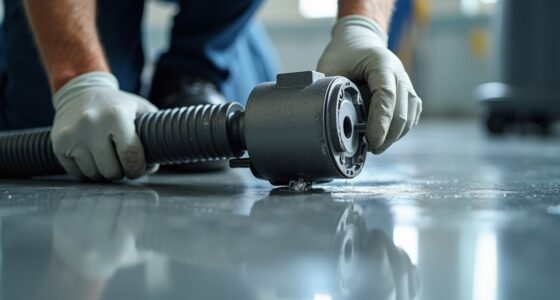
If your vacuum still isn’t performing after these checks, consider the motor itself. Sometimes, the motor is the root cause of poor pickup, especially if it’s overheating or producing unusual sounds. In such cases, motor replacement might be necessary. While it can be a more involved process, replacing a faulty motor restores full suction and prolongs your vacuum’s lifespan. Remember, a well-maintained motor coupled with clean filters and hoses ensures your vacuum operates at peak efficiency during those long school days. Staying informed about pump and dump schemes and other market phenomena can also help you avoid costly repairs if you’re involved in commercial cleaning equipment investments. By staying attentive to filter maintenance and being prompt about motor replacement when needed, you prevent larger problems down the line, saving both time and money. Proper care guarantees your vacuum remains a reliable tool for keeping hallways spotless.
Frequently Asked Questions
How Often Should Vacuum Motors Be Serviced in School Hallways?
You should service vacuum motors in school hallways every three to six months. Regular vacuum filter maintenance helps keep the system efficient, and performing motor noise diagnostics can identify issues early. By checking these components regularly, you prevent breakdowns and ensure the vacuum operates smoothly, maintaining a clean environment. Consistent servicing also extends the lifespan of the motors and minimizes disruptions during cleaning routines.
What Are Common Signs of a Failing Vacuum Motor?
Watch for warning signs of a waning vacuum motor, like weird noises or whining sounds, which indicate trouble. You might also notice the motor overheating or a decrease in suction strength, causing cleaning to be less effective. These signals suggest the motor may be malfunctioning. Catching these cues early helps keep your school hallways spotless and prevents costly repairs, so stay alert to these telltale signs of a failing vacuum motor.
Can Hose Repairs Be Done Without Replacing the Entire Vacuum System?
Yes, hose repairs can often be done without replacing the entire vacuum system. You can perform hose repair by patching or replacing sections of the hose, which is usually quick and cost-effective. However, if the damage is extensive or the hose keeps failing, system replacement might be necessary for reliable performance. Assess the damage carefully to decide whether a simple hose repair suffices or if a full system replacement is the better choice.
Are There Safety Precautions When Inspecting Vacuum Motors?
When inspecting vacuum motors, always prioritize safety. Wear proper safety gear, such as gloves and eye protection, to prevent injuries. Confirm electrical safety by unplugging the vacuum before inspection, avoiding contact with live wires. Use insulated tools if needed, and work in a dry, well-lit area. Following these precautions protects you from electrical hazards and keeps your inspection safe and effective.
What Maintenance Tips Prolong Vacuum Hose Lifespan?
To prolong your vacuum hose lifespan, regularly perform hose cleaning to remove dust and debris that can cause wear. Check for cracks or splits and replace damaged sections promptly. Additionally, make sure proper motor lubrication to keep the vacuum running smoothly, which reduces strain on the hose. By maintaining these routines, you’ll extend the life of your vacuum hose and keep your school hallways clean efficiently.
Conclusion
Think of your vacuum system as the heartbeat of clean school hallways. When you check the motor and hose regularly, you’re keeping that heartbeat strong and steady. Skipping these checks is like ignoring a warning sign on a car—you’re risking a breakdown. Stay proactive, and your vacuum will keep running smoothly, making your hallways shine. Remember, a well-maintained vacuum is the engine that keeps your school looking fresh and welcoming every day.