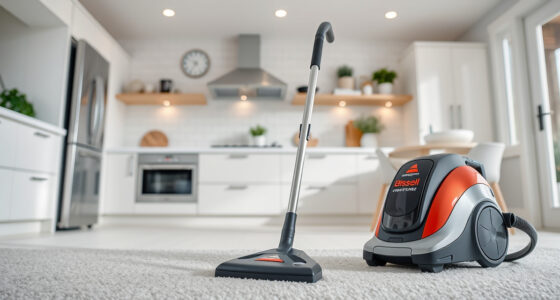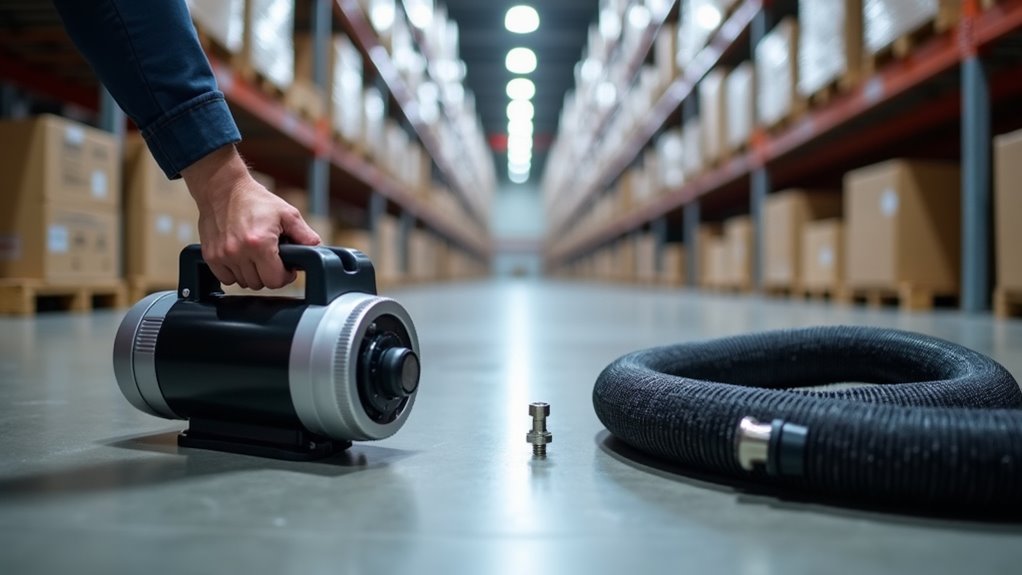

If you’re experiencing no pickup in your warehouse aisles, start by checking your vacuum motor and hoses. Make sure the filter isn’t clogged and that the filters are clean or replaced. Inspect hoses for cracks, tears, or blockages, and clear any debris with compressed air or water. Regular maintenance prevents these issues from worsening, ensuring strong suction. Continuing with proper inspection habits can keep your equipment performing at its best and avoid costly breakdowns.

Get cleaning gear delivered free with Prime
- Fast, free delivery on millions of items
- Prime Video, Amazon Music and more included
- Member-only deals all year
Key Takeaways
- Inspect filters regularly for dirt or clogs and clean or replace them as needed to maintain airflow.
- Check hoses for cracks, tears, or blockages, and replace damaged hoses promptly to restore suction.
- Ensure hoses are properly connected and free of obstructions to prevent pickup issues.
- Look for signs of wear like brittleness or leaks that could reduce vacuum efficiency.
- Schedule routine maintenance to prevent buildup of issues that could cause motor strain or failure.

Regularly checking the vacuum motor and hoses in your warehouse aisles is vital to maintaining efficient cleaning operations. When your vacuum isn’t picking up debris effectively, the problem often stems from overlooked issues like clogged filters or damaged hoses. By staying proactive with filter maintenance and hose replacement, you can prevent costly downtime and guarantee your cleaning process runs smoothly.
Start by inspecting the vacuum’s filters. Dirty or clogged filters restrict airflow, reducing suction power and decreasing the machine’s overall effectiveness. If you notice dust or debris accumulating on the filter, it’s time to clean or replace it. Regular filter maintenance doesn’t just improve performance; it also prolongs the lifespan of your vacuum motor. Depending on your model, filters may need cleaning weekly or monthly, especially in high-traffic warehouse environments. Using the correct cleaning method and replacement parts recommended by the manufacturer ensures ideal filtration and airflow.
Next, focus on the hoses. Over time, hoses can develop cracks, tears, or blockages that hinder suction and cause no pickup issues. When inspecting hoses, look for signs of wear, such as brittleness or leaks. Damaged hoses should be replaced promptly to maintain consistent suction power. Hose replacement is straightforward but vital; neglecting it can lead to motor strain or failure. Additionally, ensure the hoses are properly connected and free from obstructions. Clear out any debris or buildup inside the hoses using compressed air or water, but make sure they are completely dry before reconnecting to prevent mold or further damage.
Maintaining the filters and hoses regularly also helps you catch small problems before they escalate. For example, a slightly clogged filter or minor hose crack might seem insignificant, but over time, they can cause the vacuum motor to work harder, increasing wear and energy consumption. Early intervention keeps your cleaning equipment functioning at peak performance and reduces the risk of costly repairs or replacements. Incorporating routine maintenance checks into your schedule ensures optimal operation and extends the lifespan of your equipment.
warehouse vacuum motor replacement
As an affiliate, we earn on qualifying purchases.
As an affiliate, we earn on qualifying purchases.
Frequently Asked Questions
How Often Should Vacuum Motors Be Inspected for Optimal Performance?
You should inspect vacuum motors regularly, ideally following your maintenance scheduling, to guarantee peak performance. Check them weekly or bi-weekly, depending on usage intensity. Use performance benchmarks to assess if motors are operating efficiently, and look for signs of wear or blockages. Consistent inspections help prevent downtime, extend equipment life, and maintain effective cleaning in warehouse aisles. Don’t wait until issues arise—stay proactive with your maintenance routine.
What Are the Signs of a Failing Vacuum Hose?
Think of your vacuum hose as the lifeline of your cleaning system. Signs of a failing hose include visible hose deterioration like cracks or tears, which symbolize weakening strength. Air leakage becomes evident when suction drops or you hear hissing sounds, revealing the hose’s compromised seal. Address these issues promptly, as ignoring them can lead to decreased performance and potential damage to your vacuum motor.
Can Vacuum Issues Affect Warehouse Safety Protocols?
Yes, vacuum issues can impact warehouse safety protocols. When vacuum equipment malfunctions, it might cause slips or falls due to debris or moisture not being properly cleaned. Regular safety training emphasizes the importance of equipment maintenance, including checking vacuum hoses and motors. Keeping vacuum systems in top condition guarantees a safer environment, reducing hazards and promoting compliance with safety standards. Always inspect and maintain equipment to prevent accidents.
Are There DIY Methods to Repair Vacuum Hoses?
Think of your vacuum hose like a garden hose—fragile yet fixable. Yes, you can try DIY repairs by sealing small cracks with duct tape or replacing damaged sections. For more extensive damage, hose replacement is your best bet. Always disconnect the vacuum first, then carefully remove and inspect the hose. With patience, you can often restore functionality without professional help, saving time and money.
What Backup Procedures Exist if the Vacuum System Fails?
If your vacuum system fails, you should follow established backup protocols to maintain efficiency. Implement contingency planning by switching to manual cleaning methods or using alternative equipment. Guarantee staff is trained on these procedures and regularly reviews them. Having a clear plan in place minimizes downtime, keeps your warehouse running smoothly, and avoids disruptions. Regularly test these backup procedures to confirm they’re effective when needed.
Conclusion
By regularly checking your vacuum motor and hose, you prevent costly breakdowns and keep warehouse aisles spotless. Don’t wait until a minor issue turns into a disaster—your entire operation depends on it. A small inspection now can save you hours of downtime and a fortune in repairs later. Think of it as the heartbeat of your cleaning system; if it stops, everything else grinds to a halt. Stay proactive and keep those aisles shining!
Halloween Picks
halloween
As an affiliate, we earn on qualifying purchases.