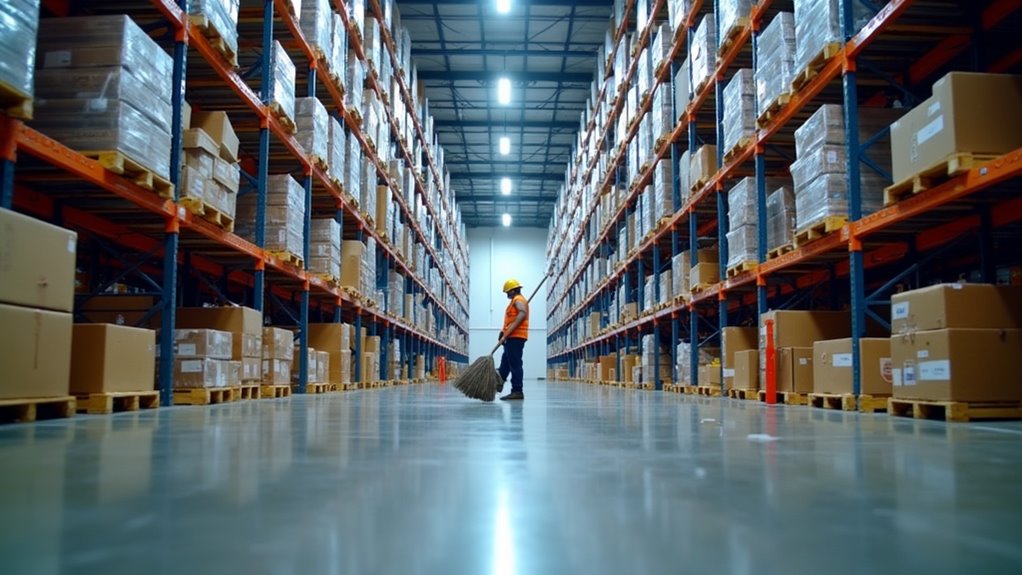

In warehouse aisles, pre-sweeping is essential to guarantee safety and efficiency. You should inspect the area first, removing large debris, loose objects, and hazards that could cause slips or trips. Focus on high-risk zones like corners and near equipment. Use signage and communicate with workers to maintain awareness. Proper preparation creates a safer, cleaner environment and makes sweeping easier. Want to know the detailed steps to ensure thorough aisle prep? Keep exploring for more insights.
Key Takeaways
- Always conduct a thorough inspection and remove large debris before sweeping to ensure safety and effectiveness.
- Focus on high-risk areas like corners and near equipment to prevent debris buildup and safety hazards.
- Ensure safety signage is visible and communicate with workers about ongoing cleaning to prevent accidents.
- Proper preparation reduces slip, trip, and fall risks, creating a safer, more efficient workspace.
- Skipping pre-sweep steps can lead to incomplete cleaning and increased safety hazards in warehouse aisles.
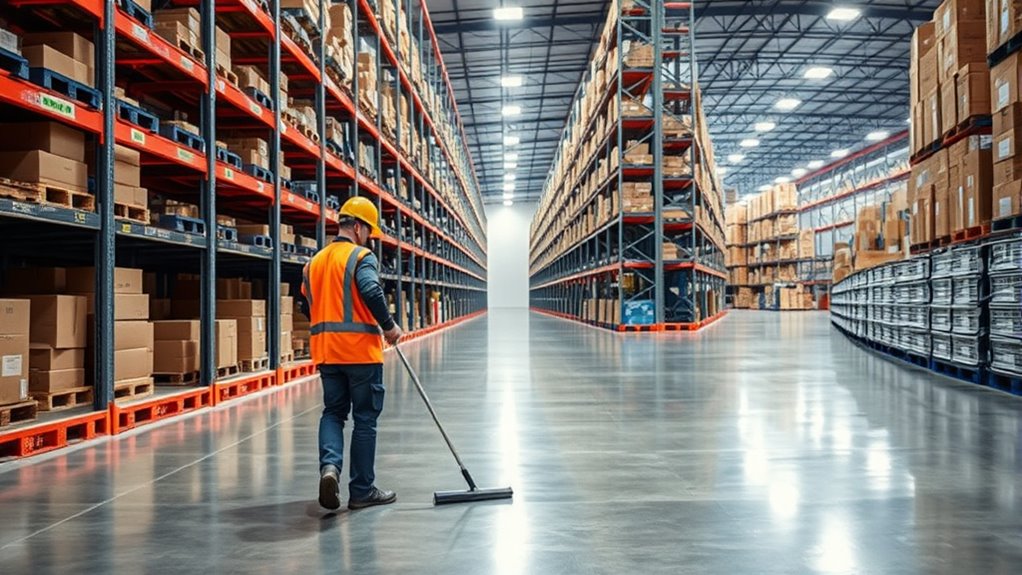
Before beginning a sweep in warehouse aisles, it’s vital to prepare the area to guarantee safety and efficiency. You want to make sure that the floor debris isn’t hiding potential safety hazards that could cause accidents or injuries. Removing loose debris, trash, or misplaced items before starting the sweep helps prevent slips, trips, and falls. When the floor is cluttered or covered with debris, it’s easy for workers or equipment to lose traction, leading to dangerous situations. By taking the time to clear the floor first, you’re creating a safer workspace for everyone involved and reducing the risk of costly accidents.
You should start by inspecting the aisle thoroughly. Look for any objects that don’t belong—such as loose pallets, tools, or packaging materials—that could turn into hazards when swept over. Small debris like paper scraps or dust might seem insignificant but can quickly turn into safety hazards if left unattended. These particles can make the floor slippery or cause machinery to malfunction. Clearing these hazards upfront makes the sweeping process more effective and helps maintain a safe environment. Remember, the goal is to remove all obstacles that could compromise safety or interfere with cleaning.
Another key step is to identify areas where debris tends to accumulate, especially in corners or around equipment. These spots often trap floor debris, which, if left unchecked, can turn into safety hazards. Once you’ve cleared the larger debris, you can focus on finer particles, dust, and dirt that could become airborne or cause respiratory issues if disturbed during sweeping. Using appropriate tools like dust pans and handheld vacuums can make this process easier and more thorough. This preparation ensures you’re not just moving debris around but actually removing it from the workspace entirely. Additionally, understanding the importance of high-quality projectors can help in designing optimized work environments that support safety and efficiency.
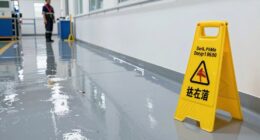
Preparing the area before sweeping also involves ensuring that all safety signage is visible and that workers are aware of ongoing cleaning activities. If you’re working in a busy warehouse, establishing clear communication helps prevent accidents. When the floor is free of debris and hazards, you can sweep confidently, knowing you’re reducing the risk of slips, trips, and falls. Proper preparation not only makes your cleaning more effective but also demonstrates a commitment to workplace safety standards. In the end, taking these initial steps creates a safer, more efficient environment for everyone, making the entire cleaning process smoother and more effective.
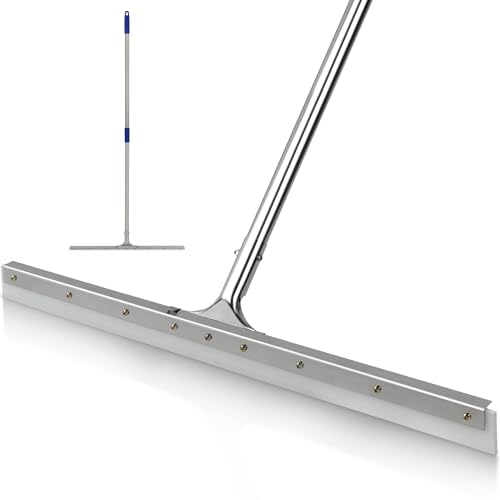
MHM AquaSlide PushPro – 28-Inch Heavy Duty Squeegee for Concrete Floors & Wet Surfaces | Industrial Rubber Blade Water Removal Tool for Garages, Warehouses, Driveways & Commerical Use
🌊 Efficient Liquid Removal: AquaSlide PushPro, with its 28-inch wide blade, outperforms other floor squeegees, swiftly moving large…
As an affiliate, we earn on qualifying purchases.
As an affiliate, we earn on qualifying purchases.
Frequently Asked Questions
How Does Pre-Sweeping Impact Warehouse Safety?
Pre-sweeping substantially improves warehouse safety by reducing dust accumulation, which can cause respiratory issues and obscure visibility. It also minimizes slip hazards caused by dirt and debris on aisles, preventing accidents and falls. When you regularly pre-sweep, you create a cleaner, safer environment that protects workers and maintains efficient operations. Overall, pre-sweeping is a proactive step to decrease risks and promote safety in your warehouse.
What Equipment Is Best for Pre-Sweeping Aisles?
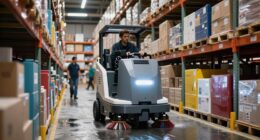
Think of your pre-sweeping equipment as the backbone of dust control in aisles. A durable, industrial-grade ride-on sweeper or walk-behind sweeper with high-quality brushes and filters works best. They efficiently pick up debris and dust, ensuring safety and cleanliness. Opt for equipment built for heavy-duty use, so it withstands warehouse conditions and keeps dust at bay, making your pre-sweeping both effective and reliable.
Are There Specific Regulations for Pre-Sweeping in Warehouses?
Yes, there are specific regulations for pre-sweeping in warehouses to ensure safety and regulatory compliance. You should follow established cleaning protocols that mandate proper disposal of debris and use approved equipment. Adhering to OSHA standards and local regulations helps prevent accidents and maintains a safe environment. Always stay updated on these rules and incorporate them into your routine to guarantee your warehouse remains compliant and safe for everyone.
How Often Should Warehouse Aisles Be Pre-Swept?
Think of your warehouse as a garden that needs regular tending. You should pre-sweep the aisles daily, like watering plants, to maintain floor cleanliness and control dust. Frequent sweeping prevents dust buildup, ensuring a safe environment and efficient operations. By staying vigilant, you minimize hazards, preserve equipment, and promote a healthier workspace. Consistent pre-sweeping is your best strategy to keep the warehouse tidy, safe, and productive.
Does Pre-Sweeping Affect Inventory Accuracy?
Pre-sweeping considerably improves inventory accuracy by reducing dust accumulation and debris buildup that can obscure labels or cause misreads. When you regularly clear dust and debris from the aisles, you guarantee that barcode scanners and inventory tracking systems work more reliably. This practice minimizes discrepancies, saves time during audits, and helps maintain precise stock counts, ultimately supporting smoother warehouse operations and better inventory control.

WDDBHSKN Dust pan Broom Dustpan Brush – Dust Pans with Brush, Dustpan and Brush Set, Handheld Broom and Dustpan Set are Used to Clean Kitchens, Floors, Tables, and Animal Cages.
High Quality: Dust pan made with high quality PET fibers.Hand broom and dustpan are ergonomically designed with a…
As an affiliate, we earn on qualifying purchases.
As an affiliate, we earn on qualifying purchases.
Conclusion
Ultimately, whether you pre-sweep or not, think of your warehouse aisles as the veins of your operation—flowing with purpose and precision. A quick sweep acts like a gentle rain, clearing debris to guarantee smooth passage, while skipping it can turn your aisles into tangled roots, slowing everything down. By choosing when to pre-sweep, you’re orchestrating a symphony of efficiency, turning chaos into harmony and keeping your warehouse thriving like a well-tuned machine.

Algra Corporation Laminated Warehouse Safety Rules Poster, 18" x 24", Black, White, Yellow
Laminated Safety Poster
As an affiliate, we earn on qualifying purchases.
As an affiliate, we earn on qualifying purchases.

BBTO 4 Pieces Telescoping Inspection Mirror Telescoping LED Lighted Flexible Inspection Mirror Tool for Checking Observing Vehicle Small Parts (Modern Style)
Comfortable design: the,small observation mirror contains a metal frame design, which can be clipped in a shirt pocket…
As an affiliate, we earn on qualifying purchases.
As an affiliate, we earn on qualifying purchases.