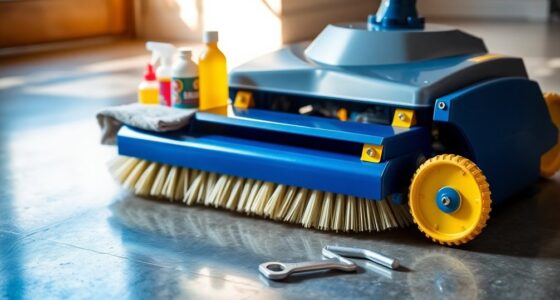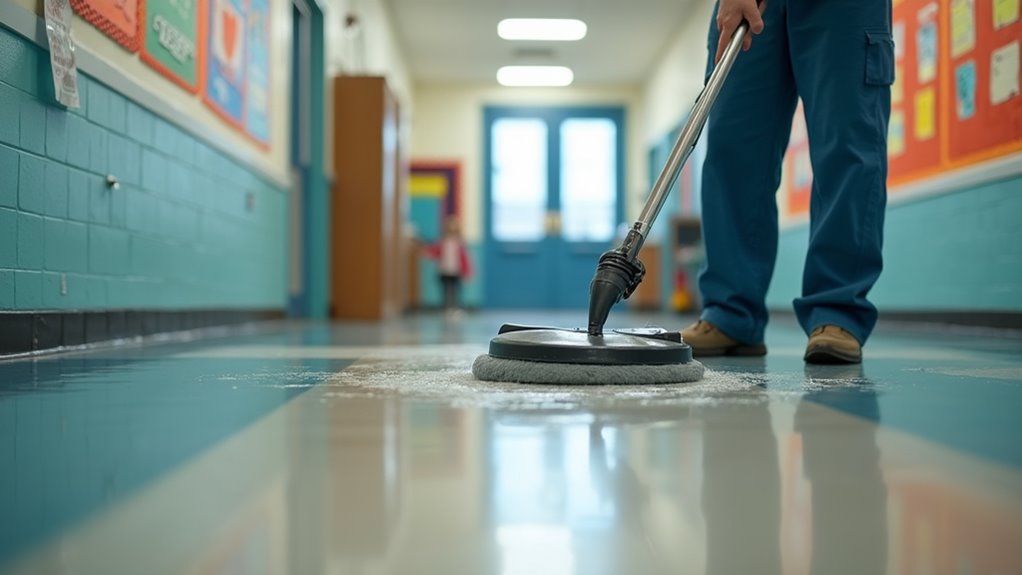

To keep your school hallway scrubbers in top shape, you should follow a structured routine. Daily tasks include checking for loose parts, wiping down the machine, and inspecting for wear. Weekly, perform thorough cleaning of filters, inspect brushes, and check batteries or cords. Monthly, conduct deep cleans, replace worn parts, and recalibrate sensors. Maintaining this schedule guarantees efficiency and safety—stay with us, and you’ll discover more ways to optimize your equipment’s performance.
Key Takeaways
- Perform daily inspections for loose parts, debris, and low solution levels to ensure immediate issues are addressed.
- Conduct weekly cleaning of filters, brushes, and inspect batteries or cords to maintain optimal equipment performance.
- Execute monthly deep cleaning, including detailed scrubbing and part replacements, to extend the scrubber’s lifespan.
- Maintain detailed records of daily, weekly, and monthly maintenance tasks to identify recurring issues early.
- Train staff regularly on proper cleaning routines and preventive care to ensure consistent and effective hallway cleaning.
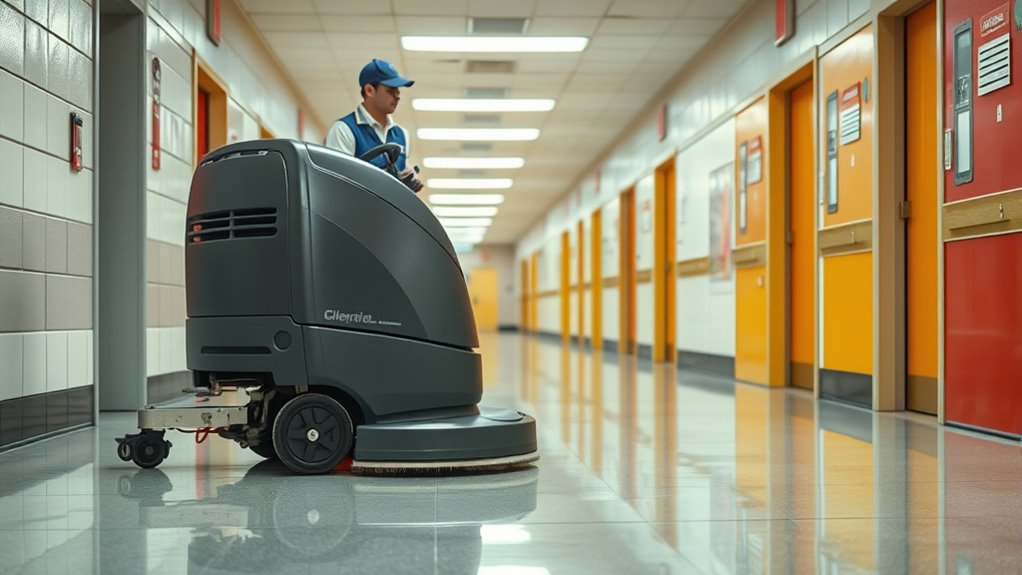
Maintaining clean school hallways is essential for a safe and healthy environment, and proper scrubber care plays a crucial role in achieving that. When you establish effective cleaning schedules, you guarantee each area gets the attention it needs without overworking your equipment. Regularly scheduled cleaning routines help you stay ahead of dirt buildup, reducing the risk of slips and falls and promoting a positive impression for students and staff alike. These schedules should clearly specify daily, weekly, and monthly tasks, aligning with the school’s usage patterns and foot traffic. Consistency is key, so sticking to these plans guarantees your scrubbers are used efficiently and effectively. Proper equipment maintenance is equally important to ensure optimal performance and longevity. Well-maintained scrubbers perform better, last longer, and require fewer repairs, saving you time and money in the long run. Daily, you should check for obvious issues like loose parts, clogged brushes, or low solution levels. Wiping down the machine and inspecting for wear and tear prevents small problems from escalating. Weekly, you need to perform more thorough maintenance, including cleaning filters, checking batteries or power cords, and ensuring brushes or pads are in good condition. This routine keeps the equipment running smoothly and prevents unexpected breakdowns that could disrupt your cleaning schedule. On a monthly basis, you should conduct extensive inspections. This includes deep cleaning the scrubber, replacing worn parts, and recalibrating any sensors or controls. Regular maintenance not only extends the lifespan of your equipment but also ensures it operates at peak efficiency. Remember, neglecting equipment maintenance can lead to poor cleaning results, increased downtime, and higher repair costs. By integrating these maintenance tasks into your cleaning schedules, you create a reliable routine that supports consistent, high-quality hallway cleanliness. To maximize your scrubber’s lifespan and performance, develop a detailed checklist that covers daily, weekly, and monthly care. Keep records of maintenance activities to track issues over time and identify patterns that might indicate larger problems. Properly training staff on how to perform these routines ensures everyone understands the importance of equipment care and adheres to the schedules you set. When your scrubbers are well-maintained and used according to a planned schedule, you’ll find your hallways stay cleaner, safer, and more inviting for everyone in your school community. This disciplined approach not only improves hygiene but also demonstrates your commitment to a safe learning environment.
Frequently Asked Questions
What Safety Precautions Should Be Taken During Scrubber Maintenance?
When maintaining the scrubber, you should wear protective gear like gloves and goggles to prevent injuries. Always disconnect the power before starting maintenance, and follow emergency procedures if any spills or malfunctions occur. Make certain the area is well-ventilated, and keep a fire extinguisher nearby. By taking these precautions, you reduce risks and keep yourself safe during scrubber upkeep.
How Often Should Replacement Parts Be Inspected or Replaced?
You should perform parts inspection regularly and follow a strict replacement schedule to keep your scrubber functioning effectively. Check for wear and tear on components like brushes, belts, and filters at least monthly, and replace them as needed. Timely replacements prevent breakdowns and guarantee safety during operation. Adhering to this schedule helps maintain peak performance and prolongs the lifespan of your scrubber, reducing costly repairs down the line.
Are There Eco-Friendly Cleaning Solutions Compatible With Scrubbers?
Imagine your scrubber as a superhero, fighting grime with eco-friendly powers. Yes, you can use biodegradable solutions and plant-based cleaners that are compatible with your equipment. These green heroes break down safely, keeping your hallways spotless without harming the environment. Just make certain they’re labeled compatible with your scrubber. Embrace these eco-friendly cleaners, and you’ll save the planet one hallway at a time—without sacrificing cleanliness or performance.
How Can Noise Levels Be Minimized During Daily Scrubbing?
To minimize noise levels during daily scrubbing, you should implement soundproof measures like using quieter scrubber models and installing sound-dampening mats. Guarantee clear operator communication through hand signals or headsets, so operators can work efficiently without loud verbal cues. Regular maintenance of scrubbers also reduces noise. Combining these strategies keeps hallway noise low, creating a safer, more comfortable environment for students and staff.
What Training Is Recommended for Staff Operating Scrubbers Safely?
You should get operator certification to guarantee safe scrubber use, just like learning the rules before playing a game. Training must include emergency procedures so you know what to do if something goes wrong. This preparation keeps everyone safe and equipment in good shape. By focusing on these areas, you’ll confidently handle scrubbers, minimize accidents, and maintain a smooth, quiet hallway environment for students and staff alike.
Conclusion
By keeping up with daily, weekly, and monthly scrubber care, you’re the steady heartbeat of a safe, sparkling school hallway. Think of your cleaning routine as a dance—each step, swipe, and polish keeps dirt and grime at bay, transforming your space into a shining corridor of learning. When you nurture your scrubbers, you’re not just maintaining equipment; you’re creating a clean path where students can walk confidently into a brighter future.