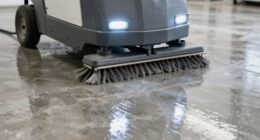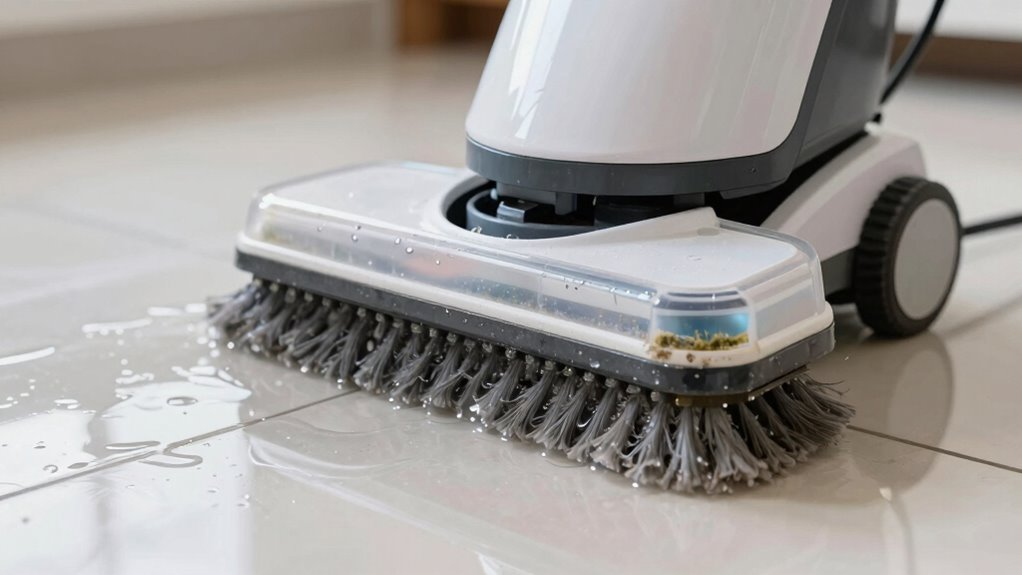

Hard water contains high minerals like calcium and magnesium, which can clog nozzles, reduce spray patterns, and diminish your floor scrubber’s efficiency. These mineral deposits also cause wear and tear on moving parts, leading to more repairs. Additionally, hard water reacts with cleaning agents, lowering foam and cleaning power, and leaving streaks. Using softened or filtered water helps prevent these issues, ensuring better performance and longer equipment life—discover more about maintaining the best water quality for your scrubber.
Key Takeaways
- Hard water causes mineral deposits that clog nozzles and reduce spray effectiveness.
- Mineral buildup decreases the scrubber’s mechanical efficiency and increases cleaning time.
- Water mineral content reacts with detergents, lowering foam and cleaning power.
- Mineral deposits settle into moving parts, leading to wear and potential mechanical failure.
- Using softened or filtered water prevents mineral buildup, extending equipment lifespan.
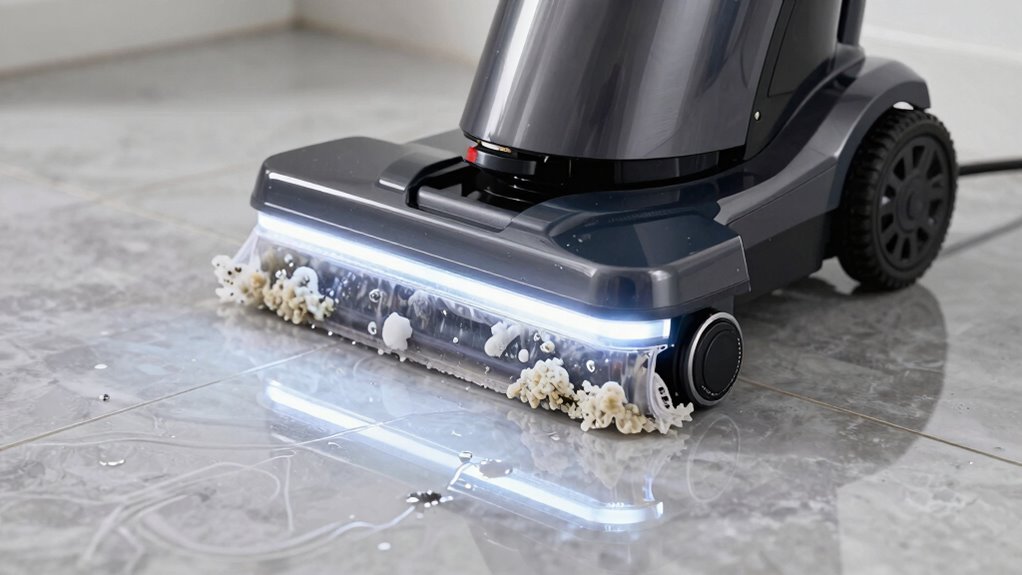
Water hardness can considerably impact the performance of your floor scrubber, often causing stubborn residue or streaks on surfaces. When you’re cleaning with hard water, mineral buildup becomes a common issue. Hard water contains high levels of minerals like calcium and magnesium, which don’t dissolve easily. Over time, these minerals can accumulate on your equipment, leading to clogged nozzles, diminished spray patterns, and reduced overall efficiency. As mineral deposits build up, you might notice your scrubber doesn’t glide as smoothly or effectively, forcing you to go over the same area multiple times. This not only wastes time but also puts unnecessary strain on your machine.
Hard water causes mineral buildup, reducing scrubber efficiency and leaving residue on floors.
Hard water also affects detergent efficacy, which is vital for achieving a thorough clean. Many cleaning agents rely on water to create a lather that loosens dirt and grime. However, with mineral-rich water, the minerals react with the detergent, reducing its ability to foam and clean properly. You might find yourself using more cleaning solution than usual to compensate for the decreased effectiveness, which increases costs and can lead to residue left behind. This residual film can make floors look dull and streaked, defeating the purpose of a deep clean. You’ll spend more time rinsing and re-cleaning surfaces to get rid of streaks and spots caused by mineral deposits. Water treatment methods can help address these issues before they affect your cleaning routine. Regular use of descaling products can also prevent mineral buildup on your equipment and ensure optimal performance.
Additionally, the mineral buildup from hard water can interfere with the scrubber’s mechanical parts. The deposits can settle into moving components, causing wear and tear or even mechanical failure over time. If you neglect to address water hardness, your machine’s parts may need repairs or replacements sooner than expected. Regular maintenance, such as descaling or using water softeners, can mitigate these issues. Installing a water softening system or using filtered water before filling your machine helps prevent mineral buildup, allowing your scrubber to perform at its best. Understanding water softening techniques and their role in maintaining equipment can help you make informed decisions about water treatment options. Moreover, implementing water quality improvements can enhance overall cleaning results and extend your equipment’s lifespan. It also guarantees that detergents work more effectively, resulting in cleaner floors with fewer streaks.
Furthermore, understanding how water hardness levels impact cleaning equipment emphasizes the importance of proper water management. By taking steps to reduce mineral buildup and improve detergent efficacy, you prolong the lifespan of your equipment and maintain high cleaning standards. It’s a simple adjustment that pays off in better performance, less downtime, and cleaner, streak-free floors every time you clean.

Morton MWSC Universal Water Softener Cleanser
Helps remove harmful deposits from resin bed, valve and system that salt alone cannot remove
As an affiliate, we earn on qualifying purchases.
As an affiliate, we earn on qualifying purchases.
Frequently Asked Questions
Can Water Softening Systems Completely Eliminate the Effects of Hard Water?
Water softening systems can considerably reduce the effects of hard water, but they might not completely eliminate them. Chemical treatments and water filtration help, but some mineral residues may still remain. You should regularly maintain your softening system and consider additional filtration to optimize performance. While these methods improve water quality, complete removal of hard water effects isn’t always guaranteed, so stay vigilant with ongoing maintenance.
How Does Water Temperature Influence Hard Water’s Impact on Scrubbers?
Water temperature acts like a double-edged sword, influencing hard water’s impact on your scrubbers. As you raise the temperature, deposits form more readily, creating a stubborn film on surfaces and equipment. Higher water temperatures can accelerate deposit formation, clogging nozzles and reducing cleaning efficiency. To keep your floor scrubber running smoothly, find a balance—using moderate water temperatures helps minimize deposit buildup and maintains peak performance.
Are There Specific Floor Types More Affected by Hard Water Deposits?
You’ll find that tile surfaces are more affected by hard water deposits, especially those with high porosity or delicate finishes, making them prone to staining or etching. Conversely, stone resilience varies; some natural stones like granite handle mineral deposits better, while softer stones like marble are more vulnerable to damage. Knowing your floor type helps you choose the right cleaning approach, protecting your surfaces from hard water buildup and potential deterioration.
What Maintenance Tips Help Mitigate Hard Water Issues on Floor Scrubbers?
You should establish a regular cleaning schedule to prevent hard water deposits from accumulating on your floor scrubber. Consistently inspect and clean filters to guarantee they aren’t clogged with mineral build-up. Use softened water whenever possible, and follow the manufacturer’s maintenance instructions. Regular filter maintenance and timely cleaning help reduce hard water-related issues, keeping your scrubber functioning efficiently and extending its lifespan.
Do Different Brands of Floor Scrubbers Handle Hard Water Differently?
Different brands of floor scrubbers handle hard water differently, mainly due to their design and water filtration systems. You should check each brand’s compatibility with hard water, as some are better equipped with advanced water filtration to reduce mineral buildup. Choose models that specify compatibility with hard water to guarantee ideal performance, minimize maintenance, and extend the lifespan of your equipment.
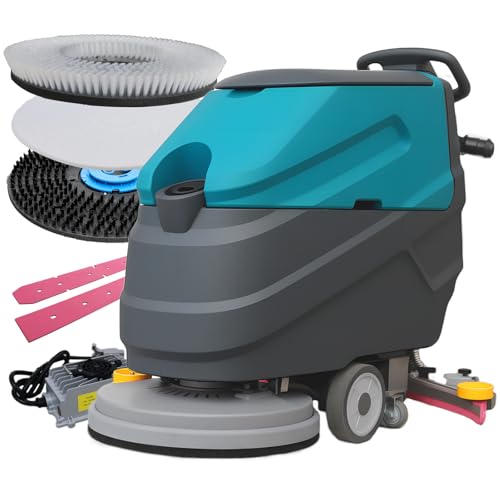
KARHDIR C7 Walk Behind Commercial Floor Scrubber Machine, 22" Cleaning Width, 31.5" Suction Width, 18.5 Gallon Solution Tank, 15.9 Gallon Recovery Tank, 32000 Sqft/h, Complete Set of Parts
【Efficient Cleaning】: 22" cleaning width and 31.5" squeegee suction width for comprehensive floor coverage in a single pass,…
As an affiliate, we earn on qualifying purchases.
As an affiliate, we earn on qualifying purchases.
Conclusion
Think of water hardness as the silent gatekeeper to your floor scrubber’s success. When you understand its role, you hold the key to unleashing maximum performance. Soft water is like a gentle breeze that clears away stubborn dirt, while hard water can be a stubborn mountain blocking your progress. By managing water hardness, you wield the power to turn your cleaning routine into a smooth voyage, transforming your floor into a shining beacon of cleanliness.

Commercial 4-in-1 Steam Carpet Cleaner Extractor – Cold Water, 18.5" Cleaning Path, 10.5/8 Gallon Tanks, with Upholstery & Wand Tool, Ideal for Large Areas & Professional Use
TRUE 4-IN-1 CLEANING SYSTEM – STEAM SPRAY SCRUB EXTRACT – Cold water extraction system with integrated 1,200W steam…
As an affiliate, we earn on qualifying purchases.
As an affiliate, we earn on qualifying purchases.

SetSail Floor Scrub Brush, 3 in 1 Floor Scrub Brush with 54-in Adjustable Long Handle and Scraper Heavy Duty Stiff Bristle Floor Scrubber for Cleaning Shower Bathroom Kitchen Patio Garage, Grey&White
3 IN 1 FLOOR SCRUB BRUSH: The floor scrub brush is multi-functional cleaning tool, combining the functions of…
As an affiliate, we earn on qualifying purchases.
As an affiliate, we earn on qualifying purchases.