To prevent freezing during cold weather sweeping, act quickly before snow turns to ice by regularly removing snow with shovels or plows, especially early in storms. Apply ice melt products proactively to lower the freezing point and create a protective barrier, reapplying as needed. Use traction materials like sand or litter to improve grip on icy patches. For more effective strategies to keep surfaces safe and ice-free, continue exploring proven techniques and tips.
Key Takeaways
- Sweep snow early to prevent compaction and ice bonding on surfaces.
- Use ice melt proactively during and after sweeping to lower freezing points.
- Regularly remove snow to minimize buildup and reduce the risk of freezing.
- Apply traction materials like sand or litter to improve grip on icy spots.
- Follow manufacturer guidelines for ice melt application to avoid surface damage and ensure safety.
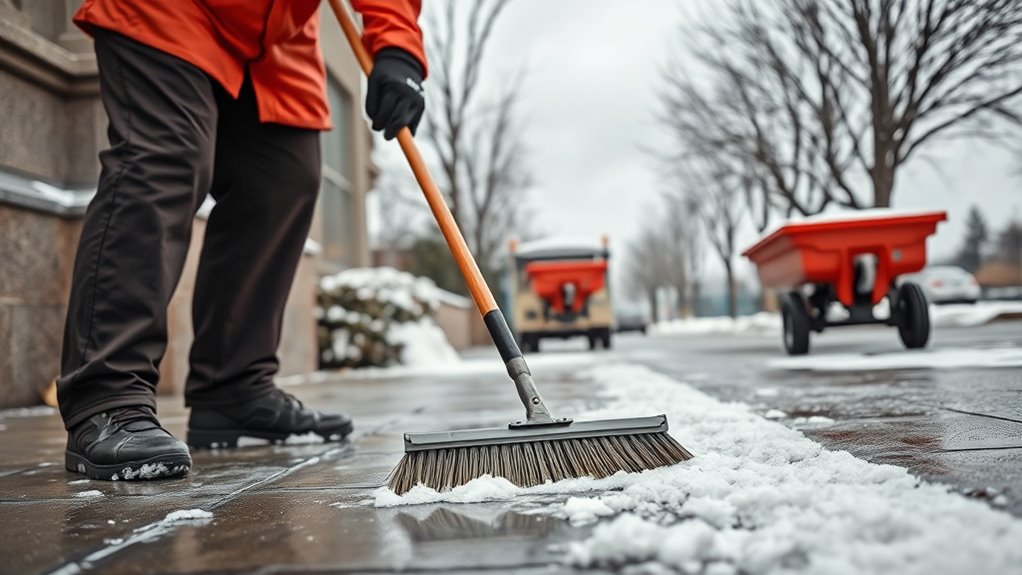
Have you ever wondered how to keep your sidewalks and driveways clear during cold weather? It’s a common concern, especially when icy conditions threaten safety and accessibility. The key is understanding effective snow removal techniques and using the right ice melt products. These strategies help prevent ice from bonding too strongly to surfaces, making removal easier and reducing the risk of dangerous slips and falls.
First, timing is everything. As soon as snow begins to fall, you want to act quickly. Waiting too long can cause snow to compact and turn into ice, making removal more difficult. Using snow removal techniques, such as shoveling or plowing early and often, prevents the buildup from becoming a solid ice layer. When you clear snow promptly, you reduce the chance of it melting and refreezing, which creates a slick, treacherous surface. Keep in mind that the goal is to keep the surface as snow-free as possible, so you’re not just removing snow but also preventing the formation of ice.
Act quickly to clear snow and prevent ice formation for safer surfaces.
Applying ice melt is an essential part of cold weather sweeping. The right ice melt products work by lowering the freezing point of water, helping to prevent ice from forming or sticking firmly to concrete and asphalt. When you use ice melt proactively—before a storm hits—it creates a barrier that inhibits ice from bonding to surfaces. During and after a storm, apply ice melt evenly across your sidewalks and driveways. This helps keep the surface warmer and reduces the amount of ice that can form, making subsequent snow removal easier. Remember that some ice melts are faster-acting than others, so choose one suited for your needs and climate.
In addition to ice melt, consider spreading sand or cat litter for extra traction, especially in particularly icy patches. These materials don’t melt ice but provide the grip you need to walk safely. Combining these methods with regular snow removal techniques ensures better control over icy conditions. When using ice melt, follow manufacturer instructions for application rates and safety precautions, and avoid overuse, which can harm your landscaping or pavement over time.
Frequently Asked Questions
What Tools Are Best for Sweeping in Sub-Zero Temperatures?
For sweeping in sub-zero temperatures, use sturdy snow removal tools like snow shovels with wide blades and ice scrapers to break through ice layers. Broom and push broom handles with heated grips can help you maintain control and reduce fatigue. These tools assist with effective ice mitigation and snow removal, ensuring safe and efficient cleaning even in freezing conditions. Always prioritize tools designed for cold weather to prevent freezing and improve performance.
How Often Should I Sweep During Extremely Cold Weather?
You should sweep at least daily during extremely cold weather to manage snow accumulation and prevent ice formation. Regular sweeping helps keep surfaces clear, reducing the risk of slipping and ice buildup. Pay close attention to high-traffic areas and edges where snow tends to accumulate. Consistent cleaning guarantees better ice prevention, keeps pathways safer, and minimizes the need for more intensive de-icing measures later on.
Can Sweeping Prevent Ice Formation on Sidewalks?
Surprisingly, sweeping can help prevent ice formation on sidewalks, but it’s not foolproof. By removing snow and applying ice melt promptly, you create a less hospitable surface for ice to bond. Regular snow removal and sweeping keep the area dry and reduce the need for harsh de-icers. So, while sweeping alone won’t completely stop ice, it plays an essential role in your cold weather ice prevention strategy.
Are There Eco-Friendly Sweeping Options for Winter?
Yes, you can choose eco-friendly sweeping options for winter. Use biodegradable sweepers that break down naturally, reducing environmental impact. Reusable sweeps are also a great choice—they last longer and minimize waste. By switching to these sustainable tools, you’ll effectively clear snow and debris while protecting the environment. Plus, they’re safe for the surroundings and help promote eco-conscious winter maintenance.
How Does Salt Affect Sweeping Equipment in Cold Weather?
Salt can cause corrosion on your sweeping equipment, leading to damage over time. It accelerates rust and weakens metal parts, making maintenance more necessary and costly. To protect your equipment, clean it thoroughly after each use in salty conditions, apply protective coatings, and inspect regularly for signs of salt corrosion. Proper maintenance helps extend the lifespan of your sweeping tools and keeps them functioning efficiently during cold weather.
Conclusion
As the cold weather sweeps in, remember that taking simple precautions can save you from a nightmare worse than winter itself. Protect your pipes, insulate your home, and stay vigilant—these steps are your first line of defense against the freezing chaos. If you ignore these tips, you risk facing a disaster so overwhelming it could feel like battling a storm of icy fury alone. Stay prepared, stay safe, and keep winter’s worst at bay.