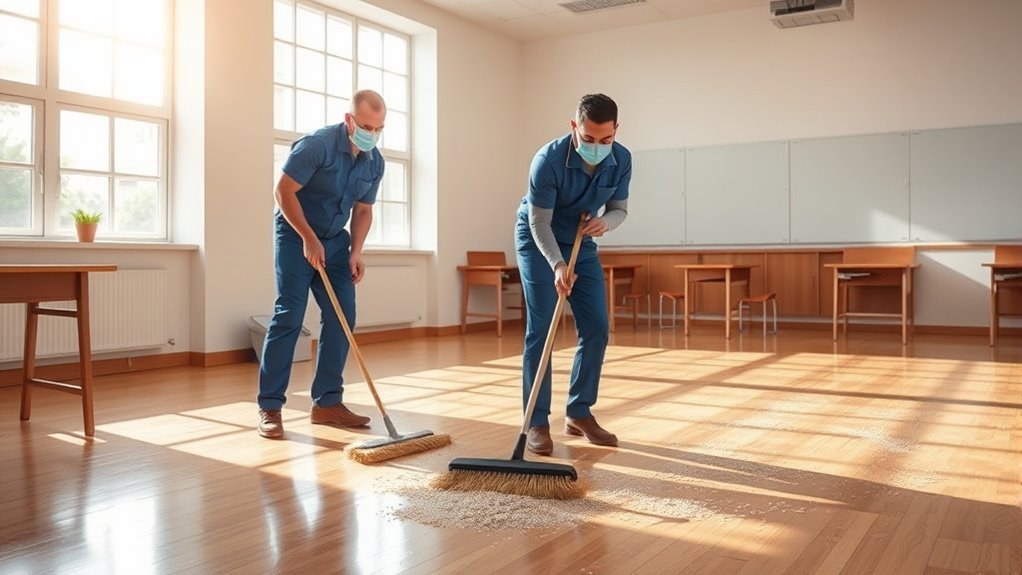

To beat fine dust in classrooms, implement a two-pass sweeping plan. First, sweep thoroughly to gather surface dust, targeting corners, under desks, and high traffic areas. Then, take a break, and sweep again to remove remaining particles. This method markedly reduces airborne dust, improving air quality and student health. Combining this with regular cleaning routines and ventilation maintenance boosts results—keep going to discover how to optimize your cleaning strategy effectively.
Key Takeaways
- Implement a two-pass sweeping schedule: complete a thorough initial sweep, take a break, then sweep again to remove residual dust.
- Focus on high-traffic areas, under desks, and corners during the first sweep for maximum dust collection.
- Use microfiber cloths or damp mops during the second sweep to trap fine dust particles effectively.
- Combine sweeping with proper ventilation system maintenance to prevent dust buildup and improve air quality.
- Regularly clean air vents and filters to minimize airborne dust and enhance overall indoor air cleanliness.
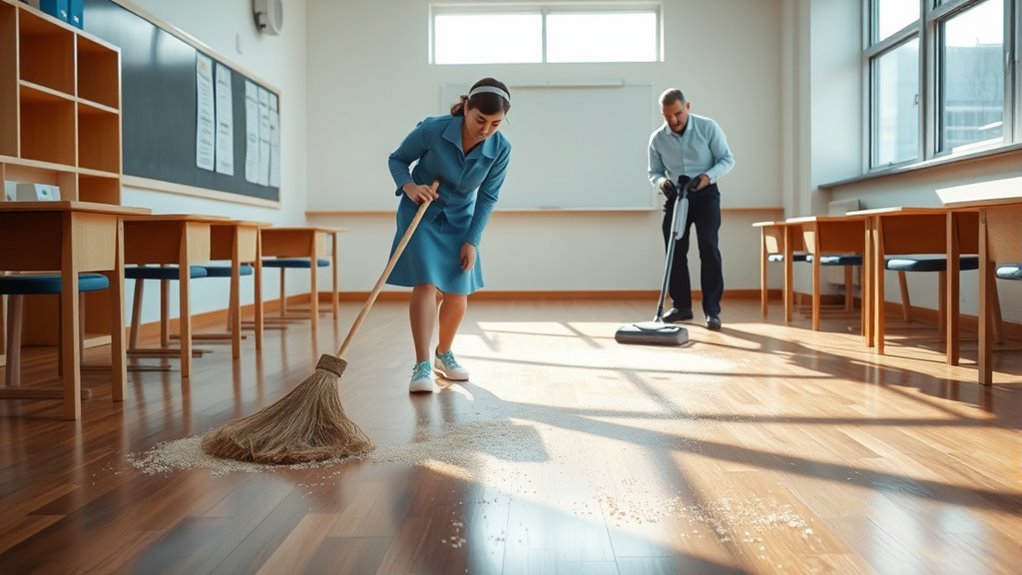
Many classrooms are affected by fine dust, which can harm students’ health and concentration. Poor air quality from fine dust particles can lead to respiratory issues, allergies, and decreased focus, making it essential to manage and reduce dust levels effectively. One of the most practical ways to address this problem is by implementing a well-structured cleaning schedule. Regular cleaning helps remove dust that settles on floors, desks, and other surfaces, preventing it from becoming airborne again. However, simply sweeping once isn’t enough. To truly improve air quality and minimize dust exposure, adopting a two-pass sweeping plan can be highly effective.
The two-pass sweeping plan involves sweeping the classroom twice, with a break in between to ensure maximum dust removal. During the first pass, you sweep thoroughly to gather as much dust and debris as possible. Focus on high-traffic areas, under desks, and corners where dust tends to settle. After this initial sweep, give the room a few minutes for the dust to settle or be collected into a dustpan. This pause allows you to prepare for the second sweep more efficiently. During the second pass, you go over the same areas to pick up any remaining dust particles that may have been stirred up during the first sweep. This double-cleaning approach considerably reduces the amount of fine dust lingering in the air. Additionally, understanding the importance of ventilation systems and their maintenance can significantly improve indoor air quality.
In addition to the two-pass approach, adjusting your cleaning schedules plays a crucial role in maintaining good air quality. You should aim to sweep and vacuum classrooms at least daily, especially during seasons when dust levels tend to rise, such as during windy days or dry seasons. Incorporating wet mopping or using microfiber cloths for dusting can further trap fine particles, preventing them from becoming airborne. Regularly cleaning air vents and filters also helps maintain good airflow and prevents dust buildup in ventilation systems, which are critical to indoor air quality.
Frequently Asked Questions
How Often Should Classrooms Be Swept to Effectively Reduce Fine Dust?
You should sweep classrooms at least twice a day to effectively reduce dust accumulation. Regular cleaning keeps fine dust levels low, improving air quality and student health. Increasing cleaning frequency during allergy seasons or high dust days can be even more beneficial. Consistent sweeping prevents dust buildup, ensuring a healthier learning environment. Remember, maintaining a routine helps keep dust under control and promotes better indoor air quality for everyone.
What Equipment Is Recommended for a Two-Pass Sweeping Plan?
You should use lightweight vacuum cleaners with HEPA filters to effectively pick up fine dust during the first pass. Afterward, utilize microfiber mops for a thorough second sweep, trapping remaining particles. This combination guarantees complete dust removal, improves air quality, and creates a healthier classroom environment. Make sure your equipment is easy to maneuver and maintain, so your cleaning remains efficient and effective in reducing fine dust levels.
Can Natural Ventilation Help Reduce Fine Dust Levels in Classrooms?
They say “a breath of fresh air” can work wonders, and it’s true for classrooms too. Natural ventilation improves airflow optimization, helping to reduce fine dust levels markedly. By opening windows and vents, you allow fresh air to replace contaminated indoor air, lowering dust concentration. This simple step boosts air quality, making the environment healthier and more comfortable for students and teachers alike.
Are There Specific Cleaning Agents Best Suited for Fine Dust Removal?
You should use cleaning agents specifically designed for allergen control and dust mite prevention, such as HEPA-filtered vacuums and damp dusting solutions. These agents effectively capture fine dust particles and allergens, reducing respiratory issues. Regularly cleaning with these products helps create a healthier classroom environment, especially for students with allergies or asthma. Always choose gentle, non-toxic cleaners to guarantee safety while maintaining ideal dust mite prevention.
How Can Teachers and Students Minimize Dust Disturbance During Cleaning?
You can minimize dust disturbance during cleaning by practicing proper dust suppression techniques and cleaning ergonomics. Encourage gentle, steady sweeping motions and use tools designed to trap dust effectively. Keep windows open or use air purifiers to reduce airborne particles. Teach students and staff to avoid stirring up dust, and use ergonomic tools that reduce strain, ensuring safer, more efficient cleaning while keeping dust levels low.
Conclusion
By implementing this two-pass sweeping plan, you can considerably reduce fine dust and create a healthier classroom environment. Did you know that students breathe in up to 2.5 times more air than adults, making clean air essential for their development? With consistent effort, you’ll help protect their health and improve focus. Don’t underestimate the power of small actions—your commitment to cleaner classrooms makes a real difference in students’ futures.