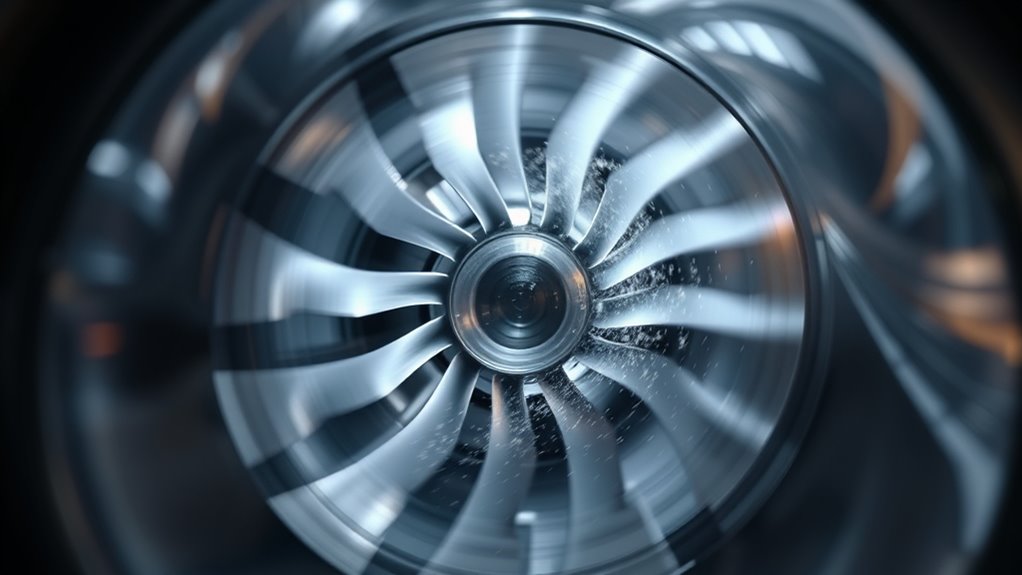

Inside a modern sweeper’s vacuum fan, you’ll find a precisely engineered system designed to maximize airflow and static pressure. The aerodynamic blades, often curved or twisted, focus on displacing debris efficiently while reducing turbulence and noise. Adjustments in blade count and rotational speed optimize performance for different cleaning tasks, all while conserving energy. This sophisticated airflow management helps keep dust contained and enhances operational efficiency. Keep exploring to understand how these systems work together seamlessly.
Key Takeaways
- Modern sweeper vacuum fans are engineered with aerodynamic blades to optimize airflow and reduce turbulence.
- Fan systems are designed to generate high static pressure and airflow velocity for effective debris collection.
- Blade shape, angle, and rotational speed are precisely calibrated to maximize debris intake while minimizing energy use.
- Airflow control within the fan and duct system prevents dust escape and enhances overall sweeping efficiency.
- Innovative engineering balances noise reduction, environmental impact, and power consumption for sustainable operation.

Have you ever wondered how modern sweeper vacuum fans efficiently clear debris from streets and surfaces? It all comes down to the intricate airflow engineering behind these machines, especially their dust collection capabilities and fan blade design. When you see a street cleaner in action, you’re witnessing a marvel of engineering that maximizes airflow while minimizing energy consumption and dust escape. The secret lies in how the fan system is crafted to optimize debris intake and collection.
Dust collection is a vital aspect of a sweeper’s performance. The fan creates a powerful suction that pulls in dirt, leaves, and small debris from the surface. To do this effectively, the airflow must be precisely controlled so that particles are directed into the collection hopper without escaping back into the environment. Engineers achieve this by designing the fan and duct system to generate high static pressure and airflow velocity. This ensures dust and debris are captured efficiently, reducing airborne particles and improving cleanliness. Proper dust collection not only enhances operational efficiency but also helps protect both workers and nearby pedestrians from dust exposure.
Effective dust collection relies on precise airflow control to capture debris without environmental escape.
The design of the fan blades plays a key role in achieving ideal airflow. You’ll find that modern sweeper fans feature blades shaped with aerodynamic precision, often curved or twisted to maximize air movement while reducing turbulence. These blades are crafted from durable materials to withstand the harsh conditions of street cleaning, including debris impact and weather exposure. The angle and curvature of the blades are carefully calibrated to generate a high volume of airflow at lower rotational speeds, which helps conserve energy. Furthermore, the blade design is optimized to prevent dust from escaping through gaps, ensuring that the vacuum’s suction remains focused and effective.
Additionally, the fan’s rotational speed and blade count are tuned for different cleaning scenarios. For instance, a high-speed fan with multiple blades can generate a more concentrated airflow to dislodge stubborn debris, while a slower, more energy-efficient setup is ideal for routine cleaning. The engineering behind these fans also considers noise reduction, so the operation remains as unobtrusive as possible. Modern fan systems also incorporate advanced aerodynamic principles to further improve airflow efficiency and reduce operational noise.
In essence, the airflow engineering of a modern sweeper vacuum fan combines precise dust collection techniques with innovative fan blade design. This synergy allows street sweepers to operate efficiently, capture debris thoroughly, and minimize environmental impact. So next time you see a street cleaner working, remember the complex engineering behind its fan—designed to clear the streets with power, precision, and care for the environment.
Frequently Asked Questions
How Does Airflow Engineering Improve Vacuum Efficiency?
Airflow engineering enhances vacuum efficiency by optimizing how air moves through your sweeper. You benefit from improved dust filtration because the airflow directs debris smoothly into the container, preventing clogs. This also boosts motor performance, as the motor doesn’t have to work as hard to maintain suction. Proper airflow management guarantees your sweeper cleans better and lasts longer, making your cleaning experience more effective and less tiring.
What Materials Are Used in Modern Vacuum Fan Blades?
You might wonder about fan blade materials in modern vacuums. Typically, manufacturers use durable plastics or lightweight metals like aluminum to guarantee blade durability. These materials are chosen because they resist wear and tear, maintain shape under stress, and contribute to efficient airflow. By selecting the right fan blade materials, you help assure the vacuum’s longevity and optimal performance, making your cleaning experience smoother and more effective.
How Is Noise Reduction Achieved in Vacuum Fans?
You can reduce noise in vacuum fans through sound insulation and vibration dampening. Sound insulation materials absorb sound waves, preventing noise from escaping the fan housing. Vibration dampening minimizes the transfer of vibrations from the blades to the frame, reducing noise generated by mechanical movement. Combining these techniques, along with optimized blade design and smooth motor operation, helps create quieter vacuum fans, enhancing user comfort and meeting noise regulation standards.
What Maintenance Is Required for Optimal Airflow?
Maintaining maximum motion requires meticulous monitoring. You should regularly inspect fan blades for damage and debris, ensuring smooth spinning. Don’t forget to clean or replace filters to prevent blockages that hinder airflow. Properly tightening fasteners and checking for vibrations also help. Consistent filter maintenance and fan blade inspection keep airflow ideal, prolong the fan’s lifespan, and ensure your sweeper performs at its best, efficiently and quietly.
How Do Airflow Dynamics Affect Dust Collection?
You should understand that airflow dynamics directly impact dust collection efficiency. When airflow is smooth, dust particles are carried effectively into the bin. However, airflow turbulence causes dust particles to settle prematurely or escape, reducing performance. By maintaining ideal airflow, you ensure consistent dust pickup, minimize turbulence, and improve overall cleaning. Proper design and maintenance help control airflow turbulence, making dust collection more effective and your sweeping tasks more efficient.
Conclusion
As you peer into the vacuum fan’s intricate blades, remember they’re the heart of the sweeper’s soul—guiding unseen currents like a steady heartbeat. Just as a lighthouse shines through darkness, airflow engineering illuminates efficiency behind the scenes. Every rotation symbolizes progress, transforming chaos into clarity. Embrace this silent force, knowing it’s the unseen guardian that keeps your world clean and clear, a quiet symbol of innovation powering your daily life.