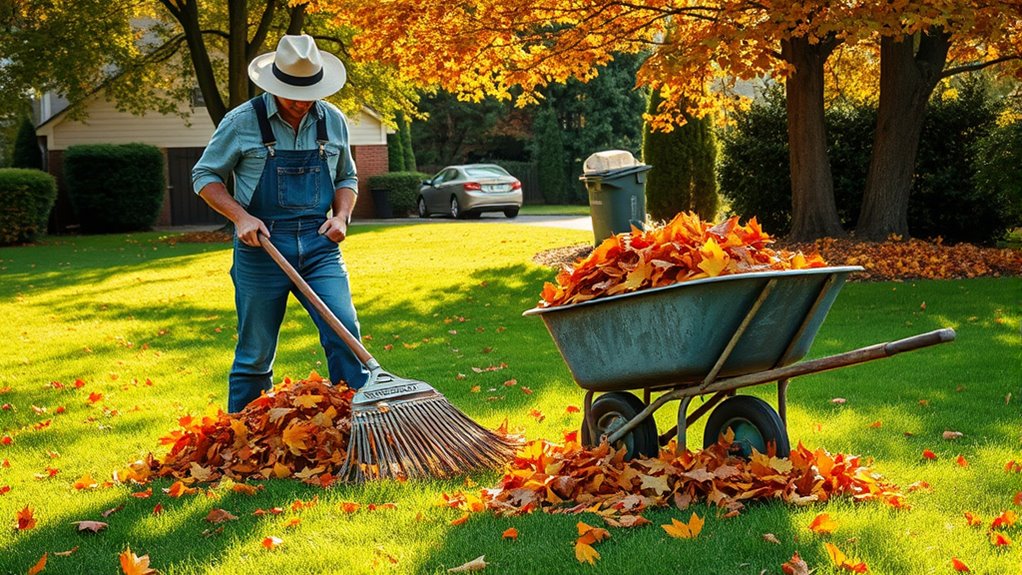

Managing leaves and seasonal debris is key to keeping your yard healthy and tidy. Use tools like blowers, rakes, or vacuums to gather leaves regularly, especially during peak fall. Compost or recycle the debris through your local programs, and shred leaves for mulch to protect soil and plants. Collect larger branches separately and dispose of them properly. Proper debris management prevents disease, pests, and damage, and there’s much more to explore for a pristine, well-maintained yard.
Key Takeaways
- Regularly collect leaves using blowers, rakes, or vacuums to prevent matting and maintain yard appearance.
- Compost or mulch shredded leaves to enrich soil and suppress weeds around plants.
- Dispose of larger debris like branches through chipping, hauling, or yard waste programs for proper removal.
- Remove debris promptly to prevent mold, pests, and damage to grass and plants.
- Use biodegradable bags or designated containers to recycle or dispose of leaves and yard waste responsibly.

As autumn approaches, managing leaves and seasonal debris becomes an essential part of maintaining a tidy and healthy yard. When the trees shed their foliage, it’s up to you to stay on top of leaf collection and debris disposal to prevent your yard from becoming overwhelmed. Regularly gathering fallen leaves not only keeps your lawn looking neat but also protects your grass and plants from suffocation and disease. Using a leaf blower, rake, or garden vacuum can make this task more manageable, allowing you to gather leaves efficiently and quickly. It’s important to collect the leaves frequently, especially during peak fall, to prevent them from matting down and creating a layer that hampers sunlight and air circulation.
Regularly collecting fallen leaves keeps your yard tidy and healthy all season long.
Disposing of debris properly is another indispensable aspect of yard maintenance during this season. Leaves and other plant matter, if left to decompose naturally, can enrich your soil, but excessive buildup can lead to issues like mold or pests. You might consider composting your leaves, which transforms organic waste into nutrient-rich compost for your garden beds. Alternatively, many communities offer yard waste collection programs—check your local regulations for specific guidelines about debris disposal. Bagging leaves in biodegradable yard waste bags or using designated containers makes disposal easier and environmentally friendly.
If you prefer a tidy appearance, using mulch made from shredded leaves can be an effective way to recycle debris and protect your soil. Mulching around trees and flower beds helps conserve moisture, suppress weeds, and insulate roots during cold months. Just be sure to shred the leaves thoroughly so they decompose quickly and don’t form a dense mat that could hinder water absorption.
When dealing with larger debris like fallen branches or twigs, it’s best to gather and dispose of them separately. Branches can be chipped into mulch or used for composting if small enough, while larger pieces should be hauled away or stored for future projects. Proper debris disposal not only keeps your yard looking tidy but also reduces potential habitats for pests and disease.
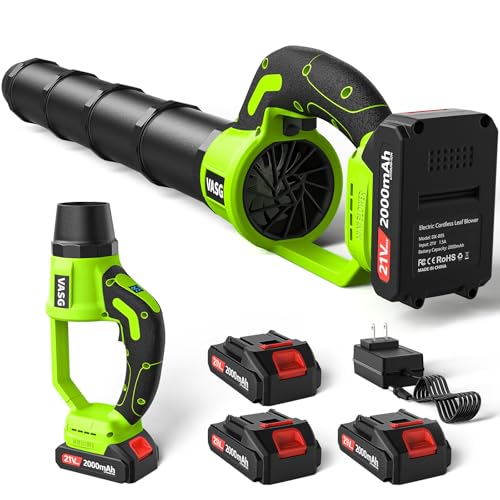
VASG Leaf Blower Cordless, 3 x 21V Batteries & Fast Charger Set, Variable Speed Mode, Lightweight Handheld Electric Leaf Blower for Lawn Care, Yard, Garden, Patio & Outdoor Cleanup
3× Battery Design for Longer Use: With three 21V rechargeable batteries and a fast charger, this cordless leaf…
As an affiliate, we earn on qualifying purchases.
As an affiliate, we earn on qualifying purchases.
Frequently Asked Questions
How Do I Prevent Leaves From Clogging My Gutters?
To prevent leaves from clogging your gutters, install leaf guards or gutter covers. These keep debris out while allowing water to flow freely. Regularly check and clean your gutter covers to make certain they’re functioning properly. Trim overhanging branches that drop leaves, and consider scheduling seasonal gutter maintenance. With leaf guards and gutter covers, you’ll reduce clogs and avoid water damage, making gutter upkeep much easier.
What Equipment Is Best for Large-Scale Leaf Removal?
You might think a tiny rake is enough for large-scale leaf removal, but honestly, a powerful leaf blower or leaf vacuum makes all the difference. These tools quickly clear massive amounts of debris, saving you time and effort. Invest in a high-capacity leaf blower for outdoor spaces or a commercial-grade leaf vacuum for efficiency. Don’t underestimate the power of proper equipment—your yard will thank you.
How Often Should I Clean up Seasonal Debris?
You should clean up seasonal debris regularly, ideally every one to two weeks, to prevent excessive debris accumulation. Timing considerations are key—you’ll want to heighten cleanup frequency during peak leaf fall or storm seasons. Staying proactive helps maintain your yard’s health, prevents clogging gutters, and keeps your outdoor space looking tidy. Regular maintenance ensures debris doesn’t pile up, making yard cleanup easier and more manageable throughout the season.
Are There Eco-Friendly Options for Disposing of Leaves?
You can turn your leaves into rich soil using eco-friendly methods like composting options or mulching techniques. Imagine your yard transforming into a lush, vibrant space as leaves break down naturally, nourishing the earth. Composting options speed up decomposition, creating valuable compost, while mulching techniques help retain moisture and suppress weeds. Both methods reduce waste and benefit the environment, giving your yard a healthy, sustainable boost without harmful chemicals.
How Can I Protect My Lawn During Leaf and Debris Cleanup?
To protect your lawn during leaf and debris cleanup, start by doing lawn aeration to prevent soil compaction and promote healthy growth. Avoid heavy equipment that can damage the grass, and make sure to water the soil beforehand to keep it moist and resilient. Gently rake leaves instead of dragging or stomping on the lawn, and remove debris carefully to minimize stress on your grass.

WORX Trivac 3 in 1 Electric Leaf Blower for Lawn Care, Leaf Vacuum with 350 CFM & 210 MPH, Leaf Mulcher with Metal Impeller, WG509
3-IN-1 DESIGN: Leaf blower, mulcher, vacuum in one for efficient yard work.
As an affiliate, we earn on qualifying purchases.
As an affiliate, we earn on qualifying purchases.
Conclusion
Managing leaves and seasonal debris isn’t just about keeping your yard tidy; it also prevents clogged gutters and reduces fire hazards. Did you know that over 80% of residential fires in dry seasons are caused by unmanaged debris? By regularly clearing your yard, you protect your home and boost curb appeal. So, stay proactive—rake, sweep, and clear. Your efforts make a big difference in maintaining a safe, beautiful outdoor space year-round.

Amazon Basics Lawn & Leaf Drawstring Trash Bags, 39 Gallon, 40 Count, Black, Unscented
Lawn and leaf garbage bags (40-count), each with a 39 gallon capacity; Unscented
As an affiliate, we earn on qualifying purchases.
As an affiliate, we earn on qualifying purchases.
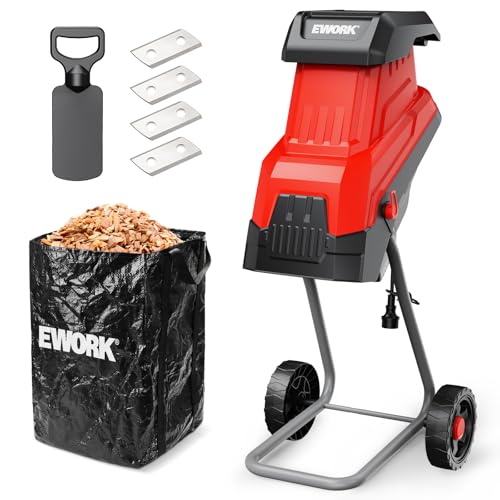
EWORK 15-Amp Electric Wood Chipper Shredder, 15:1 High Reduction Ratio with 4 Steel Blades Included, 1.77 Inch Capacity, Garden Mulcher for Composting Branches and Twigs
[15-Amp POWERFUL MOTOR] Unlike standard motors, EWORK EK-DT8401 features a professional-grade that delivers 4500 RPM consistent torque without…
As an affiliate, we earn on qualifying purchases.
As an affiliate, we earn on qualifying purchases.