
As a sweeper operator, you’re exposed to high noise levels that can cause permanent hearing damage if you’re not protected. Noise often exceeds safe limits of 85 decibels during extended use, risking irreversible harm. To stay safe, wear certified earplugs or earmuffs consistently, make sure they fit properly, and take regular breaks. Combining PPE with engineering controls can further reduce your risk—stay with us to discover more effective noise management strategies.
Key Takeaways
- Sweepers can generate noise levels exceeding 85 decibels, risking hearing damage during prolonged exposure.
- Consistent use of PPE like earplugs and earmuffs is essential to protect against high noise levels.
- Engineering controls, such as sound dampening components, help reduce overall noise from sweepers.
- Regular noise monitoring identifies high-risk periods, guiding the use of appropriate hearing protection.
- Combining PPE with engineering and administrative controls provides the most effective hearing safety strategy.

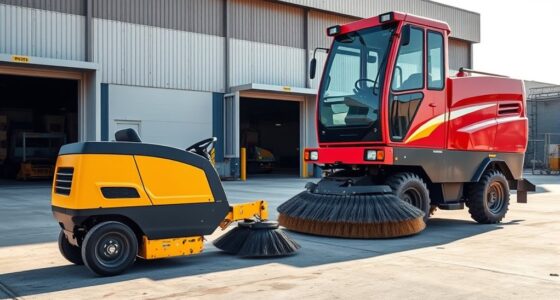
Sweepers are essential for maintaining clean streets and public spaces, but they often generate high noise levels that can harm your hearing over time. When you’re operating these machines regularly, exposure to loud noises can lead to permanent hearing loss if you’re not properly protected. That’s why understanding noise reduction strategies and adhering to PPE guidelines is crucial for your safety and well-being.
The noise produced by sweepers can reach levels well above safe thresholds, especially during prolonged use. To mitigate this risk, noise reduction becomes a key focus. Modern sweepers are equipped with sound dampening features, such as insulated panels and quieter engine designs, but these alone might not be enough if you’re exposed for hours each day. Wearing appropriate hearing protection, like earplugs or earmuffs, is essential to markedly lower the risk of hearing damage. These devices work by reducing the decibel level that reaches your ears, allowing you to operate the equipment safely over extended periods.
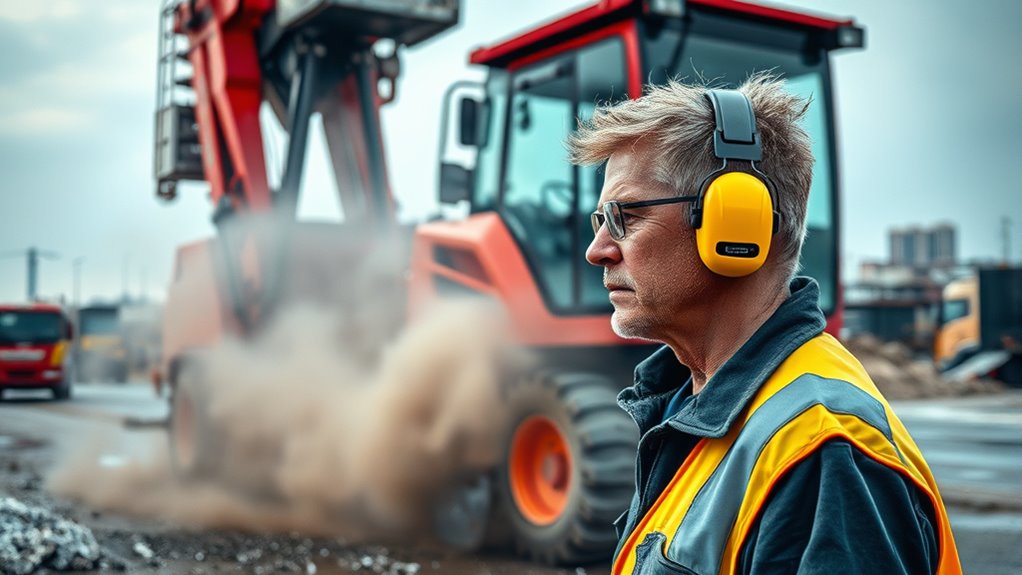
Following PPE guidelines is vital when working with noisy machinery. Employers should ensure you have access to certified hearing protection and that you’re trained on how to use it correctly. Proper fitting is essential—earmuffs should snugly cover your ears without gaps, and earplugs must be inserted properly to form a tight seal. Regularly inspecting your PPE helps maintain its effectiveness; damaged or worn-out devices won’t provide adequate noise reduction. Additionally, PPE guidelines recommend that you wear hearing protection consistently whenever you’re near or operating sweepers, especially in environments where noise levels frequently surpass 85 decibels, which is the limit where persistent exposure can cause harm. Implementing noise monitoring can also help identify high-risk periods and adjust work schedules accordingly.
Wearing properly fitted PPE consistently protects your hearing near noisy sweepers.
Incorporating noise reduction measures into your daily routine can make a big difference. For instance, taking short breaks from noisy environments allows your ears to recover. If your work involves continuous exposure, consider using PPE with higher noise reduction ratings (NRR) for maximum protection. Employers should also implement engineering controls, such as installing sound barriers or using quieter equipment, to further reduce noise levels at the source. By combining these approaches—engineering controls, PPE adherence, and awareness of noise levels—you can protect your hearing effectively.
Frequently Asked Questions
What Are the Long-Term Health Effects of Noise Exposure From Sweepers?
Exposure to noise from sweepers can cause long-term health issues like noise-induced hearing loss and chronic tinnitus. If you don’t wear proper hearing protection, your hearing may deteriorate gradually, making it hard to hear conversations or sounds. Over time, persistent noise can damage your auditory system, leading to ongoing ringing or buzzing in your ears. Protect your hearing now to avoid these serious, lifelong effects.
How Often Should Hearing Tests Be Conducted for Sweeper Operators?
Think of hearing tests like a lighthouse guiding you through foggy waters; they’re crucial for safety. You should have hearing conservation assessments at least annually, especially if noise monitoring indicates high levels. Regular testing helps catch early signs of hearing loss, ensuring you stay protected. By staying proactive, you maintain your hearing health, just as a lighthouse keeps ships safe—so don’t skip these essential check-ups.
Are There Specific Types of Ear Protection More Effective for Sweepers?
You should choose ear protection that offers high earplug effectiveness while ensuring earmuff comfort. Look for earplugs with a good noise reduction rating (NRR) to block out loud sounds, and select earmuffs with padding that feels comfortable for long wear. Combining earplugs and earmuffs can provide extra protection, especially in very noisy environments. Prioritize options that balance sound attenuation with comfort to encourage consistent use.
How Do Weather Conditions Affect Noise Levels and Hearing Protection?
Weather impact can turn your workday into a symphony of chaos, as humidity, rain, or wind amplify noise variability around you. When the air thickens or gusts howl, sound waves bounce and intensify, making hearing protection more vital. You might find that in wet or windy conditions, noise levels spike unexpectedly, so always gear up with reliable ear protection to shield your ears from the weather’s unpredictable roar.
What Are the Legal Noise Exposure Limits for Sweeper Operators?
You need to follow noise regulation standards, which typically set the permissible exposure limit at 85 decibels over an 8-hour work shift. As a sweeper operator, it’s vital to adhere to hearing conservation programs, including using proper hearing protection devices. These limits help prevent hearing loss and safeguard your safety on the job. Always stay updated with OSHA or local regulations to maintain compliance and protect your hearing health.
Conclusion
Remember, responsible regulation and reliable hearing protection reduce risks and reinforce safety. By recognizing noise levels and donning dependable defenders, you defend your hearing and dodge damage. Don’t delay—determine the decibels, dispose of distractions, and dedicate yourself to diligent safety. Your hearing’s health hinges on your habits; harness habits that help, hinder hazards, and hold noise levels in check. Protect your ears today for a healthier, happier tomorrow.