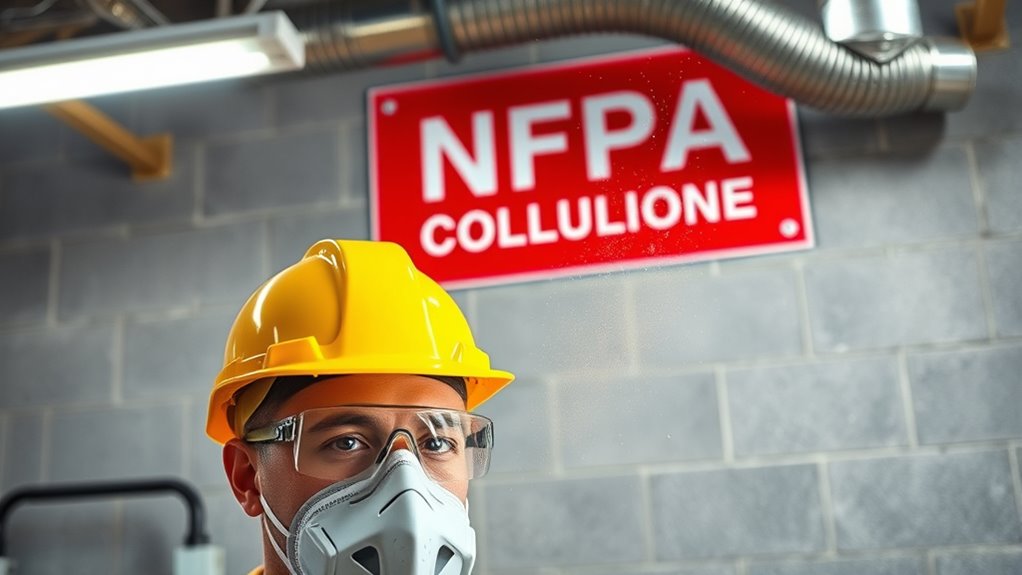

To comply with OSHA and NFPA dust safety standards, you need to identify dust hazards, install proper engineering controls like ventilation and dust collection, and use appropriate PPE. Regularly inspect and maintain safety systems, keep detailed records of hazard assessments, and ensure employees are trained on safe procedures. Failing to follow these steps can put workers at risk of respiratory issues, fires, or explosions. If you want to learn more, there’s valuable information ahead to help you stay compliant and safe.
Open a free Amazon Business account
Business pricing, bulk buying and tax-exempt orders.
As an affiliate, we earn on qualifying purchases.
Key Takeaways
- Recognize and assess dust hazards, including explosion and health risks, in the workplace.
- Implement engineering controls like ventilation and dust collection systems to manage dust.
- Ensure proper use of PPE and train employees on dust safety procedures.
- Maintain detailed records of hazard assessments, inspections, and safety training.
- Foster a safety culture committed to ongoing compliance with OSHA and NFPA regulations.

Ensuring dust compliance according to OSHA and NFPA standards is essential for maintaining a safe work environment. Dust hazards are a serious concern in many industries, especially where fine particles are generated during manufacturing, grinding, or handling materials. These hazards can lead to respiratory issues, fires, or explosions if not properly managed. That’s why understanding and adhering to safety standards is critical for protecting yourself, your coworkers, and the facility as a whole. OSHA, the Occupational Safety and Health Administration, sets regulations that define the permissible levels of airborne dust and require employers to implement control measures. Meanwhile, the NFPA, National Fire Protection Association, provides guidelines aimed at preventing dust explosions by controlling dust collection and ignition sources. When you follow these standards, you’re actively reducing the risk of accidents related to dust hazards.
Maintaining dust safety per OSHA and NFPA standards protects workers and prevents hazards.
To effectively comply with safety standards, you need to identify the specific dust hazards present in your work environment. Some dusts, like those from flour or sugar, might seem harmless but can become explosive under the right conditions. Others, such as metal or chemical dusts, pose health risks if inhaled over time. Once hazards are identified, implementing engineering controls becomes your first line of defense. This includes installing proper ventilation systems, local exhausts, and dust collection devices designed to capture dust at its source. Regular maintenance and inspection of these systems are fundamental to ensure they operate effectively and prevent dust accumulation that could ignite or cause respiratory issues. Additionally, understanding the dust explosion risks associated with certain fine particles is crucial for comprehensive safety management.
Personal protective equipment (PPE) also plays a crucial role in dust compliance. Respirators, gloves, and protective clothing help minimize your exposure to harmful dust particles. However, PPE should never be your only safeguard—it’s a supplementary measure alongside engineering controls. Training is equally important. You need to understand how dust hazards can develop into dangerous situations and how to operate equipment safely, follow proper procedures, and respond quickly if a dust-related incident occurs. OSHA mandates training programs that outline these safety measures, so make sure you stay informed and compliant.
Finally, documentation and record-keeping are essential components of OSHA and NFPA compliance. Keeping detailed records of hazard assessments, safety procedures, inspections, and employee training not only demonstrates your commitment to safety but also helps identify areas for improvement. Compliance isn’t just about avoiding penalties; it’s about fostering a safety culture where everyone understands the risks associated with dust hazards and actively works to mitigate them. By adhering to these safety standards, you’re creating a safer, healthier environment for everyone while reducing the risk of costly accidents or legal issues down the line.
dust collection system for workshop
As an affiliate, we earn on qualifying purchases.
As an affiliate, we earn on qualifying purchases.
Frequently Asked Questions
How Often Should Dust System Inspections Be Performed?
You should perform dust system inspections regularly, ideally according to your maintenance schedules and industry standards. Typically, inspections are recommended at least annually, but more frequent checks may be necessary depending on your operation’s dust levels and equipment usage. Consistent inspection frequency guarantees that your dust control system stays effective, prevents hazards, and complies with safety regulations. Stay proactive by adhering to a routine inspection schedule tailored to your specific environment.
What Training Is Required for Workers Handling Dust Hazards?
You need to provide workers with dust safety training that covers hazard awareness and proper handling procedures. This training should include recognizing dust hazards, understanding proper use of protective equipment, and emergency response protocols. Regularly update this training to reflect new safety standards and guarantee workers stay informed. By doing so, you help prevent dust-related accidents and promote a safer work environment, emphasizing the importance of hazard awareness in dust safety practices.
Are There Specific PPE Requirements for Dust Exposure?
You definitely need to follow dust mask requirements and respirator standards for dust exposure. These standards are like the superhero shields against harmful dust particles, ensuring your safety. Always wear the appropriate respirator, whether it’s a simple dust mask or a more advanced respirator, depending on the hazard level. Proper PPE not only protects your lungs but keeps you compliant with safety regulations and prevents serious health issues.
How Do I Document Compliance With Osha/Nfpa Standards?
You document compliance by conducting dust sampling regularly to monitor airborne dust levels and verify they stay within OSHA and NFPA limits. Keep detailed records of sampling results, maintenance logs, and equipment inspections. Additionally, maintain hazard communication materials like safety data sheets and training records. Regularly review and update your documentation to demonstrate ongoing adherence, and make these records accessible to inspectors if needed.
What Are the Penalties for Non-Compliance?
If you fail to address dust hazards and don’t comply with standards, you risk hefty penalties, including fines and inspection citations. OSHA enforces compliance through inspections, and non-compliance can lead to costly fines, work stoppages, or even legal action. NFPA standards also promote safety; ignoring them can result in increased risk of fire and health issues, and enforcement actions might include penalties or mandatory corrective measures to guarantee dust hazard mitigation.
Conclusion
Ensuring your workspace meets OSHA and NFPA dust compliance isn’t just about avoiding fines—it’s about protecting lives. Did you know that workplace dust explosions have caused over 100 fatalities in the past decade? Staying compliant not only safeguards your team but also prevents devastating accidents. Take action today to prioritize safety, reduce risks, and create a safer environment where everyone can work with confidence and peace of mind.
Fall Picks
fall essentials
As an affiliate, we earn on qualifying purchases.