To reduce brush wear in industrial sweepers, choose the right brush material for your surfaces and debris, like stiff polypropylene for rough surfaces or softer nylon for delicate floors. Regularly inspect and clean your brushes to catch early signs of damage, and adjust tension and height according to manufacturer guidelines. Proper maintenance and selecting environment-appropriate materials will extend your brushes’ lifespan and improve performance—keep exploring to discover more tips for maximizing your sweeper’s efficiency.

Get cleaning gear delivered free with Prime
- Fast, free delivery on millions of items
- Prime Video, Amazon Music and more included
- Member-only deals all year
Key Takeaways
- Select the appropriate brush material based on surface type and debris to prevent unnecessary wear.
- Perform regular inspections to detect early signs of bristle damage and uneven wear patterns.
- Adjust brush tension and height correctly according to manufacturer guidelines to ensure optimal contact.
- Maintain proper cleaning routines to remove debris buildup that accelerates brush deterioration.
- Consider environmental factors and choose brushes suited for specific conditions to minimize strain and extend lifespan.
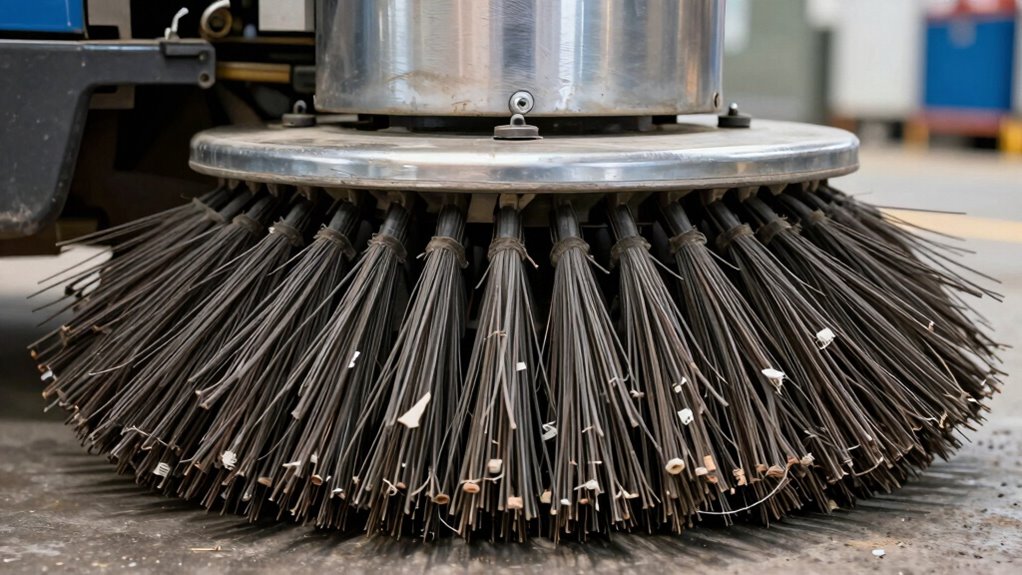
Industrial sweepers rely heavily on their brushes to keep environments clean, but excessive wear can lead to costly replacements and downtime. To extend the life of your brushes, paying close attention to brush material selection is essential. Different materials are suited for specific surfaces and debris types, so choosing the right one can considerably reduce wear. For example, stiff polypropylene brushes work well on rough surfaces like asphalt, while softer nylon brushes are better for delicate flooring. Using the wrong material accelerates brush deterioration, so consider your cleaning environment carefully before making a selection. Properly selecting the right brush material based on your environment is crucial for maximizing lifespan and efficiency. It also helps prevent unnecessary strain on the brushes caused by incompatible materials. Implementing a strict maintenance schedule is another critical step in minimizing brush wear. Regular inspections help you identify early signs of damage, such as worn bristles or uneven wear patterns, allowing for timely adjustments or replacements. By routinely checking the brushes, you prevent small issues from escalating into major problems that force costly downtime. A maintenance schedule should include cleaning the brushes to remove debris and buildup, which can cause uneven wear and reduce effectiveness. Additionally, adjusting brush tension and height according to manufacturer guidelines helps optimize contact with surfaces, preventing unnecessary strain and wear. Understanding proper maintenance techniques can significantly impact the longevity of your brushes, ensuring consistent performance and reduced replacement costs. Moreover, incorporating proper cleaning methods can further enhance brush durability. A proactive approach to maintenance not only prolongs the lifespan of your brushes but also maintains overall sweeping efficiency.
industrial sweeper brush replacement
As an affiliate, we earn on qualifying purchases.
As an affiliate, we earn on qualifying purchases.
Frequently Asked Questions
What Types of Brushes Are Best for Different Surfaces?
You should select brushes based on their material and surface compatibility. For rough surfaces like concrete, use stiff, durable brushes made of polypropylene or nylon. For delicate surfaces such as wood or tile, soft-bristled brushes with natural fibers work best to prevent damage. Always match the brush material to the surface to maximize cleaning efficiency and minimize wear, ensuring your sweeper performs at its most effective without unnecessary replacement or damage.
How Often Should Brushes Be Replaced for Optimal Performance?
You should replace your brushes based on their material and the replacement schedule recommended by the manufacturer. Typically, soft brushes last longer on smooth surfaces, while stiff brushes wear faster on rough terrains. Regularly inspect for signs of wear, such as uneven bristles or decreased cleaning efficiency. For ideal performance, follow a consistent replacement schedule—usually every few months—especially if you notice a decline in sweeping effectiveness or excessive wear.
Can Adjusting the Sweepers’ Settings Reduce Brush Wear?
Adjusting your sweepers’ settings acts like tuning a fine instrument, helping to reduce brush wear. Proper Brush maintenance and precise Equipment calibration guarantee the brushes contact surfaces just right, preventing undue friction. By fine-tuning the height and pressure, you prevent excessive abrasion, extending brush life. Think of it as giving your equipment a gentle handshake—firm enough to do its job, but gentle enough to keep your brushes lasting longer and performing better.
What Are Common Signs of Excessive Brush Wear?
You’ll notice signs of excessive brush wear when the brush material appears frayed, uneven, or notably shorter than its original length. Wear indicators, like grooves or missing bristles, also signal overuse. If you observe increased debris escape, reduced sweeping efficiency, or visible damage to the brush, it’s time to replace or maintain the brush. Regular inspections help catch these signs early, ensuring your sweeper operates effectively and prolongs brush life.
How Do Environmental Conditions Affect Brush Longevity?
Environmental impact plays a subtle role in brush longevity, as harsh conditions can accelerate wear. You’ll want to pay close attention to factors like dust, moisture, and temperature, which influence wear prevention strategies. By minimizing exposure to extreme elements and maintaining a clean, dry environment, you help prolong your brushes’ life. Adapting your maintenance routines to environmental conditions ensures your sweepers perform at their best, reducing premature wear and maximizing efficiency.
Conclusion
So, next time you marvel at those pristine floors, remember—the secret isn’t just the mighty sweeper, but how you treat its humble brush. Ironically, the more you care for it—by adjusting pressure, choosing the right materials, and maintaining regularly—the less you’ll need to replace it. It’s almost poetic how a tiny component demands so much attention, proving that sometimes, the smallest details make the biggest difference in keeping your industrial cleaning game strong.
Halloween Picks
halloween
As an affiliate, we earn on qualifying purchases.