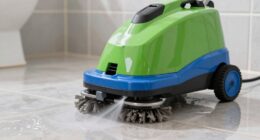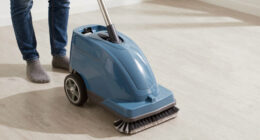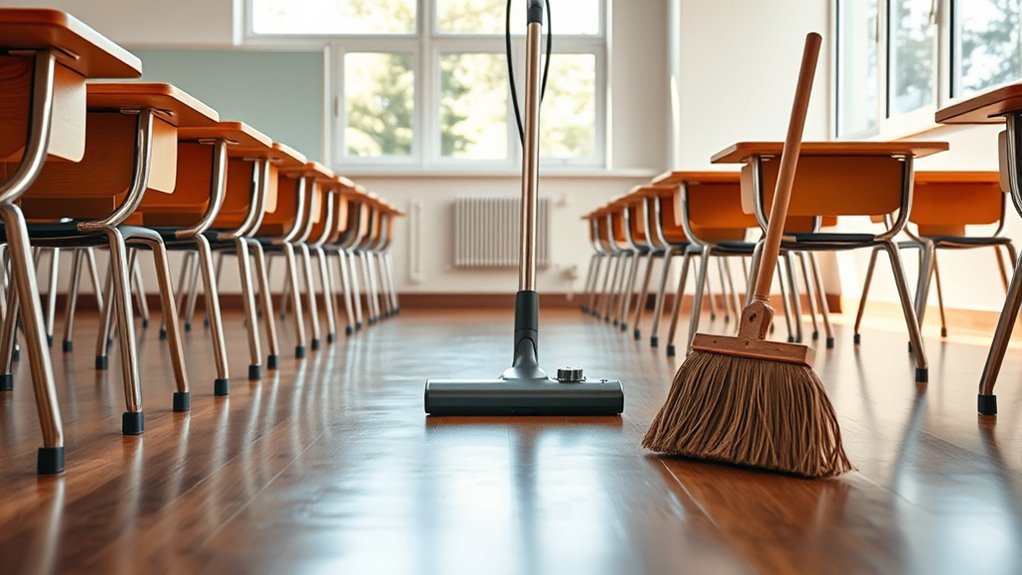
When deciding between sweeping and vacuuming in classrooms, consider your priorities. Sweeping is quick, quiet, and great for surface dirt on hard floors, making it ideal during lessons. Vacuuming is more thorough, trapping fine dust and allergens, especially on carpets. It’s noisier but better for air quality. Combining both methods guarantees a cleaner, healthier space. Keep exploring to discover how to maximize your cleaning routine effectively.
Key Takeaways
- Use sweeping for quick surface cleanups on hard floors during class hours to minimize disruption.
- Opt for vacuuming to effectively remove fine dust, allergens, and debris, especially on carpets and rugs.
- Choose sweeping for low-noise, routine tidying, and vacuuming when thorough cleaning or dust control is needed.
- Combine both methods: sweep to gather debris and vacuum for detailed dirt and allergen removal.
- Consider maintenance and effort: sweeping is simple and less equipment-dependent; vacuuming offers deeper cleaning but requires upkeep.

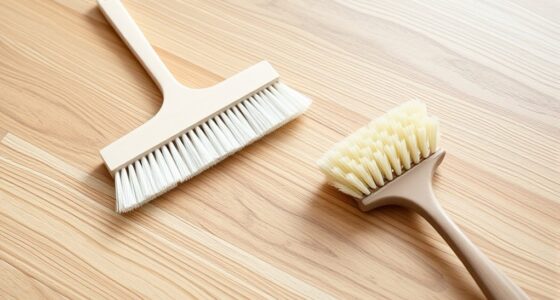
When it comes to keeping classrooms clean, choosing between sweeping and vacuuming can make a significant difference in efficiency and effectiveness. Your decision impacts not only how quickly you can tidy up but also how well you control dust and manage noise levels, both of which are essential in a busy learning environment. Sweeping is a straightforward approach that works well for quick cleanups and hard surfaces like tile or linoleum floors. It’s often quieter and less disruptive, making it ideal during class hours when noise levels need to stay low. Plus, sweeping helps control dust more precisely; you can focus on areas with accumulated dirt, preventing dust from becoming airborne and settling into the air or onto surfaces. However, sweeping may not pick up fine dust particles as effectively as vacuuming, especially if the broom isn’t in top condition. It also requires more physical effort and can spread dust around if not done carefully.
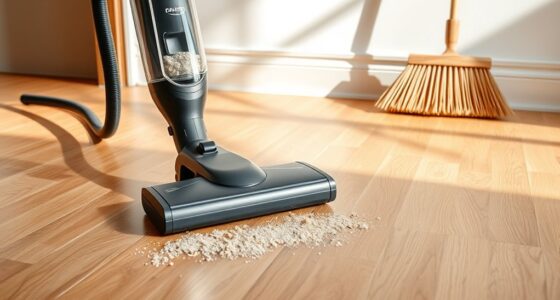
Vacuuming, on the other hand, offers superior dust control because it traps fine particles in filters or bags, preventing them from re-entering the air. This is especially important in classrooms where students or staff suffer from allergies or respiratory issues—keeping dust levels low contributes to healthier indoor air quality. Modern vacuums designed for institutional use tend to operate quietly, so you won’t have to worry about disrupting lessons or causing discomfort. They’re also more efficient at removing dirt, crumbs, and allergens from carpets and rugs, which sweeping often misses. However, vacuuming can generate higher noise levels, especially with older or less advanced models, and might be distracting during active class times. Additionally, vacuums require power sources and regular maintenance, which can be less convenient than the simplicity of sweeping. Incorporating effective dust control strategies can further enhance classroom air quality and health outcomes.
Ultimately, your choice depends on the specific needs of your classroom environment. For quick surface dust removal on hard floors, sweeping might be your best bet—if you prioritize low noise and minimal disturbance. When tackling carpets or areas with persistent dust and allergens, vacuuming becomes more effective, especially if noise levels are kept in check with quieter models. Combining both methods can often deliver the best results: sweep during the day for quick cleanups and vacuum periodically to thoroughly remove dust and allergens. By understanding how each tool impacts dust control and noise levels, you can create a cleaner, healthier, and more conducive learning environment.

Battery Powered Walk Behind Mini Automatic Floor Scrubber Machine – Compact & Portable, 15” Cleaning Width, 90-Minute Runtime, 170 RPM – Ideal for Small Commercial Spaces, Offices, Retail & More
Compact & Efficient Cleaning – Designed for small commercial spaces, this mini automatic floor scrubber features a 15-inch...
As an affiliate, we earn on qualifying purchases.
Frequently Asked Questions
How Often Should Classrooms Be Cleaned for Optimal Hygiene?
You should clean classrooms at least daily to maintain hygiene standards and prevent the spread of germs. High-touch surfaces like desks, doorknobs, and light switches need more frequent attention, ideally multiple times a day. Regular cleaning ensures a healthier environment for students and staff, reducing illness and improving focus. Adjust the cleaning frequency based on classroom size and usage, but daily cleaning is a solid standard for maximum hygiene.
Are There Eco-Friendly Cleaning Options for Classrooms?
Yes, there are eco-friendly solutions for classroom cleaning. You can opt for green cleaning products made from natural ingredients that are safe for children and the environment. Using microfiber cloths and vacuums with HEPA filters also reduces chemical use and improves air quality. By choosing green cleaning and eco-friendly solutions, you minimize your environmental impact while maintaining a healthy, safe learning space for students.
Can Vacuum Cleaners Be Safely Used Around Children?
You might wonder if vacuum cleaners are safe around children, and the answer depends. While modern vacuums can be safe, you need to watch for vacuum hazards like exposed brushes or powerful suction that could cause injuries. Always choose models designed for environments with kids, guarantee they’re well-maintained, and supervise cleaning. Prioritizing children’s safety means picking the right vacuum and using it carefully, avoiding potential hazards.
What Are the Costs Associated With Different Cleaning Tools?
When comparing costs, vacuum cleaners typically have higher upfront prices but lower maintenance expenses over time. Brooms are cheaper initially and require minimal upkeep, making them budget-friendly for short-term use. Conversely, mops involve moderate costs and ongoing maintenance. Your choice depends on your budget and cleaning needs. Conduct a cost comparison to determine which tool offers the best balance of affordability and efficiency for your classroom.
How Do Noise Levels Impact Classroom Cleaning Routines?
Noise levels markedly impact your classroom cleaning routine by causing noise disruption, which can distract students and hinder learning. If you choose loud cleaning tools, you might need to schedule cleaning during breaks or after school hours to minimize disruption. Quieter options like vacuum cleaners with low-noise settings help maintain a smooth cleaning schedule, ensuring a quiet environment that supports concentration and an effective learning experience.

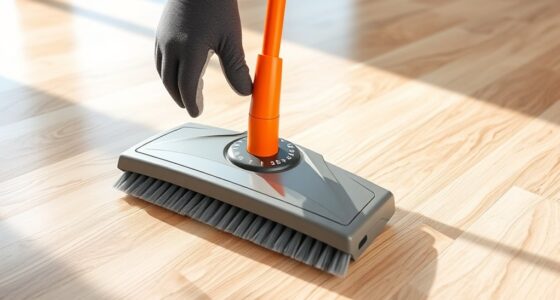
HHQ Commercial Floor Scrubber Machine with Brushes and Pads, Heavy Duty Floor Cleaner Polisher and Buffer- Deep Cleaning Tile and Grout, Hardwood Floors and Carpets without Getting on Hands and Knees
Kit Included: 1 Orbital Floor Buffer & Scrubber Machine, 2 Polishing/ Stripping Pads, 3 Scrub Brushes, 1 Microfiber...
As an affiliate, we earn on qualifying purchases.
Conclusion
Think of your classroom as a garden. Sweeping is like gently raking leaves—great for surface debris, but it might miss the hidden pests. Vacuuming is your trusty gardener, pulling out dirt and debris from deep within the soil. By choosing the right tool, you’re nurturing a healthy, vibrant space where students can thrive. So, pick wisely—your classroom’s health depends on it. After all, a well-tended garden blossoms brighter.

Oreck Commercial Orbiter Hard Floor Cleaner Machine, Multi-Purpose Floor Cleaning, Random Orbital Drive, Wide Cleaning Path, 50-Foot Long Cord, ORB550MC, Gray/Red
MULTI-PURPOSE CLEANING: Commercial grade cleaner and effective on all types of flooring surfaces. Sand, refinish, strip, scrub, wax,...
As an affiliate, we earn on qualifying purchases.

Bissell BigGreen BGFS5000 Portable Two Brush Floor Scrubber & Polisher, Polypropylene, 13"" W x 7"" D x 44"" H, White & Green
A small portable scrubbing machine that is perfect for cleaning brick, carpet, ceramic, concrete, cork, hard wood, laminate,...
As an affiliate, we earn on qualifying purchases.