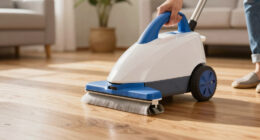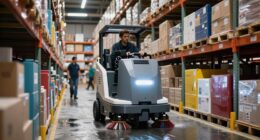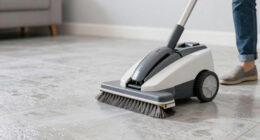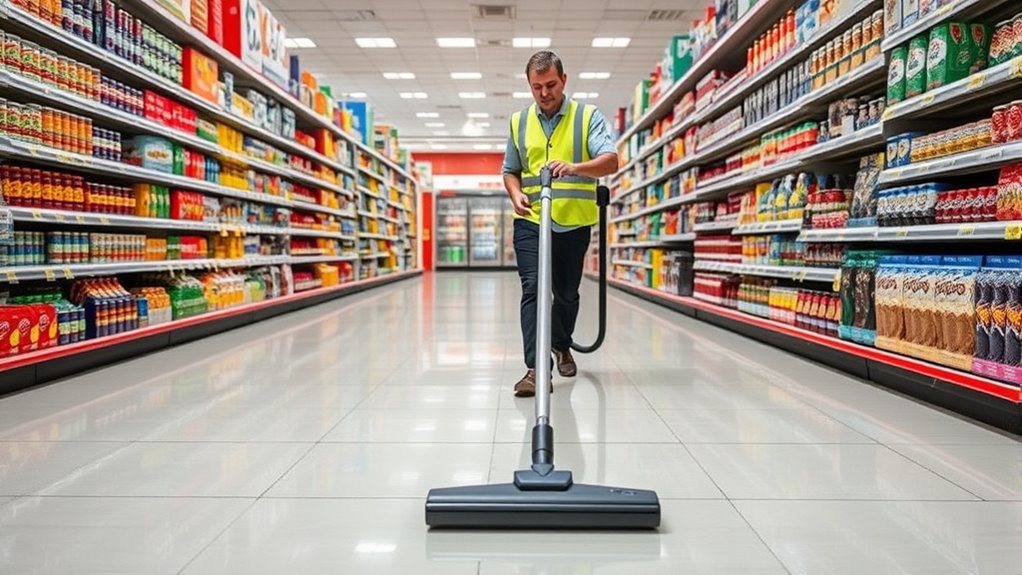

For shop aisles, choose sweeping for quick, surface-level cleaning and larger debris like sawdust or dirt. Use vacuuming for more detailed cleanups, especially to pick up fine dust, particles, or debris in cracks and corners. The right choice depends on debris type and floor surface. Combining both methods gives you the best results, so exploring options further will help you decide when and what to use for ideal cleanliness.
Key Takeaways
- Use sweeping for quick removal of large debris like sawdust or metal shavings on surfaces.
- Opt for vacuuming to effectively pick up fine dust, allergens, and debris from cracks and corners.
- Match equipment to floor type and debris size; heavy-duty vacuums are ideal for heavy or fine debris on concrete or tile.
- Combine both methods: sweep large debris first, then vacuum for detailed cleanliness and air quality.
- Consider cleaning frequency and environment; vacuuming enhances indoor air quality, while sweeping covers large areas rapidly.
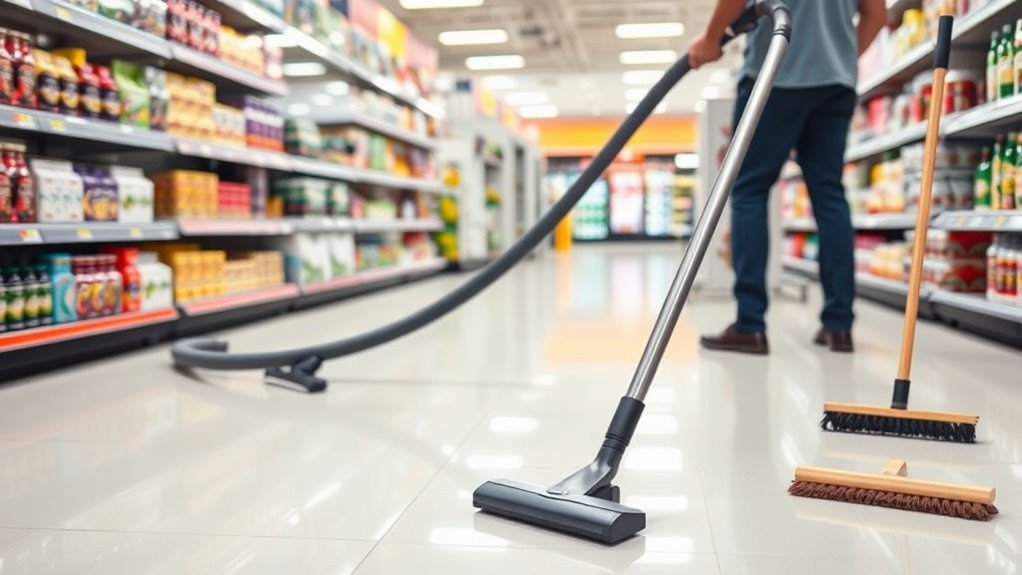
When it comes to maintaining clean shop aisles, choosing between sweeping and vacuuming can make a big difference in efficiency and cleanliness. The right decision hinges on your specific floor cleaning needs, the type of debris you encounter, and the equipment selection that best suits your environment. Sweeping is often the go-to for quick, surface-level cleaning, especially when dealing with larger debris like sawdust, metal shavings, or dirt. It’s simple, requires minimal equipment, and allows you to cover wide areas rapidly. However, if you’re dealing with fine dust or lightweight particles that tend to settle into cracks and corners, vacuuming might be the more effective choice. Vacuums with appropriate attachments can remove microscopic dust and debris that sweeping might miss, guaranteeing a higher level of cleanliness. Modern vacuum technology, including HEPA filters, can also improve indoor air quality by trapping fine dust and allergens.
Choosing the right equipment is vital. For sweeping, a sturdy push broom or a dust mop can suffice, but for more thorough floor cleaning, a commercial-grade vacuum designed for industrial or shop environments can be more efficient. When selecting equipment, consider factors such as floor type—whether it’s concrete, tile, or sealed surfaces—as well as the volume of debris generated daily. Lightweight vacuums are ideal for quick cleanups, while heavy-duty industrial vacuums excel at handling larger quantities of debris and fine dust, reducing the need for frequent rest periods and increasing productivity.
Your decision also impacts the time you spend on maintenance. Sweeping requires minimal setup, but it might need to be repeated more frequently, especially if debris is constantly tracked in. Vacuuming, on the other hand, can be more time-consuming initially but often results in less overall effort to maintain a clean environment. Consider how often your shop floor gets dirty and the type of debris you’re clearing. For heavy, bulky debris, a broom or push sweeper might be enough, but for dust or small particles, a vacuum with HEPA filters can improve air quality and safety.
Ultimately, your choice should align with your floor cleaning goals, the nature of your shop’s operations, and the equipment selection that offers the best balance of efficiency and thoroughness. Sometimes, combining both methods provides ideal results—sweeping to quickly clear larger debris and vacuuming for detailed cleaning in corners and hard-to-reach spots. Making an informed choice ensures your shop aisles stay clean, safe, and conducive to productive work. Regularly evaluating your cleaning methods and equipment based on energy efficiency and operational needs can further optimize your workflow.

ECOMAX Dust Extractor & Shop Vac 2-in-1, Semi-Automatic Filter Clean, HEPA Filter, 8 Gallon 6.5 HP Wet Dry Vacuum, Anti-Static Hose, Dust-Full Indicator, for Woodworking, Workshop and Garage
Dual-mode Operation for Versatile Cleaning: This wet/dry shop vacuum switches between standard vacuum mode for everyday messes and…
As an affiliate, we earn on qualifying purchases.
As an affiliate, we earn on qualifying purchases.
Frequently Asked Questions
What Is the Average Cost Difference Between Sweeping and Vacuuming?
The cost comparison between sweeping and vacuuming varies, but vacuuming generally costs more upfront and in maintenance. You might spend 20-50% more on equipment and energy costs for vacuums. An efficiency analysis shows vacuuming can save time and reduce labor costs, but sweeping remains cheaper initially. Consider your shop size and debris type to determine if the higher investment in vacuuming pays off in long-term efficiency.
How Often Should Shop Aisles Be Cleaned With Each Method?
Cleaning your shop aisles is like tuning a guitar—regular maintenance keeps everything in harmony. For maximum aisle maintenance, vacuum high-traffic areas daily to remove dust and debris, while sweeping can be done weekly, especially in less busy sections. Adjust cleaning frequency based on foot traffic and debris levels. Consistent cleaning ensures a safe, tidy environment, preventing buildup and prolonging your flooring’s life.
Are There Environmental Concerns With Vacuuming Shop Aisles?
Yes, vacuuming shop aisles can raise environmental concerns like dust generation and noise pollution. The dust created may affect air quality and pose health risks, especially if not properly filtered. Additionally, the noise from vacuum cleaners can disturb customers and staff. To minimize impact, choose quieter, eco-friendly vacuums with good filtration systems, and guarantee regular maintenance to reduce dust and noise levels.
Can Automated Cleaning Tools Replace Manual Sweeping or Vacuuming?
Robotic technology can effectively replace manual labor for routine cleaning tasks, but it depends on your shop’s specific needs. Automated tools excel at maintaining cleanliness consistently and saving time, yet manual sweeping or vacuuming may still be necessary for detailed or delicate areas. You should assess your shop’s size, debris type, and cleanliness standards to determine if robotic technology can fully take over or if manual labor remains essential for thorough results.
What Safety Precautions Should Be Taken During Cleaning?
Think of cleaning as steering a busy street—you need safety gear. Always wear personal protective equipment like gloves and masks, especially when dealing with dust or chemicals. Pay attention to electrical safety; unplug vacuum cleaners before maintenance. I once saw a worker trip over a cord, so keep cords organized and dry. These precautions prevent accidents and keep your workspace safe during cleaning.

Yocada 18 Inch Push Broom Heavy-Duty Outdoor Commercial Broom Brush Stiff Bristles for Cleaning Patio Garage Deck Concrete Wood Stone Tile Floor 65.3 inch Long
The width of the broom part is about 18 inch long, so it can sweep a large area…
As an affiliate, we earn on qualifying purchases.
As an affiliate, we earn on qualifying purchases.
Conclusion
Remember, a clean shop is a happy shop. Whether you choose sweeping or vacuuming, pick the tool that best suits your aisle’s needs. Don’t cut corners—because a tidy space boosts safety and customer satisfaction. As the saying goes, “A place for everything, and everything in its place.” Keep your aisles spotless, and you’ll keep your business running smoothly. When in doubt, choose the right tool and keep your shop shining bright.

CLEANHOME 36" Commercial Dust Mops for Floor Cleaning Heavy Duty Floor Duster Mop with Long Handle Hotel Gym Household Cleaning Supplies for Hardwood, Tiles, Marble Floors (Green)
39" X 8.5" Large Microfiber Mop Pad: Good absorbent polyester surface perfect for wet mopping and dry sweeping.With…
As an affiliate, we earn on qualifying purchases.
As an affiliate, we earn on qualifying purchases.

CRAFTSMAN CMXEVBE17250 2.5 Gallon 2.5 Peak HP Wet Dry Vac, Portable Shop Vacuum Wet and Dry with Filter Bag, Hose and Attachments for Cleaning in the Home
PORTABLE: Lightweight, 2.5-gallon wet dry shop vac offers unparalleled mobility
As an affiliate, we earn on qualifying purchases.
As an affiliate, we earn on qualifying purchases.