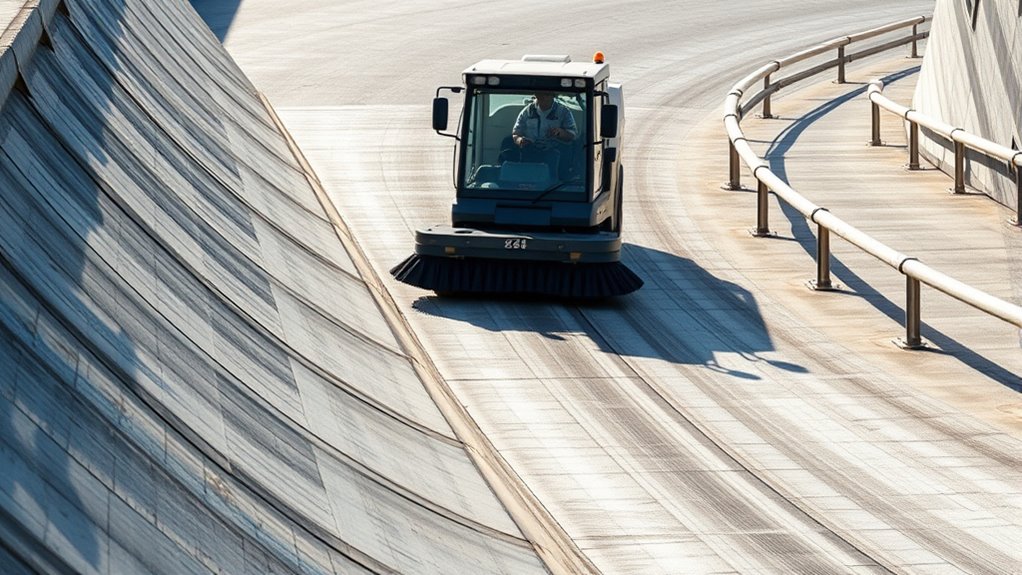
To operate sweepers safely on ramps without skidding, approach slopes carefully with reduced speed and steady control. Rely on your machine’s traction control systems, but don’t depend solely on them—adjust settings as needed. Keep a close eye on terrain and avoid sudden movements that could cause wheel spin. Recognize signs of traction loss early and respond promptly. Mastering these techniques guarantees safe, stable operation—if you continue, you’ll discover more effective strategies to prevent accidents.
Key Takeaways
- Approach ramps slowly, maintaining steady speed to prevent wheel spin and ensure stability.
- Use traction control systems properly, but do not rely solely on technology for safety.
- Adjust machine settings and operator techniques for incline work, considering terrain conditions.
- Recognize signs of traction loss early and reduce speed or reposition to regain grip.
- Prioritize operator training to develop skills in safe ramp navigation and terrain assessment.
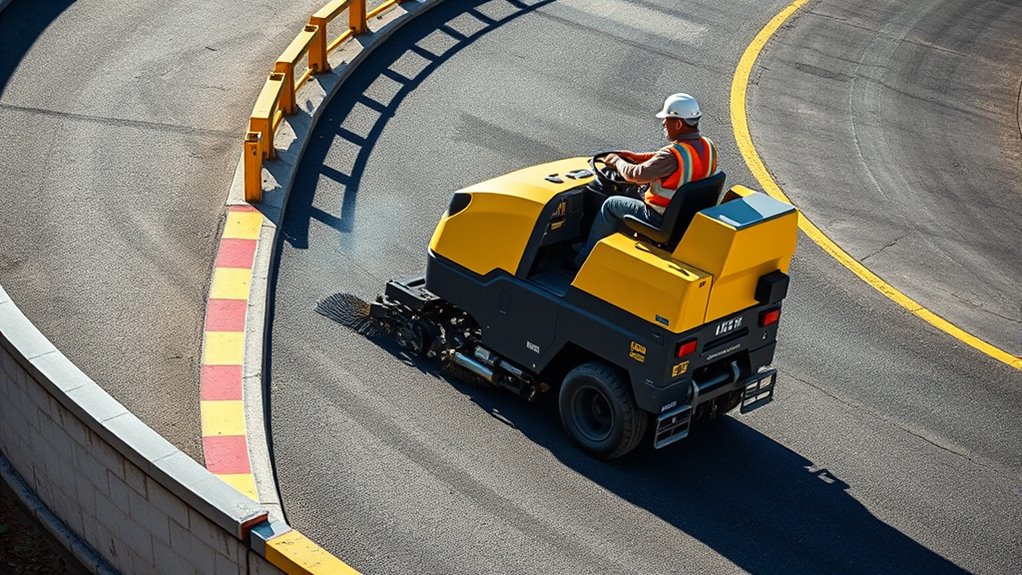
Have you ever considered how dangerous slopes can be if you’re not careful? Operating sweepers or any equipment on ramps requires more than just skill; it demands awareness of how terrain affects your machine’s stability. When working on inclines, slipping or skidding can occur if proper precautions aren’t taken. That’s why understanding traction control is vital. Modern sweepers often come equipped with traction control systems designed to prevent wheel spin and maintain grip, but relying solely on technology isn’t enough. You need to know how to manage these systems effectively and adjust your driving accordingly. Proper operator training is essential here—without it, you might not recognize the signs of losing traction or how to respond promptly. Training ensures you understand how to set the machine for incline work, how to control speed, and how to adapt to changing surface conditions.
As you approach a ramp, slow down and plan your route carefully. Sudden acceleration can cause wheels to spin, especially if the surface is loose or wet. Use traction control features if available, but don’t depend on them exclusively. Instead, focus on maintaining steady, cautious movements to prevent slipping. When you’re trained properly, you learn to recognize when traction is compromised and how to adjust your operation to regain stability. This might mean reducing speed further or repositioning the machine to a more stable footing. Remember, the key to safe operation on slopes isn’t just technology; it’s your ability to read the terrain and respond appropriately. Operator training plays a crucial role in developing these skills and ensuring safe practices on ramps and inclines.
Frequently Asked Questions
What Are the Best Types of Sweepers for Ramp Operations?
When choosing sweepers for ramp operations, you should focus on ramp compatibility and sweepers selection. Opt for models with good traction control and stability features to prevent slipping. Compact, maneuverable sweepers with adjustable brushes work best for slopes, ensuring thorough cleaning without risking safety. Always prioritize sweepers designed for inclined surfaces, as they provide better grip and control, making your ramp cleaning safer and more efficient.
How Do Weather Conditions Affect Ramp Safety During Sweeper Operation?
Weather conditions greatly impact ramp safety during sweeper operations. Rain hazards create slippery surfaces, increasing the risk of slipping or losing control. You should monitor weather impact closely, adjusting your approach as needed. When rain or wet conditions occur, reduce speed, make sure your equipment has proper traction, and take extra precautions. Staying alert to changing weather helps prevent accidents, keeping both you and others safe on the ramp.
Are There Specific Training Programs for Operating Sweepers Safely on Slopes?
You might think anyone can operate sweepers on slopes, but nope, specialized training programs exist to keep you safe. These programs, often tied to safety certifications, teach you how to handle ramps without risking a skid or rollover. Ironically, just having a license doesn’t mean you’re prepared. Proper training ensures you understand slope dynamics and safety measures, turning potential hazards into manageable tasks.
What Maintenance Checks Are Essential Before Working on Ramps?
Before working on ramps, you need to check ground stability to verify it’s firm and even, reducing the risk of slipping or tipping. You should also perform a brake inspection to confirm your sweeper can stop effectively if needed. These maintenance checks help you operate safely, preventing accidents and ensuring the equipment functions properly on inclined surfaces. Always prioritize these safety measures before starting work on ramps.
How Can Technology Improve Safety When Operating Sweepers on Inclined Surfaces?
Technology can considerably enhance safety when you operate sweepers on inclined surfaces. Sensor integration helps detect changes in slope or surface conditions, alerting you to potential risks. Real-time monitoring allows you to receive instant feedback on your equipment’s stability and performance, enabling quick adjustments. By leveraging these tools, you reduce the risk of accidents, maintain control, and guarantee a safer working environment on ramps and inclined surfaces.
Conclusion
When operating sweepers on ramps, always prioritize slope safety to avoid the tiniest slip turning into a catastrophe. Stay alert, keep your speed under control, and use proper techniques—because a single mistake can turn your day into a disaster faster than you can blink. Remember, safety isn’t just a rule; it’s your shield against the chaos of a skid. Stay vigilant, work smart, and keep those ramps as safe as a fortress!