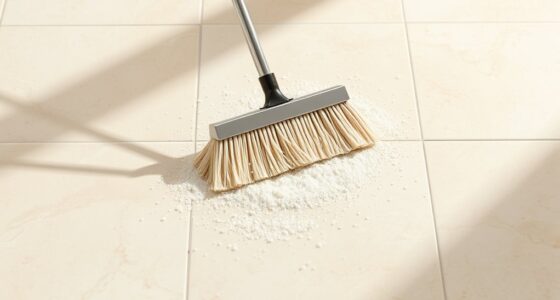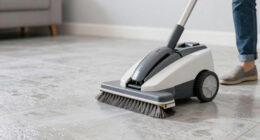
To beat the dust bowl, twin-brush sweepers are your best defense against microscopic, micron-sized particles. They use advanced brushes and filtration systems that trap even the tiniest dust particles effectively. Proper maintenance, including cleaning brushes and replacing filters, keeps these machines working at peak performance. Their thoughtful design covers surfaces thoroughly, reducing airborne contaminants and creating healthier environments. Keep going to discover how these powerful tools can transform your cleaning strategy even further.
Key Takeaways
- Twin-brush sweepers use advanced brushes and filtration to effectively trap microscopic dust particles, improving cleanliness.
- Proper maintenance, including filter replacement and brush cleaning, ensures maximum filtration efficiency against micron-sized particles.
- Design features enhance maneuverability and surface coverage, reducing missed spots where fine dust can settle.
- High filtration performance reduces airborne contaminants, promoting healthier indoor environments.
- Routine upkeep extends equipment lifespan and maintains its ability to combat tiny, hard-to-capture particles.
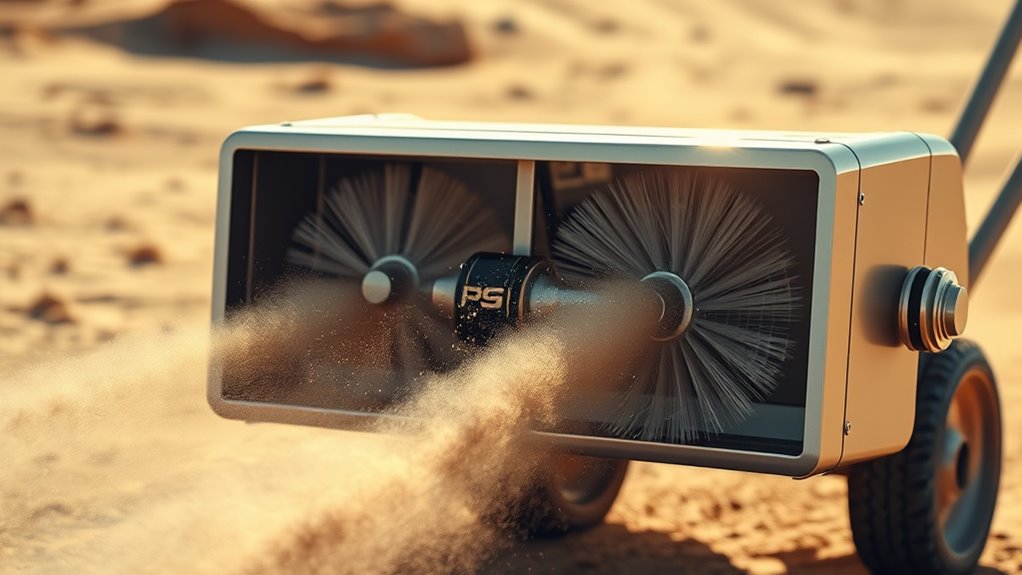
Have you ever wondered how tiny particles evade traditional cleaning methods? It’s a common challenge, especially when dealing with micron-size particles that can linger in the air or settle on surfaces. Standard sweepers and vacuums often struggle to trap these minuscule contaminants because their filtration efficiency isn’t high enough. That’s where twin-brush sweepers come into play, offering a game-changing solution to dust and particle management. These machines are engineered with advanced brushes and filtration systems designed specifically to target particles at the microscopic level. Their ability to trap even the smallest dust particles makes them invaluable in environments where cleanliness is vital, such as hospitals, laboratories, or industrial facilities.
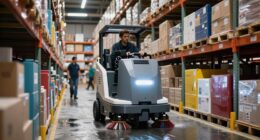
Twin-brush sweepers excel at capturing microscopic dust particles in critical environments.
To maximize their effectiveness, understanding proper maintenance procedures is vital. Regularly inspecting and cleaning the brushes ensures they retain ideal contact with surfaces, preventing debris from bypassing the system. Worn or clogged brushes reduce the sweeper’s ability to pick up fine particles, decreasing overall filtration efficiency. Additionally, maintaining the filtration system itself—whether it involves replacing filters or cleaning dust collection bins—ensures the machine continues to operate at peak performance. Neglecting these procedures can lead to reduced airflow and particle retention, defeating the purpose of using a twin-brush sweeper in the first place. Establishing a routine maintenance schedule not only prolongs the lifespan of your equipment but also guarantees it works as intended to trap the smallest of particles effectively.
Furthermore, the design of twin-brush sweepers allows for better maneuverability and thorough coverage, which is vital in complex environments. By covering more ground efficiently, they reduce the likelihood of missed spots where dust might settle or escape. This thorough cleaning capability, combined with high filtration efficiency, helps maintain healthier indoor environments and minimizes dust-related allergies or respiratory issues. When you’re committed to keeping spaces clean and safe, investing in a twin-brush sweeper and adhering to recommended maintenance procedures becomes a smart choice. It’s not just about picking up visible dirt but about targeting those invisible, micron-sized particles that can cause long-term health problems if left unchecked.
In short, mastering the use of twin-brush sweepers involves understanding their filtration capabilities and ensuring consistent maintenance. This combination ensures you’re not just sweeping away surface dirt but actively trapping the tiniest particles that traditional methods often miss. Proper maintenance procedures and attention to filtration efficiency are crucial for optimal performance. With proper care, these machines become powerful allies in the fight against dust and airborne contaminants, helping you beat the dust bowl with confidence and precision.
Top picks for "beat dust bowl"
Open Amazon search results for this keyword.
As an affiliate, we earn on qualifying purchases.
Frequently Asked Questions
What Industries Benefit Most From Twin-Brush Sweeper Technology?
You’ll find the most benefit from twin‑brush sweeper technology in industries focused on dust suppression and particle filtration, such as manufacturing, construction, and warehousing. These sweepers efficiently trap micron-sized particles, improving air quality and safety. By actively removing fine dust, you reduce health risks and comply with environmental standards, making them essential for maintaining clean, safe environments in industries where dust control is critical.
How Long Do Twin-Brush Sweepers Typically Last?
Coincidences often reveal surprising durability; twin-brush sweepers usually last between five to ten years, depending on usage and maintenance. You’ll find they excel at dust suppression and particle filtration, making them ideal for industrial cleaning. Regular upkeep extends their lifespan, guaranteeing efficient operation. Proper care ensures your sweeper continues trapping micron-sized particles, maintaining air quality and productivity longer, so you get the most out of your investment.
Are Twin-Brush Sweepers Environmentally Friendly?
You’ll find twin-brush sweepers are quite eco-friendly, especially when made with eco-friendly materials. They help reduce dust and particulate pollution, improving air quality. Plus, many models operate using renewable energy sources like solar or electric power, further lowering their environmental impact. By choosing these sweepers, you support cleaner air and sustainable practices, making them a responsible choice for environmentally conscious operations.
What Maintenance Is Required for Optimal Performance?
You might think twin-brush sweepers need little maintenance, but regular upkeep proves essential. To keep them performing at their best, you should routinely replace filters and guarantee proper motor lubrication. Investigating this, it’s clear that neglecting these tasks can reduce efficiency and increase wear. By staying on top of filter replacement and motor lubrication, you help the sweeper trap tiny particles effectively and extend its lifespan.
Can Twin-Brush Sweepers Be Customized for Different Applications?
Yes, twin-brush sweepers can be customized to suit different applications. You can modify brush customization options to enhance application flexibility, allowing the sweeper to handle various surfaces and debris types effectively. By adjusting brush materials, sizes, and configurations, you guarantee peak performance tailored to specific cleaning needs. This customization makes your equipment more versatile, efficient, and capable of addressing diverse cleaning challenges with ease.
Conclusion
As you witness these twin-brush sweepers conquering tiny particles, realize they’re more than machines—they’re guardians of clarity in chaos. Like silent sentinels, they symbolize hope, turning the tide against dust’s relentless grip. With every sweep, they remind you that innovation can clear the way for cleaner, healthier futures. Embrace this symbol of progress, knowing that even the smallest tools wield the power to sweep away the dust of doubt and despair.