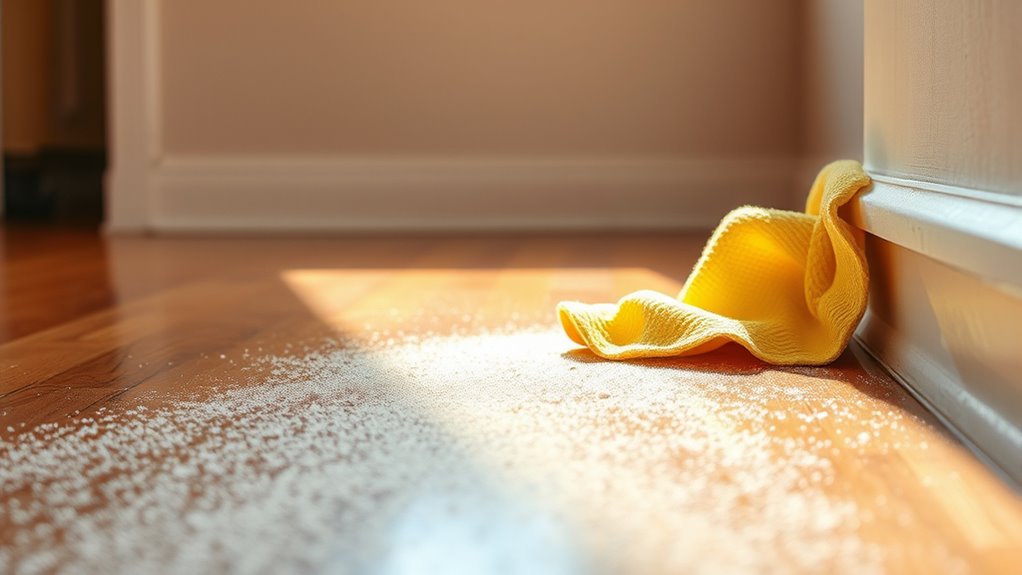
To clean after construction dust, start by sealing off areas with plastic sheeting to contain debris. Use a high-quality vacuum with HEPA filters to carefully vacuum all surfaces, paying special attention to corners, vents, and carpets. Wipe hard surfaces with damp microfiber cloths to pick up remaining dust. Regularly change filters and use air purifiers to improve air quality. For detailed tips on tackling stubborn dust, keep exploring these expert methods.
Key Takeaways
- Seal off areas with plastic sheeting to contain dust during cleaning.
- Use a HEPA-filter vacuum on all surfaces, including ceilings, vents, and corners.
- Wipe surfaces with damp microfiber cloths immediately after vacuuming to trap dust.
- Sweep or damp-mop floors thoroughly, paying attention to high-traffic and hard-to-reach spots.
- Employ air purifiers with HEPA filters to improve indoor air quality and remove airborne dust particles.
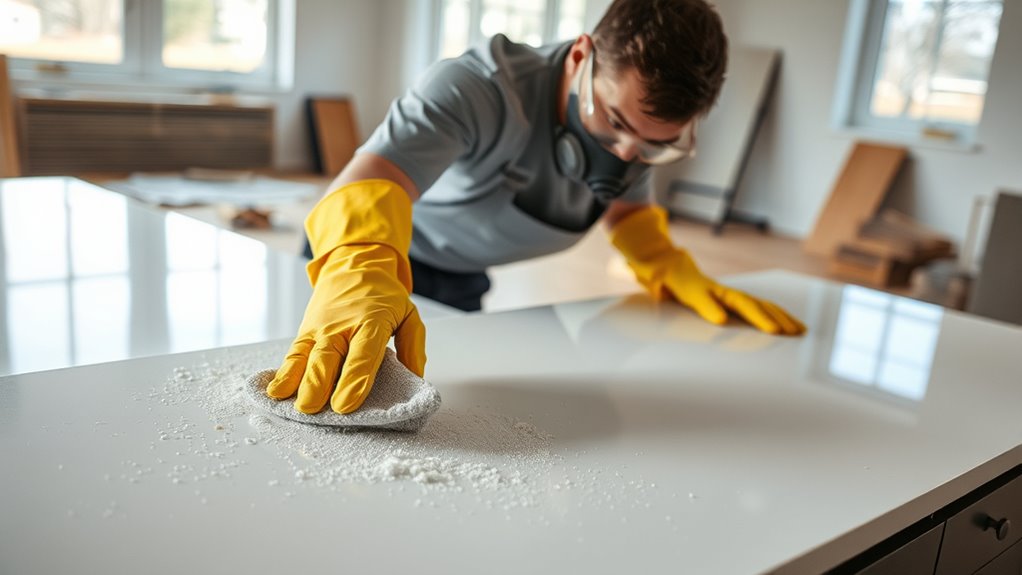
After construction work, dust can settle into every corner of your space, making it vital to clean thoroughly before moving back in. Construction dust isn’t just annoying; it can pose health risks and damage surfaces if not addressed properly. To effectively clean after construction, you need to start with proper vacuum techniques and dust mitigation strategies that target the fine particles lurking everywhere.
Begin by using a high-quality vacuum equipped with a HEPA filter. This filter trap tiny dust particles that regular vacuums might recirculate into the air, ensuring a deeper clean. Use slow, deliberate passes over surfaces to lift dust without dispersing it into the air. Pay special attention to corners, baseboards, window sills, and other hard-to-reach areas where dust tends to settle. For carpets and rugs, go over them multiple times, adjusting the vacuum height if possible, to remove embedded debris. Don’t forget to vacuum ceilings, light fixtures, and vents, as dust can settle on these surfaces too. Proper vacuum techniques are vital because they help reduce airborne dust, making subsequent cleaning easier and more effective. Incorporating vacuum maintenance into your routine ensures the equipment continues to operate efficiently and traps dust effectively.
Alongside vacuuming, implementing dust mitigation strategies will help contain and remove the residual dust. Start by sealing off areas with plastic sheeting or painter’s tape to prevent dust from migrating to other parts of your home. Use damp cloths or microfiber cloths to wipe surfaces immediately after vacuuming, as dry dust can resettle quickly. For floors, sweeping with a microfiber mop or damp mop ensures dust doesn’t get stirred into the air again. Consider using air purifiers with HEPA filters during and after cleaning to capture airborne particles, especially if anyone in your household has allergies or respiratory issues. Regularly change vacuum bags and filters to maintain suction power and prevent dust from escaping back into your space.
Frequently Asked Questions
How Long Does Construction Dust Typically Take to Settle?
Construction dust typically takes about 24 to 48 hours to settle, depending on factors like dust dispersion and air circulation. During this settling time, dust particles disperse throughout the area, gradually decreasing in visibility and airborne presence. To speed up the process, you can improve ventilation and use air purifiers. Keep in mind that larger projects might require longer settling times, so patience is key for a cleaner, safer space.
Are Special Cleaning Products Necessary for Removal?
You don’t necessarily need special cleaning products for dust removal after construction. Regular household cleaners, like a damp cloth or microfiber mitt, work well for dust removal. However, if the dust is stubborn or extensive, consider using specialized cleaning products designed for fine particles. These help make sure thorough cleaning and prevent lingering dust. Always test a small area first, and wear a mask to protect yourself during the cleaning process.
Can I Clean Dust Without Professional Equipment?
Did you know that over 70% of dust particles can be removed with simple household tools? You can definitely clean dust without professional equipment by using effective vacuum techniques, such as a vacuum with a HEPA filter, to trap fine particles. Focus on dust prevention by sealing off areas and wearing masks. Regular dusting and damp cloths also help keep your space cleaner, making post-construction cleanup manageable.
Is It Safe to Stay in the House During Cleanup?
It’s safest to avoid staying in the house during cleanup, as construction dust can substantially impact air quality. Staying inside exposes you to airborne particles, even with dust protection measures in place. If you must stay, guarantee proper ventilation and wear a mask. However, for ideal dust protection and health, it’s better to vacate temporarily until the dust is thoroughly cleaned and the air quality improves.
How Often Should I Clean After a Construction Project?
You should clean frequently after a construction project, ideally every 2-3 days, to prevent dust buildup. Regular vacuum maintenance with a HEPA filter helps capture fine particles and keeps the air cleaner. Use dust prevention techniques like sealing off work areas and damp mopping surfaces. This consistent cleaning minimizes dust spread, protects your home’s air quality, and makes the cleanup process more manageable over time.
Conclusion
Now that you’ve swept away the chaos, your space begins to breathe again, like a fresh morning breeze clearing the fog. With each wipe and vacuum, you’re sculpting clarity from the dust, turning chaos into calm. Remember, patience is your trusted brush, gently revealing the beauty hidden beneath the debris. Soon, your home will shine brighter than ever, a clean canvas ready for new memories. Keep going—you’re almost there, transforming dust into a dazzling new beginning.